
Choosing the right fats isn’t about eating “fat-free”—it’s about swapping unhealthy fats for better ones. U.S. Dietary Guidelines emphasize limiting saturated fat (from fatty meats, butter, full-fat dairy, some baked goods) and keeping trans fat as close to zero as possible, while choosing unsaturated fats from foods like olive or canola oil, nuts, seeds, avocados, and fatty fish. These swaps can help improve LDL (“bad”) cholesterol and support heart health. In practice, that means cooking with oils instead of butter, picking fish or beans over processed meats, choosing low-fat dairy, and reading labels for hidden saturated/trans fats. The sections below translate those principles into simple meal ideas, shopping tips, and cooking habits.
Choose heart-smart fats, limit saturated fat, avoid trans fat—aligned with U.S. Dietary Guidelines and AHA.
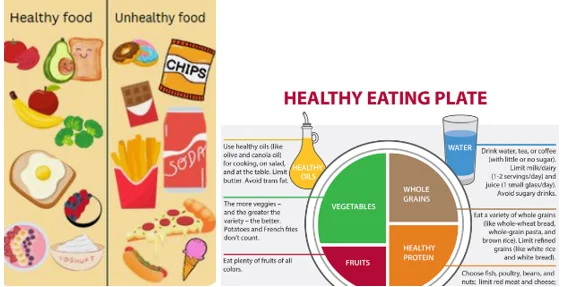
For adults over 50, fat quality matters even more than it did in earlier decades of life. As metabolism shifts and the risk of heart disease, stroke, and type 2 diabetes naturally rises with age, the type of fat on your plate becomes one of the most powerful, and most controllable, levers for protecting long-term health. The good news is that this isn’t about strict deprivation. According to the American Heart Association, most adults can meaningfully lower their cardiovascular risk simply by shifting the balance of fats they already eat, rather than cutting fat out altogether. A practical way to think about it: instead of asking “how do I eat less fat?” ask “how do I eat better fat, more often?” Over weeks and months, small daily swaps, like using olive oil in place of butter for sauteing vegetables, or choosing a handful of walnuts instead of a bag of chips, add up to meaningful changes in cholesterol levels and inflammation markers. For seniors managing cholesterol medications, blood pressure, or prediabetes, these dietary shifts often work alongside medical treatment rather than replacing it, so it’s worth mentioning your goals to your doctor or a registered dietitian, who can help tailor recommendations to any existing conditions or medications.
Why This Matters
Small kitchen choices add up. Swap butter for olive oil, pick salmon over processed meats, and keep nuts or seeds on hand. U.S. guidance is consistent: limit saturated fat, avoid industrial trans fat, and lean on unsaturated fats from plants and fish.
Authoritative overviews:
- Dietary Guidelines for Americans: https://www.dietaryguidelines.gov/2020-2025-dietary-guidelines-online-materials/top-10-things-you-need-know
- American Heart Association (Dietary Fats): https://www.heart.org/en/healthy-living/healthy-eating/eat-smart/fats/dietary-fats
Back to top
Why does this matter so much for people in their 50s, 60s, and beyond? Cardiovascular disease remains the leading cause of death among U.S. adults over 65, and decades of research consistently link the type of dietary fat consumed, not just total fat intake, to the risk of heart attack and stroke. The biological mechanism is fairly direct: saturated fat tends to raise LDL cholesterol, the particles that can build up as plaque inside artery walls, while unsaturated fats from olive oil, nuts, and fish tend to lower LDL and may even raise protective HDL cholesterol. Over years, even modest differences in LDL levels translate into meaningfully different risks of clogged arteries. There’s also a quality-of-life angle: maintaining healthy blood vessels supports better circulation to the brain, which research has linked to sharper memory and reduced risk of cognitive decline in later life. The encouraging takeaway is that this isn’t an all-or-nothing project. Replacing just one or two saturated-fat sources a day with an unsaturated alternative, consistently, is associated with measurable improvements in cholesterol panels within as little as four to eight weeks for many people, according to research summarized by the Harvard T.H. Chan School of Public Health.
Dietary Guidelines
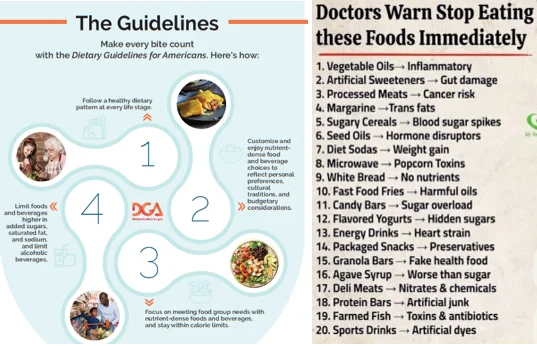
The Dietary Guidelines for Americans (2020–2025) advise keeping saturated fat under 10% of calories from age 2 onward. On a 2,000-calorie day, that’s about ≤22 g. The practical message: shift toward plant oils, nuts, seeds, and seafood.
- “Top 10” summary: https://www.dietaryguidelines.gov/2020-2025-dietary-guidelines-online-materials/top-10-things-you-need-know
- Executive Summary (PDF): https://www.dietaryguidelines.gov/sites/default/files/2020-12/DGA_2020-2025_ExecutiveSummary_English.pdf
Back to top
To put that 22-gram saturated fat limit into everyday terms: a single tablespoon of butter contains about 7 grams of saturated fat, meaning just three tablespoons could use up most of your daily allowance before lunch. A typical fast-food cheeseburger can contain 10 to 13 grams on its own. This isn’t meant to induce guilt, it’s meant to highlight how a few simple swaps in the foods eaten most often can have an outsized effect. The 2020-2025 Dietary Guidelines also emphasize that the saturated fat recommendation applies across the lifespan, including for older adults, though individual needs can vary based on existing heart disease, cholesterol levels, or medications like statins. For seniors, the guidelines specifically note the importance of nutrient-dense choices, since calorie needs often decrease with age while nutrient needs stay the same or increase. This makes foods like fatty fish (rich in omega-3s and vitamin D), nuts (rich in vitamin E and magnesium), and olive oil (rich in antioxidants called polyphenols) particularly valuable choices, since they deliver heart-healthy fat alongside nutrients that support bone health, brain function, and immune health, three areas of particular importance after age 50.
Healthy vs. Unhealthy Fats: Quick Map
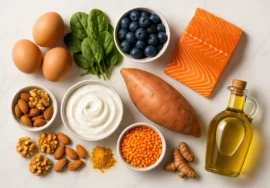
- Choose more often (unsaturated): olive, canola, avocado, peanut, soybean oils; almonds, pistachios, walnuts; pumpkin/sunflower seeds; salmon, sardines, trout.
- USDA MyPlate (Oils): https://www.myplate.gov/eat-healthy/more-key-topics
- Go easy on (saturated): butter, ghee, lard, full-fat cheese, high-fat cuts of beef/pork, coconut and palm oils.
- AHA on Saturated Fat: https://www.heart.org/en/healthy-living/healthy-eating/eat-smart/fats/saturated-fats
- Skip (industrial trans fat): the FDA removed partially hydrogenated oils (PHOs), but still scan labels.
A helpful way to remember this “quick map” is to picture fats on a spectrum based on their state at room temperature. Unsaturated fats, like olive oil or the oil in almonds, stay liquid at room temperature because of their chemical structure, which is part of why they behave differently in the body than saturated fats, which tend to be solid (think butter or the white marbling in fatty meat). This same structural difference affects how these fats interact with your cell membranes and cholesterol-carrying particles in the bloodstream. Trans fats deserve a special note even though they’re now largely banned from the U.S. food supply: small amounts can still appear in some imported foods, certain baked goods, or products manufactured before the 2018 phase-out deadline. The FDA’s removal of partially hydrogenated oils was one of the most significant food safety actions in decades, estimated to prevent tens of thousands of heart attacks annually. Still, checking labels for the phrase “partially hydrogenated” is a good habit, particularly with shelf-stable baked goods, non-dairy creamers, and microwave popcorn, categories where trans fats historically lingered longest.
Grocery Swaps (Easy Wins)
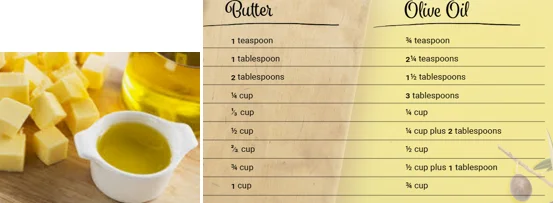
- Butter → olive or canola oil for stovetop cooking
- Creamy dressing → vinaigrette (olive oil + lemon + Dijon)
- Deli meats → tuna or salmon (water/olive-oil pack)
- Daily full-fat cheese → rotate with nuts, hummus, plain yogurt (watch added sugar)
Back to top
These swaps work best when they’re framed as upgrades rather than restrictions, since that mindset tends to make changes stick longer. Take the butter-to-olive-oil swap: beyond the saturated fat reduction, extra-virgin olive oil brings polyphenols and vitamin E, compounds with antioxidant properties that have been studied for their role in reducing inflammation. For the deli meat swap, there’s a bonus benefit worth knowing about: many processed and cured meats are also high in sodium and contain nitrates, which have been associated with increased cardiovascular and colorectal cancer risk in large population studies, so swapping to canned tuna or salmon a few times a week addresses more than just fat quality. When it comes to the cheese swap, it doesn’t have to mean giving up cheese entirely, portioning out a smaller amount of a flavorful cheese (like a sharp aged cheddar or parmesan, where a little goes a long way) and pairing it with nuts or vegetables can satisfy the craving while moderating saturated fat intake. The key for long-term success is rotating through several of these swaps rather than trying to overhaul every meal at once; even committing to one or two changes per week tends to be more sustainable.
Cooking Oils at a Glance
- Workhorse oils: olive, canola, avocado, peanut, soybean
- Liquid vs. solid: choose oils (liquid at room temp) more often than solid fats
- MyPlate basics: https://www.myplate.gov/eat-healthy/more-key-topics
- Coconut oil: flavorful, but high in saturated fat—use sparingly
Back to top
Choosing the right oil for the right job can also affect both health and cooking results. Extra-virgin olive oil is excellent for salad dressings, drizzling, and lower-heat cooking, but its flavor compounds and some nutrients can break down at very high temperatures. For high-heat methods like searing or stir-frying, refined avocado oil or canola oil, both of which have higher smoke points, tend to hold up better while still offering a favorable unsaturated fat profile. Peanut and soybean oils are budget-friendly, neutral-flavored options that work well for everyday sauteing and baking. As for coconut oil, it’s worth addressing directly because it has gained a reputation as a “health food” in some circles, largely due to its unique medium-chain fatty acids. However, the American Heart Association and most major nutrition bodies still classify coconut oil as a saturated fat, comparable in saturated fat content to butter, roughly 80-90% saturated fat by weight. That doesn’t mean it needs to be avoided entirely; using it occasionally for flavor in a curry or baked good is fine within an otherwise balanced pattern, but it shouldn’t become an everyday cooking oil if heart health is a priority.
Label Reading for U.S. Shoppers
Three quick checks on Nutrition Facts:
- Saturated fat: lower per serving is better
- Trans fat: target 0 g; scan ingredients for “partially hydrogenated”
- Serving sizes: watch per-container totals
- FDA Trans Fat explainer: https://www.fda.gov/food/food-additives-petitions/trans-fat
Back to top
Reading labels gets easier with a little practice, and a few extra details can make comparisons more meaningful. First, remember that the “% Daily Value” listed next to saturated fat is based on a 2,000-calorie diet, so if your needs are different, the percentage is still a useful relative guide for comparing two products side by side, even if the absolute target differs slightly for you. Second, the “0 g trans fat” claim on a label can sometimes be misleading due to a rounding rule: the FDA allows products with less than 0.5 grams of trans fat per serving to be labeled as “0 g.” This is why checking the ingredient list for “partially hydrogenated oil” remains valuable, even on products that claim zero trans fat, since eating multiple servings of several such products could add up. Third, pay attention to serving size definitions, which can sometimes be smaller than what people realistically eat in one sitting, particularly for items like nuts, granola, or salad dressing, where doubling or tripling the listed serving is common. Taking thirty extra seconds to check these details while shopping can make a meaningful difference over months of grocery trips.
Why Swaps Work (Evidence Snapshot)
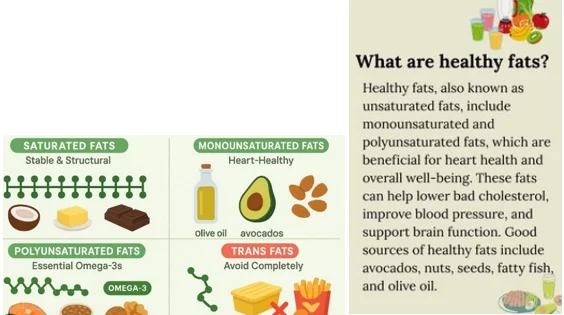
Replacing saturated fat with polyunsaturated (and, to a lesser extent, monounsaturated) fats improves LDL-cholesterol and supports heart health. Swapping saturated fat for refined carbs doesn’t help.
- Harvard Nutrition Source (Types of Fat): https://nutritionsource.hsph.harvard.edu/what-should-you-eat/fats-and-cholesterol/types-of-fat/
Back to top
This last point deserves emphasis because it’s one of the most common misunderstandings about heart-healthy eating. In the 1990s and early 2000s, many “low-fat” packaged foods became popular, but manufacturers often replaced the removed fat with refined starches and added sugars to maintain taste and texture. Large studies, including a notable analysis published in the BMJ, found that this type of swap, saturated fat for refined carbohydrates, did not improve and sometimes worsened markers of heart disease risk, including triglycerides and HDL (“good”) cholesterol. The lesson is that the goal isn’t simply “less fat,” it’s “better fat, and not replaced by refined carbs.” Research compiled by Harvard’s Nutrition Source consistently shows that diets higher in polyunsaturated and monounsaturated fats, the kind found in fish, nuts, seeds, and plant oils, are associated with lower rates of heart disease compared to diets higher in saturated fat, particularly when those unsaturated fats replace saturated fat directly (for example, choosing salmon instead of a fatty steak) rather than being added on top of an already high-fat diet.
One-Week Starter Plan
- Breakfast: oatmeal + walnuts; or eggs in 1 tsp olive oil with berries
- Lunch: tuna on whole grain with olive-oil vinaigrette; or hummus + veggie wrap with seeds
- Dinner: sheet-pan salmon with olive-oil roasted veggies; or bean-and-avocado bowls
- Snacks: pistachios, almonds, plain yogurt, fruit
Back to top
The beauty of this starter plan is its repeatability, you don’t need seven different dinners to make progress; rotating two or three of these meals throughout the week is plenty. For those managing diabetes or prediabetes, which is common in adults over 50, pairing these fat sources with fiber-rich vegetables and whole grains can also help slow the absorption of carbohydrates, supporting more stable blood sugar levels throughout the day. If cooking for one or two people, sheet-pan meals like the salmon-and-vegetable dinner are particularly practical: a single tray in the oven means less cleanup, and leftovers can often be repurposed for lunch the next day. For anyone new to cooking with more olive oil, a simple rule of thumb is “swap, don’t add”, use olive oil in place of butter or margarine rather than adding it on top of dishes that already contain solid fats, which helps keep overall calorie intake in a similar range while shifting fat quality. Keeping a small rotation of canned fish (tuna, salmon, sardines), a jar of good olive oil, a bag of mixed nuts, and frozen vegetables on hand makes it much easier to default to these choices on busy days.
FAQs (Quick Answers)
1) What is the U.S. saturated fat limit? Under 10% of calories (Dietary Guidelines).
2) Which fats should I emphasize most days? Oils from plants, nuts, seeds, and seafood.
3) Are trans fats gone? PHOs were removed; still read labels.
4) Is coconut oil okay? Yes—sparingly; it’s high in saturated fat.
5) Best everyday oil? Olive or canola—versatile and budget-friendly.
6) Do I need “low fat” to lose weight? No—focus on better fat quality.
7) Which fish supply omega-3s? Salmon, sardines, trout.
8) How do I compare two products? Lower saturated fat, 0 g trans fat, short ingredients.
9) Is butter off limits? Not forbidden—just use less and lean on oils.
10) Are seed oils acceptable? Yes, within an overall balanced pattern.
11) How do swaps help heart health? They tend to lower LDL over time.
12) Fast lunch upgrade? Try tuna or a bean salad with olive oil.
Related Reads on KeepFitQuote
- What Foods Cause Inflammation in Your Body
- Best Foods for Body Detox
- What Are the Nutritional Benefits of Dates
- How to Wash Fruits at Home
⚕️ Medical Disclaimer
The information provided on this page is for educational purposes only and is not intended as medical advice, diagnosis, or treatment. Always consult a qualified healthcare professional before making changes to your diet, starting any supplement, or if you have an existing medical condition. KeepFitQuote does not provide medical diagnoses or treatment recommendations. Read our full disclaimer.
Related Posts







Howdy! I could have sworn I’ve been to this site before but after browsing through some of the post I realized it’s new to me. Nonetheless, I’m definitely happy I found it and I’ll be bookmarking and checking back often!