
Clear Protein and Protein Coffee After 60
After 60, clear protein and protein coffee can be useful ways to increase protein when appetite is low or heavy meals feel difficult. They work best as practical add-ons, not complete meal replacements. Use them to strengthen a weak breakfast, a light lunch, or recovery after exercise, while keeping regular protein-rich foods as the foundation. Choose products with clearly listed protein, sugar, sodium, and caffeine. Ask a clinician or pharmacist for individualized advice if you have chronic kidney disease, reflux, insomnia, heart-rhythm problems, uncontrolled blood pressure, swallowing difficulty, or medicines with special timing rules.
Older adults often know they “should eat more protein,” but the real problem is practical: breakfast is weak, lunch is light, appetite is lower than it used to be, and thick shakes can feel too heavy. That is where clear protein and protein coffee can help. Used well, they are not gimmicks. They are low-friction tools that can make it easier to hit protein goals, preserve strength, and support recovery when full meals are not happening. The best plan after 60 is still food-first, strength-training-supported, and individualized for kidney function, medications, sleep, reflux, blood pressure, and caffeine tolerance. For many adults, the right answer is not “drink more shakes.” It is “use the lightest protein option that you can tolerate consistently, at the time of day you are most likely to miss protein.”
What Are Clear Protein and Protein Coffee After 60?
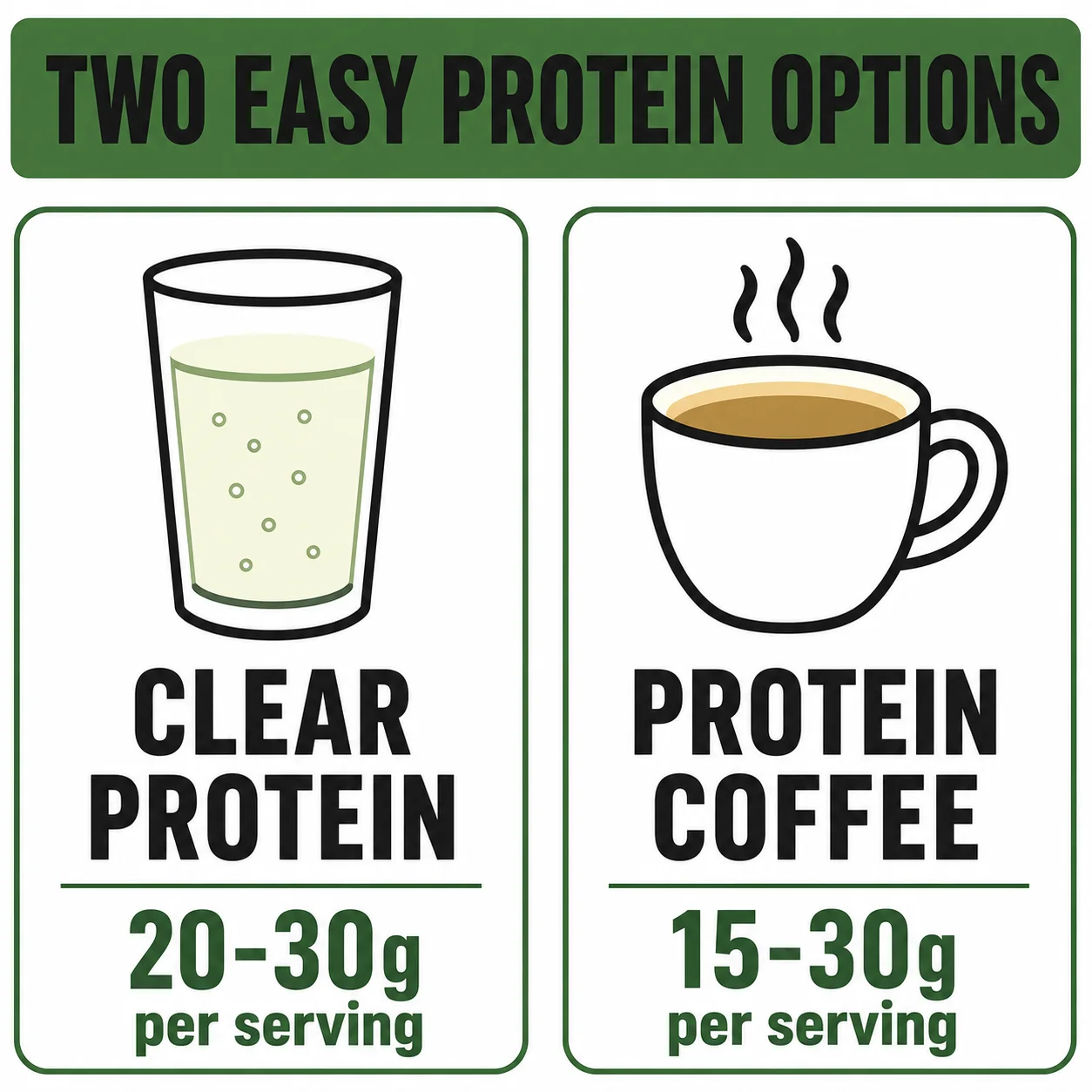
Clear protein is usually a lighter, juice-like protein drink rather than a creamy shake. In practice, it is often made from whey isolate or a similarly filtered protein source and usually provides about 20 to 30 grams of protein per serving with less thickness and less “meal heaviness” than a milkshake-style product. For older adults who feel full fast, that lighter texture can be a real advantage.
Protein coffee, often called “proffee,” is simply coffee combined with a protein shake or protein powder. The idea is not magical. It solves a common problem: a person drinks coffee in the morning anyway, but skips breakfast or eats very little with it. Turning that routine into a 15 to 30 gram protein opportunity can be useful when mornings are the weakest eating window.
These products are not equal. Some are lean, simple, and practical. Others are basically caffeinated dessert drinks or highly processed supplement blends. After 60, the best choice is usually the boring one: enough protein, tolerable taste, modest sugar, clearly declared caffeine, and no unnecessary stimulant stack.
Why Protein Matters More After 60
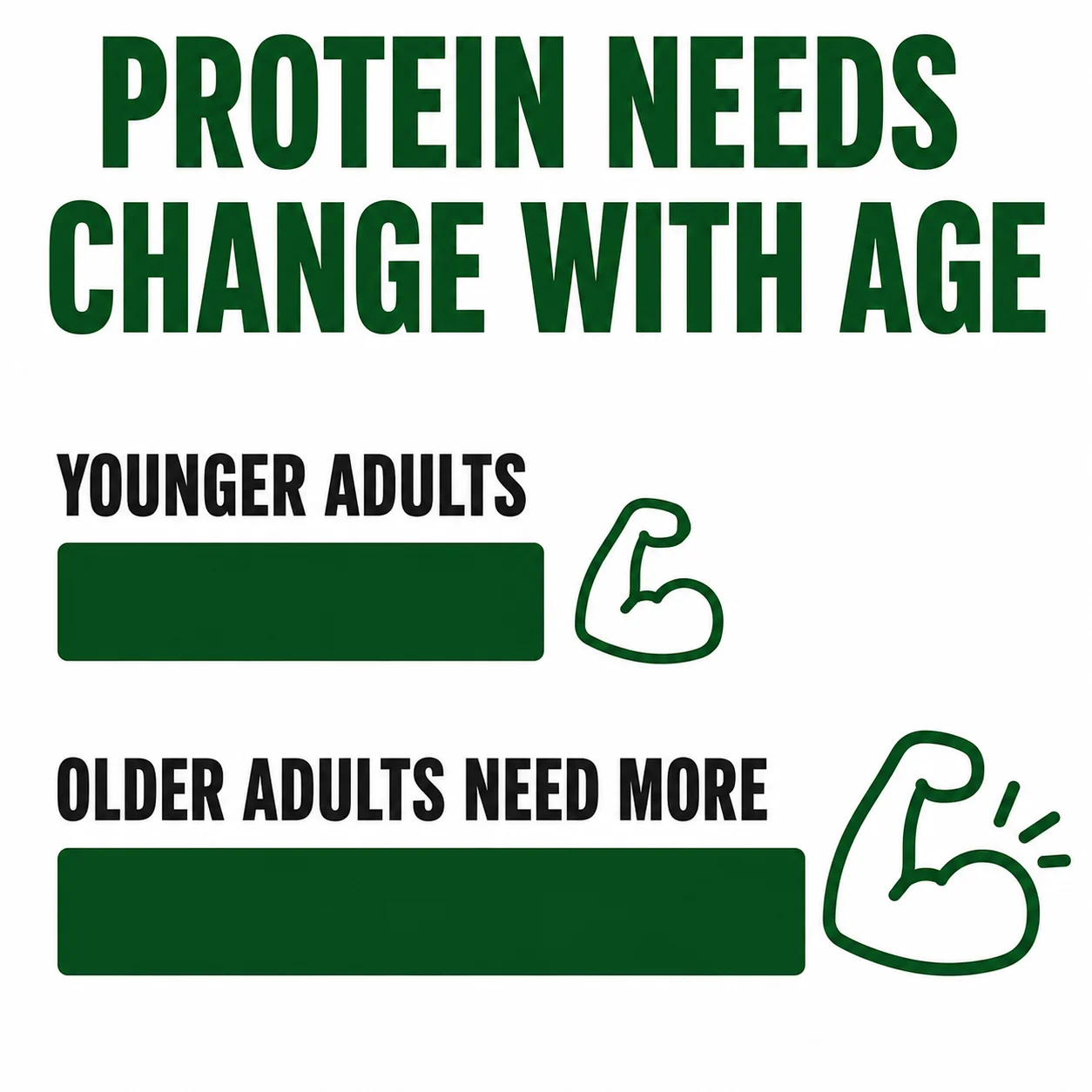
Protein becomes more important with age for two reasons. First, muscle mass and strength decline over time. Second, older muscle is less responsive to small doses of protein, a problem often described as anabolic resistance. That means the pattern many adults drift into after retirement or illness, such as coffee for breakfast, soup for lunch, and a normal dinner, may not give muscles enough stimulus during the earlier part of the day. This decline in muscle mass and strength is also known as sarcopenia, and it is one of the main reasons protein timing matters so much after 60.
This is why after 60 the conversation should shift from “Do I eat protein?” to “When do I get enough protein to matter?” A protein-heavy dinner cannot always rescue a protein-poor morning and midday routine.
Protein also works best when the body has a reason to keep muscle. That reason is resistance exercise. CDC guidance for adults 65 and older calls for aerobic activity, muscle-strengthening activity, and balance work each week. In simple terms, protein supports the building blocks, but your muscles still need a signal to stay.
Daily Protein Targets, Timing, and Dosing
For generally healthy adults, the traditional protein RDA is 0.8 grams per kilogram of body weight per day. That is a minimum adequacy target, not always the best muscle-preservation target for aging adults. Reviews focused on older adults often support a higher intake, especially when muscle maintenance is the goal.
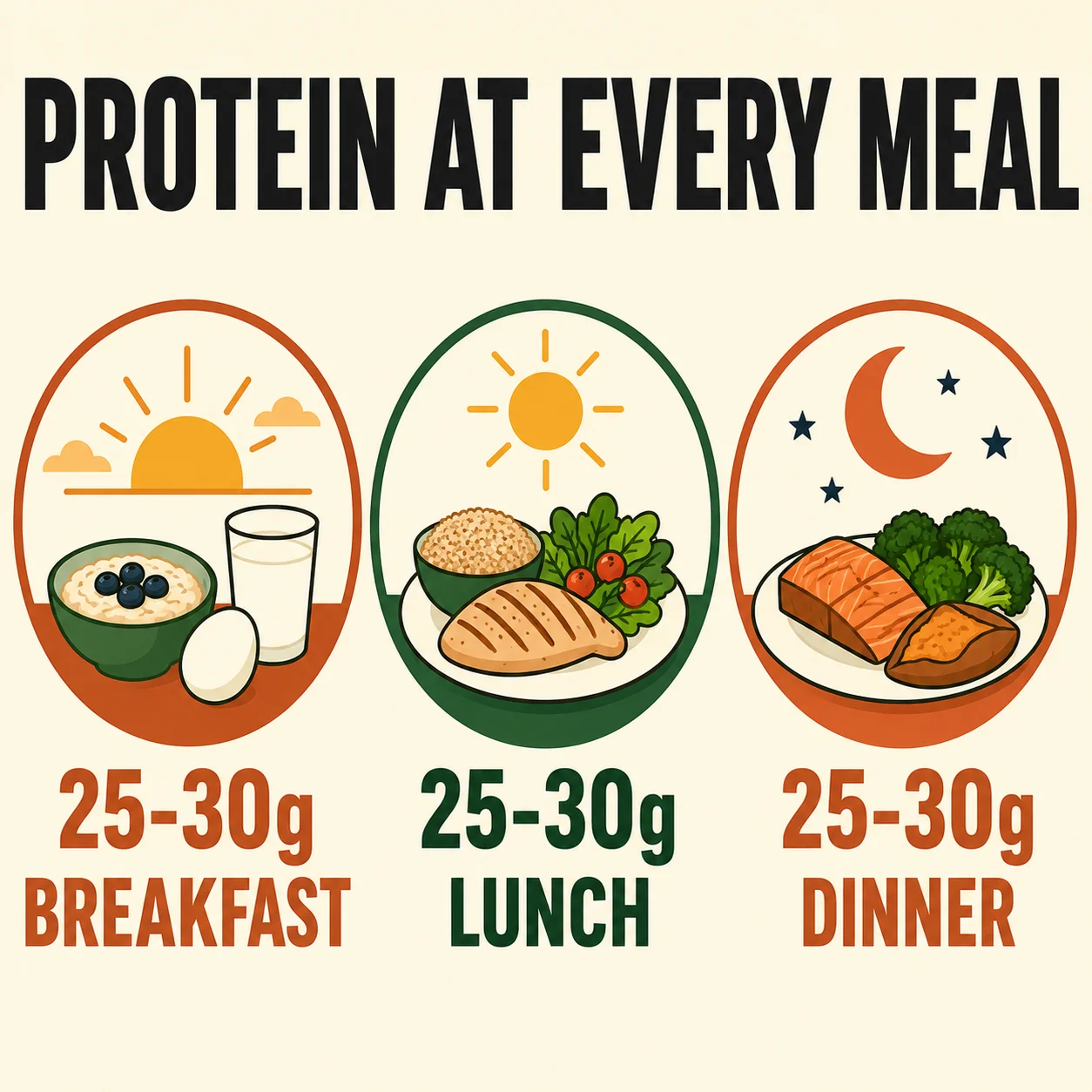
A practical plan for many adults over 60 looks like this: aim for roughly 1.0 to 1.2 g/kg/day if you are generally healthy and trying to maintain muscle, think in terms of 25 to 30 grams of protein at a meal rather than saving nearly all of it for dinner, use a protein supplement strategically, not automatically, and individualize the plan if you have chronic kidney disease, low body weight, recent illness, or poor appetite.
A good rule is to fix the weakest meal first. For many older adults, that is breakfast. If breakfast is only coffee and toast, protein coffee may be enough to turn a weak start into a useful start. If lunch is often missed or too small, clear protein can be a bridge between meals. For more ideas on building a protein-forward day, see our guide on what to eat to gain muscle after 60.
A Practical Dosing Approach
If you are trying clear protein or protein coffee for the first time, do not start with a maximal supplement routine. Start with one serving per day in the meal window where you consistently under-eat.
A simple pattern is: Breakfast fix: one protein coffee providing 15 to 30 grams of protein. Low-appetite midday fix: one clear protein drink providing 20 to 30 grams of protein. Exercise support: use a protein drink within the next couple of hours after a strength session if the next meal is uncertain or delayed.
If the supplement is replacing real food instead of supporting real food, the plan may be too supplement-heavy.
When Clear Protein Helps More Than a Full Shake
This is where many older adults get stuck. They know they need protein, but a standard creamy shake feels too thick, too sweet, or too filling.
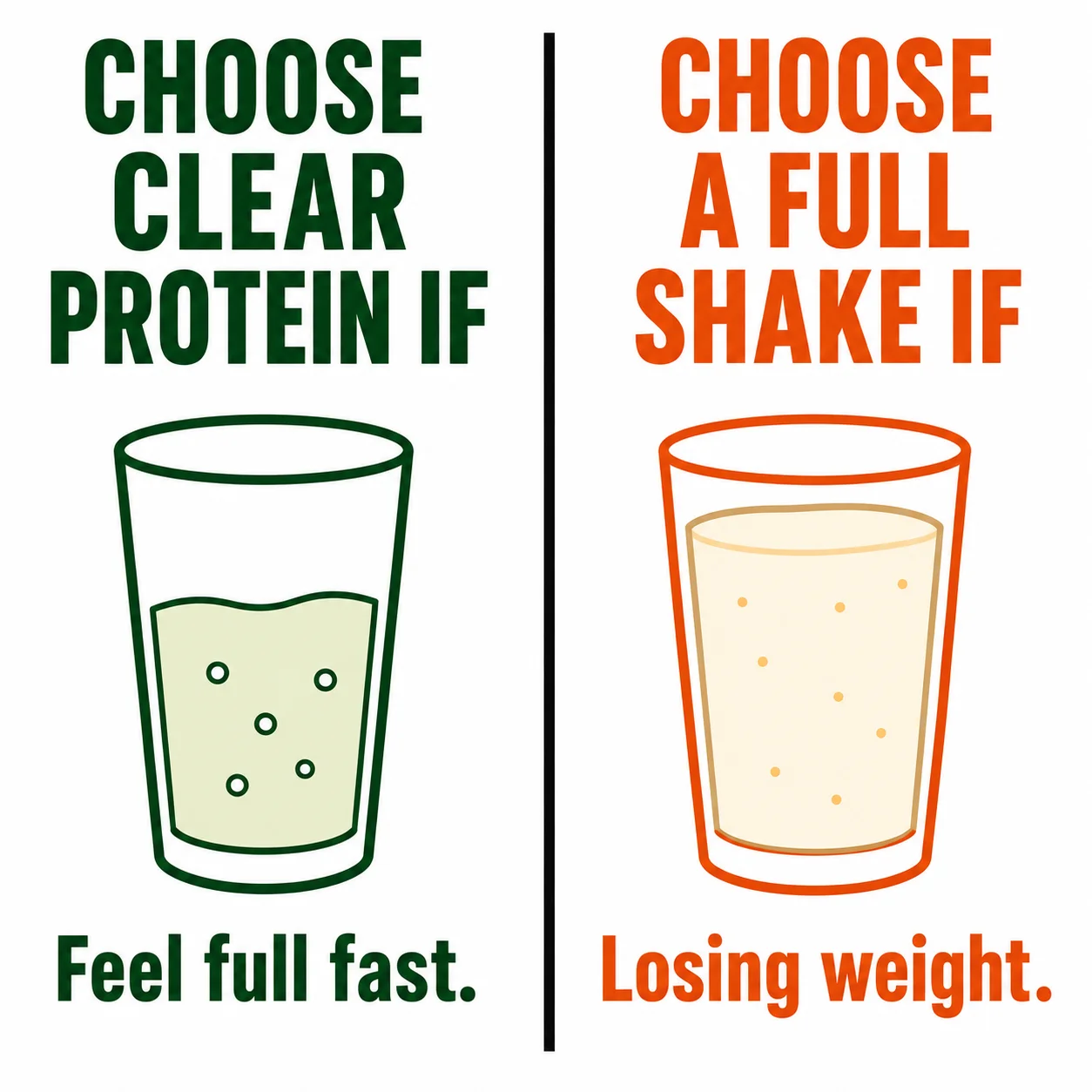
Clear protein is often the better choice when you feel full quickly, you dislike milky textures, you are trying to add protein without feeling like you drank a full meal, you need a lighter option between meals, or nausea, reflux, or early fullness make creamy shakes hard to finish.
A full shake is often the better choice when you are unintentionally losing weight, you need more calories as well as more protein, your meals are tiny and you need meal support, not just protein support, or you tolerate thicker drinks well and actually need something more filling.
That distinction matters. If your problem is low protein but stable weight, clear protein may be ideal. If your problem is low protein plus overall under-eating and weight loss, a higher-calorie shake may make more sense than a light clear drink.
Product Format Comparison
| Format | Best For | Typical Protein | Typical Downside |
|---|---|---|---|
| Clear protein drink | Low appetite, dislike of creamy shakes, midday protein rescue | 20–30 g | Often lower in calories, so it may not help enough if weight is dropping |
| Ready-to-drink full shake | Missed meals, poor appetite with weight loss, easy meal support | 20–30 g | Can feel heavy or too sweet |
| Protein coffee | Weak breakfast, coffee habit, mornings with little food | 15–30 g | Caffeine may worsen sleep, reflux, anxiety, palpitations, or blood pressure |
| Food-first protein meal | Best long-term foundation | 20–35 g | More prep, chewing, cleanup, and appetite required |
How to Use Protein Coffee Safely After 60
Protein coffee works best when it solves a real problem. The problem is usually not “I need more caffeine.” It is “I already drink coffee, but I rarely eat enough protein in the morning.”
The safest way to use protein coffee is to keep it simple. Use brewed coffee plus a ready-to-drink protein shake, or mix coffee with a plain protein powder that you already tolerate. Avoid turning it into a stimulant cocktail.
For most healthy adults, the FDA cites 400 mg of caffeine per day as an amount not generally associated with negative effects. Many older adults will need less because caffeine sensitivity rises with age, sleep becomes easier to disrupt, and medical conditions become more common.
Protein coffee is a poor choice if you already have trouble with insomnia, anxiety, reflux or heartburn, heart rhythm problems, uncontrolled high blood pressure, shakiness, headaches triggered by caffeine, or dehydration from repeated caffeinated drinks with too little water.
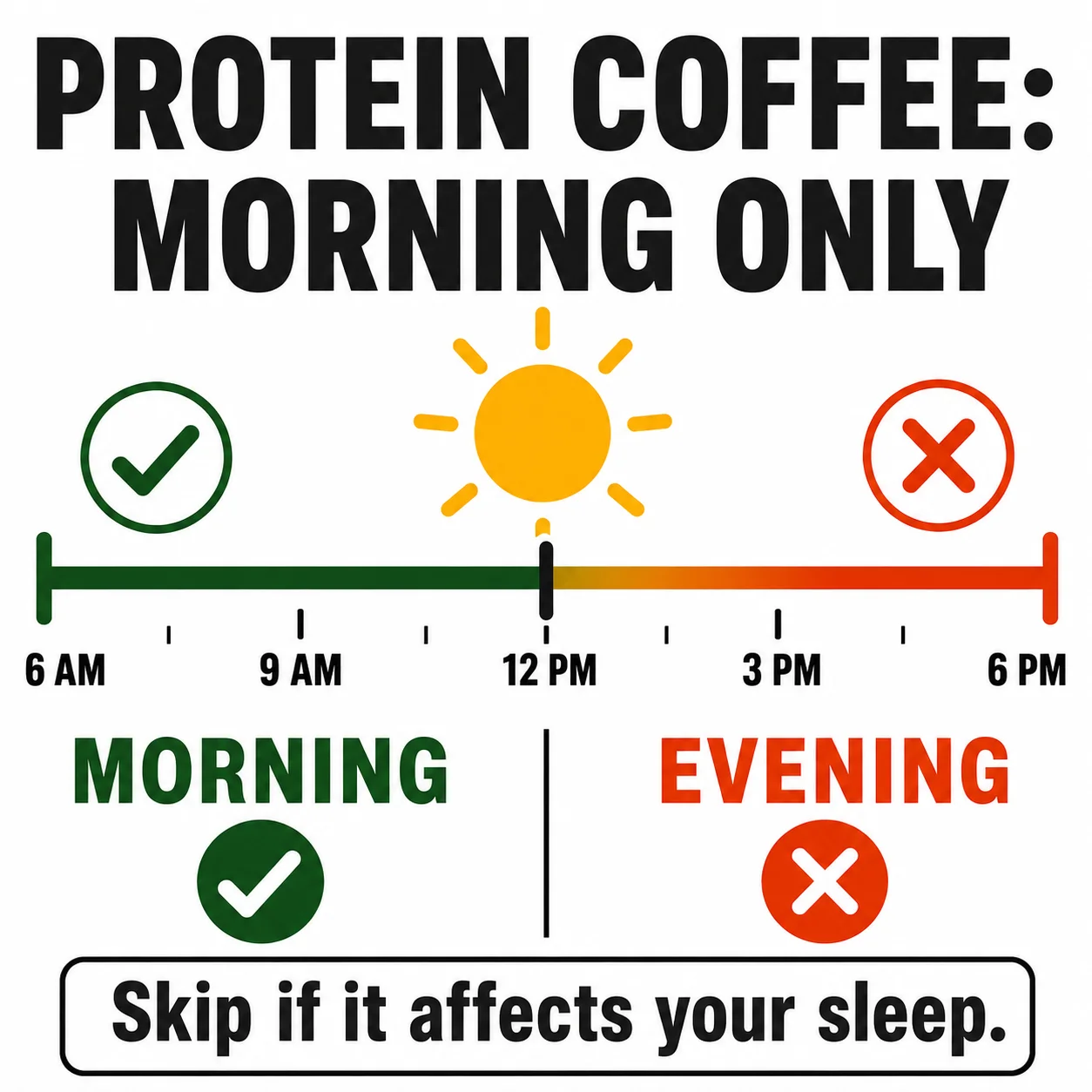
A good working rule is this: protein coffee belongs in the first half of the day. If the same drink that helps your breakfast ruins your sleep, it is not helping your overall health.
A Sensible Protein Coffee Template
A practical serving might be: 8 to 12 ounces of coffee, plus one protein source delivering 15 to 30 grams of protein, with minimal added syrup or sugar, and no additional stimulant blend.
If you use a powder, follow the label serving size. Scooping extra powder into coffee is not automatically better. More powder can worsen texture, stomach tolerance, and sweetness without meaningfully improving the usefulness of the drink.
How to Choose the Right Product
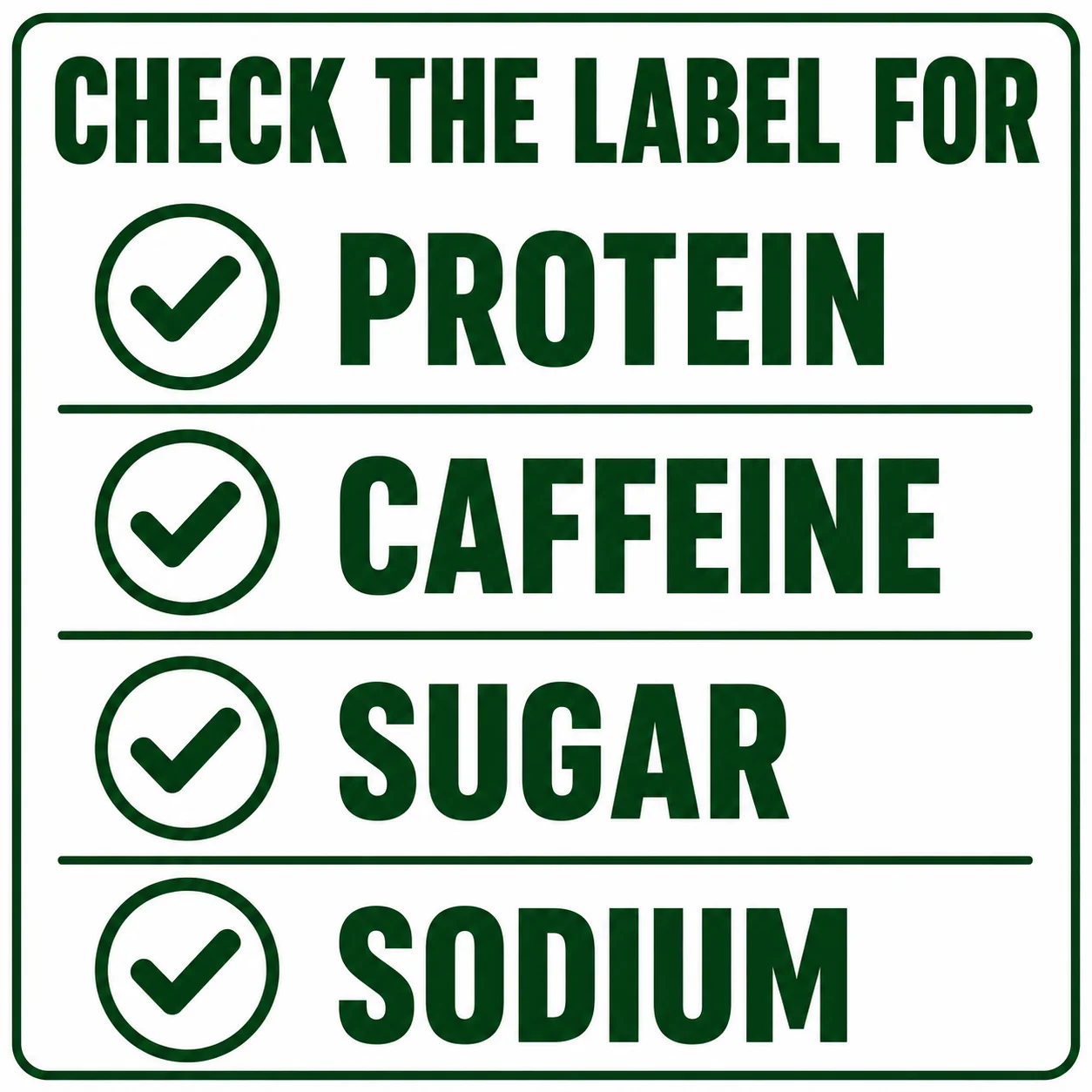
After 60, the label matters. Protein drinks and powders are not all designed for the same body or the same goals. A strong older-adult checklist looks like this:
Look First for the Basics
You want a product that clearly lists protein per serving, ideally at least 15 grams and often 20 to 30 grams; caffeine per serving if coffee or stimulants are involved; added sugar, especially if you use it daily; sodium, especially if you have heart failure, swelling, or blood pressure issues; and the full ingredient list, not a vague proprietary blend.
Match the Product to the Problem
If your issue is early fullness, choose a lighter product. If your issue is missed meals and weight loss, choose a more complete shake. If your issue is weak breakfast, choose a protein coffee strategy. If your issue is chewing fatigue, consider softer foods first and supplements second.
Watch for Fortified Ingredients and Medication Timing
Some protein drinks are fortified with calcium and vitamin D, both of which also matter for preventing osteoporosis after menopause. That can be helpful, but it also means the drink is doing more than just adding protein. Calcium supplements can interfere with some medications, including levothyroxine, if taken too close together. If your protein drink is heavily fortified or you take thyroid medication, antibiotics, or other medicines with special timing rules, ask your pharmacist how to separate them.
Be More Cautious If You Have Kidney Disease
High-protein advice should not be copied blindly if you have chronic kidney disease and are not on dialysis. A generally healthy older adult trying to preserve muscle is different from an older adult with reduced kidney function. If you know you have CKD, the safest move is not to self-prescribe multiple daily protein supplements. Ask for an individualized protein target.
Product-Selection Table
| What to Check | Better Choice After 60 | Be Careful With |
|---|---|---|
| Protein amount | 15–30 g per serving, clearly labeled | Tiny “protein” drinks with only 8–10 g unless used as add-ons |
| Caffeine | Clearly declared amount | Hidden caffeine from coffee, guarana, or stimulant blends |
| Sugar | Lower added sugar for daily use | Dessert-style drinks marketed as “protein” |
| Texture | Light clear drink if creamy shakes are hard to tolerate | Thick products you consistently leave unfinished |
| Fortification | Helpful if you need calcium or vitamin D | Heavily fortified products if medication timing is complicated |
| Ingredient list | Short, understandable, transparent | Proprietary blends and multi-stimulant formulas |
Practical Meal Plans and Comparison Tables
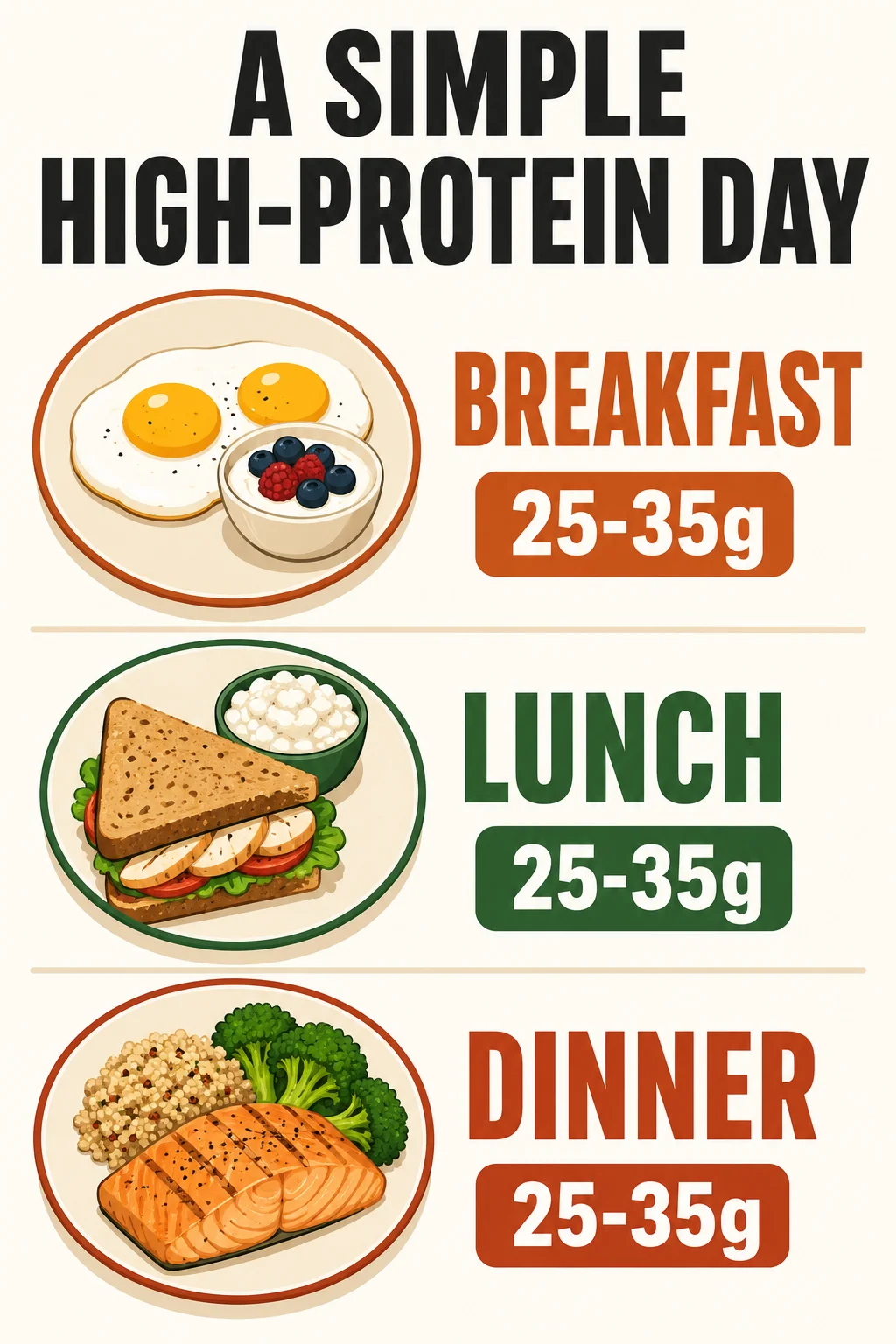
The safest long-term pattern is not breakfast protein coffee, lunch clear protein, and dinner whatever happens. The better approach is food-first with supplements filling the predictable gaps.
A Simple High-Protein Day After 60
| Meal | Example | Approx. Protein |
|---|---|---|
| Breakfast | Protein coffee plus one boiled egg or Greek yogurt | 25–35 g |
| Lunch | Turkey sandwich, cottage cheese, or bean soup plus milk | 20–30 g |
| Dinner | Salmon, chicken, tofu, or lean beef with vegetables and starch | 25–35 g |
| Optional add-on | Clear protein drink on a low-appetite afternoon | 20–30 g |
A Low-Appetite Day Plan
| Time | Practical Option | Why It Works |
|---|---|---|
| Morning | Protein coffee | Fixes a weak breakfast without a heavy meal |
| Midday | Clear protein drink and a banana or crackers | Light, easy to finish |
| Evening | Soft protein meal such as eggs, fish, tofu, yogurt bowl, or soup with beans | Lower chewing burden |
| Before bed if needed | Cottage cheese, Greek yogurt, or half a shake | Adds protein without pressuring one large meal |
Food-First Protein Staples That Often Work Well After 60
| Food | Typical Serving | Approx. Protein |
|---|---|---|
| Greek yogurt | 1 cup | 15–20 g |
| Cottage cheese | 1/2 cup | 12–14 g |
| Milk | 1 cup | 8–13 g |
| Eggs | 2 large | 12–13 g |
| Tuna pouch | 1 pouch | 15–20 g |
| Chicken or turkey | 3 oz | 20–27 g |
| Tofu | 1/2 cup | 10–15 g |
| Lentils or beans | 1 cup cooked | 14–18 g |
| Clear protein drink | 1 serving | 20–30 g |
| Ready-to-drink protein shake | 1 bottle | 20–30 g |
For more budget-friendly, food-first ideas that pair well with this plan, see our guide on rebuilding muscle after 60 with cheap everyday foods.
Decision Pathway and When to Call a Clinician
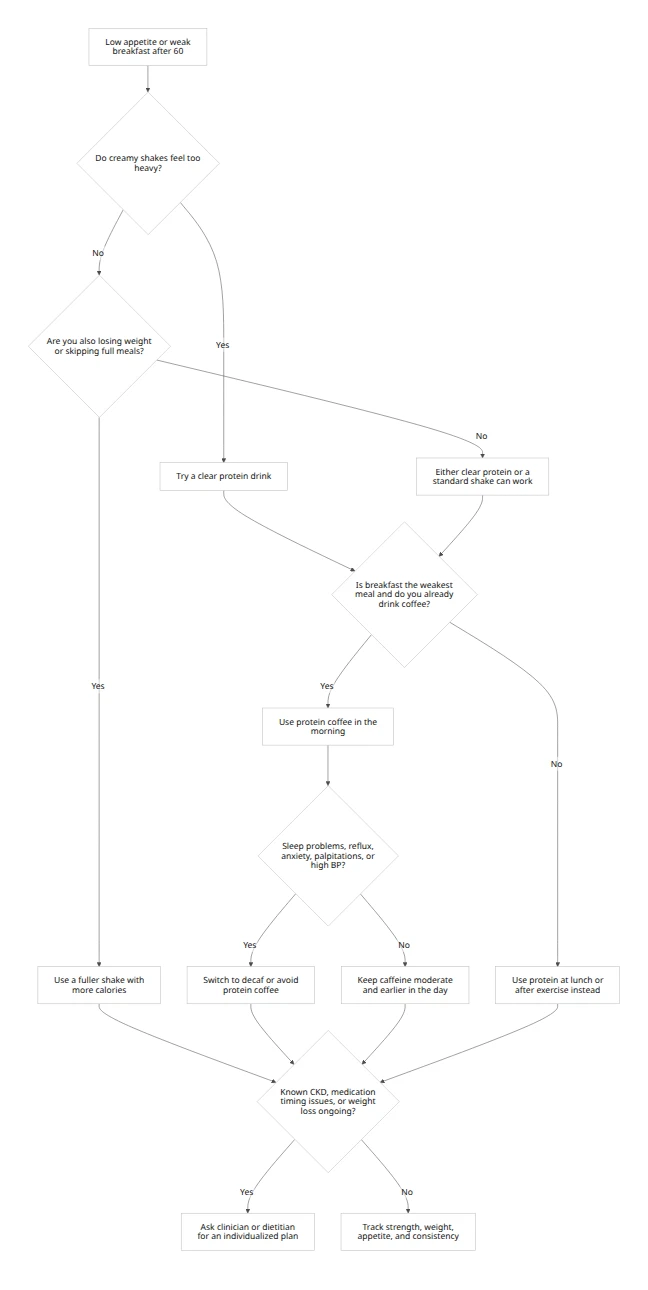
A clinician or dietitian should get involved sooner, not later, if any of these are happening: unintentional weight loss, repeated meal skipping, worsening weakness, trouble getting out of a chair, falls or near-falls, chronic nausea, reflux, or diarrhea, poor sleep made worse by caffeine, chronic kidney disease, diabetes treated with insulin or sulfonylureas, swallowing difficulty, or confusion about how to time supplements with medications.
A protein powder is not the right place to “wing it” if your health is complicated.
Frequently Asked Questions
Not universally. Clear protein is often better when appetite is low and heavy shakes feel difficult. Regular shakes are often better when you also need more calories.
Usually no. It is better viewed as a breakfast upgrade or a bridge, not a complete substitute for balanced eating.
A practical goal is often 20 to 30 grams, especially if breakfast is usually your weakest meal.
Yes, if you tolerate the caffeine, the ingredient list is reasonable, and it helps you eat better rather than replacing too many real meals.
Any can work. Whey is popular because it is a complete protein and tends to be easy to use. Plant-based options can also work well if they provide enough protein per serving and fit your digestion and preferences.
Yes. Coffee can increase stomach acid and may worsen reflux or heartburn in some people.
Caffeine may interfere somewhat with calcium absorption, which is one reason not to build your whole nutrition plan around coffee-based drinks.
For most healthy adults, up to 400 mg per day is often cited as a general upper level. Many older adults do better with less.
Then adding protein to one of them may be smart, but adding even more caffeine may not be. Count total daily caffeine from all drinks and products.
Dietary supplements are regulated by FDA, but they are not approved by FDA for safety and effectiveness before they are marketed in the same way drugs are.
Yes, indirectly or directly. Fortified ingredients, added caffeine, and timing can all matter. Ask your pharmacist if your medication has timing restrictions.
Do not assume a higher-protein plan is right for you. You may need a different target than a healthy older adult without CKD.
Usually not by itself. If weight is dropping unintentionally, you may need a more calorie-dense option and a fuller nutrition review.
Yes. Protein works best for muscle preservation when paired with resistance exercise and regular activity.
Fix the weakest meal. If breakfast is just coffee, turn it into a protein coffee or pair it with Greek yogurt or eggs. If afternoons are when intake falls apart, use clear protein then.
Authoritative Outbound Sources Used
The following government, clinical, nutrition, and peer-reviewed resources support the article’s recommendations on protein intake, caffeine safety, product selection, and healthy aging.
- FDA – Information for Consumers on Using Dietary Supplements
- USDA FoodData Central
- MedlinePlus – Caffeine
- Nutrients – Protein Consumption and the Elderly: What Is the Optimal Level of Intake?
- CDC – Physical Activity Guidelines for Older Adults
- EWGSOP2 – Sarcopenia: Revised European Consensus on Definition and Diagnosis
- MedlinePlus – Protein in Diet
- NIH Office of Dietary Supplements – Vitamin D
- NIH Office of Dietary Supplements – Calcium
- FDA – Dietary Supplements
- FDA – Spilling the Beans: How Much Caffeine Is Too Much?
- USDA MyPlate – Older Adults
- CDC STEADI – Timed Up and Go Test
Medical note: These links are provided for education and further reading. Individual protein, caffeine, and supplement decisions should be reviewed with a qualified healthcare professional.
Related reading: For a food-first plan, see what to eat to gain muscle after 60.
Kitchen safety note: If you prepare oil-based foods, follow this garlic-in-oil safety guide for safe storage.
⚕️ Medical Disclaimer
The information provided on this page is for educational purposes only and is not intended as medical advice, diagnosis, or treatment. Always consult a qualified healthcare professional before making changes to your diet, starting any supplement, or if you have an existing medical condition. KeepFitQuote does not provide medical diagnoses or treatment recommendations. Read our full disclaimer.