
For U.S. adults 50+: what’s known, what’s not, and how to use dandelion root safely—if you choose to.
If you’re curious whether dandelion root might offer any support for cancer, you’re not alone—this humble “weed” has become a popular topic in natural-health circles. But before you reach for a tincture or tea, it helps to separate hopeful headlines from what’s actually been studied. What does the research actually say? Is it safe with my medicines? How would I use it without overdoing it? These are exactly the right questions to ask, and this guide walks through each one carefully.
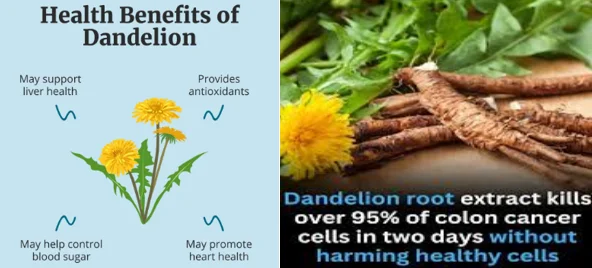
For readers 50 and older, the stakes around any new supplement are a bit higher—more medications, more chronic conditions, and more potential for interactions. That’s why this guide covers not just what dandelion root might do, but also the safety basics: how it can interact with blood thinners like warfarin, mood stabilizers like lithium, certain antibiotics, diuretics, and diabetes medications, and what to know if you have a ragweed allergy. Think of this as a balanced briefing you can bring to your next doctor’s visit, not a sales pitch.
Dandelion root has a long history in folk and traditional medicine, used across Europe, Asia, and North America for everything from digestive complaints to mild fluid retention. Modern researchers have started taking a closer look at some of its compounds—including taraxasterol, chicoric acid, and various polysaccharides—to understand whether traditional uses hold up under scientific scrutiny. The honest answer, as you’ll see throughout this guide, is “partially, and mostly in early-stage research.”
A quick, important note on cancer: dandelion root is not a treatment and shouldn’t replace standard care. Any possible role—if at all—would be as a supportive add-on discussed with your oncology team, never as a substitute for chemotherapy, radiation, surgery, or other prescribed treatments. Anyone who tells you otherwise is overstating the evidence, and for seniors managing cancer alongside other health conditions, that distinction matters enormously.
Read on for a clear look at benefits, risks, and smart ways to use (or skip) dandelion root after 60.
Key facts
- Cancer claims aren’t proven in people. Current findings come from cells/animals; no clinical trials show prevention or treatment in humans.
- Why some seniors try it: gentle fluid support (often leaf) and digestive/bile support (often root). Human data are limited.
- Caution flags: warfarin (vitamin-K–rich greens), lithium, quinolone antibiotics, bile-duct/gallbladder disease, Asteraceae (ragweed) allergy, and potassium concerns in kidney disease.
These three points are worth bookmarking, because they summarize the entire guide in miniature. The gap between “cells in a lab dish responded to dandelion extract” and “this will help my health condition” is enormous—and it’s a gap that applies to thousands of natural compounds, not just dandelion. Researchers often describe this as the difference between in vitro (test tube) findings and clinical (real patient) outcomes. Many promising lab results never translate into human benefit once tested in actual trials, often because of how the body absorbs, processes, and eliminates a compound—a field called pharmacokinetics.
For seniors specifically, the caution flags deserve extra weight. Aging kidneys and livers process medications and herbs more slowly, which means interactions that might be minor in a 30-year-old could be more pronounced in someone 65 or older. The Beers Criteria, a widely used guideline for medication safety in older adults, doesn’t specifically address dandelion, but its underlying philosophy—start low, go slow, and review everything with a pharmacist—applies just as well to herbal supplements. If you take five or more medications (a common situation called polypharmacy among older adults), adding any new supplement, including dandelion, is worth a quick conversation with your pharmacist, who can check for interactions you might not think to ask about.
What research really says about “cancer support”
- Colorectal models: Dandelion root extract triggered cancer-cell death and slowed mouse tumor growth (PLOS ONE, 2016).
- Breast-cancer cell lines: With all-trans retinoic acid, extracts showed additive effects (Scientific Reports, 2023).
These are preclinical signals—interesting, not treatment guidance. Balanced summaries: NCCIH and Memorial Sloan Kettering (About Herbs). - NCCIH — Dandelion
- MSK About Herbs — Dandelion
- PLOS ONE (2016): https://journals.plos.org/plosone/article?id=10.1371/journal.pone.0157824
- Sci Reports (2023): https://www.nature.com/articles/s41598-023-42177-z
To understand what these studies actually showed, it helps to know how this kind of research typically unfolds. The 2016 PLOS ONE study took dandelion root extract and applied it directly to colorectal cancer cells grown in petri dishes, then also tested it in mice with implanted tumors. The extract triggered a process called apoptosis—essentially, a built-in “self-destruct” signal that cancer cells often evade—and the treated mice showed slower tumor growth than untreated controls. That’s a genuinely interesting finding, but it’s many steps removed from a human swallowing a cup of dandelion tea and having any comparable effect reach a tumor in their body.
The 2023 Scientific Reports study looked at dandelion extract combined with all-trans retinoic acid (a vitamin A derivative already used in some cancer treatments) against breast cancer cell lines, finding additive effects when the two were combined. Again, this is cell-culture research—valuable for identifying compounds worth studying further, but not evidence that taking dandelion alongside cancer medications would replicate those results in a person. Drug absorption, metabolism, dosing, and the complexity of a living body all change the picture dramatically.
For seniors and their families navigating a cancer diagnosis, the most useful takeaway is this: it’s completely reasonable to mention dandelion root to your oncology team if you’re curious, and resources like the NCCIH dandelion page and Memorial Sloan Kettering’s “About Herbs” database (used by integrative oncology programs nationwide) offer balanced, regularly updated summaries written specifically to help patients and clinicians have these conversations. Bringing a printed page from one of these sources to an appointment is often more productive than searching forums or social media, which tend to amplify preliminary findings far beyond what the evidence supports.
Everyday reasons seniors use dandelion (what’s known)
1) Fluid balance
Traditional texts allow dandelion (especially leaf) for increased urination. Because leaf carries potassium, those with kidney disease or on diuretics need individualized advice.
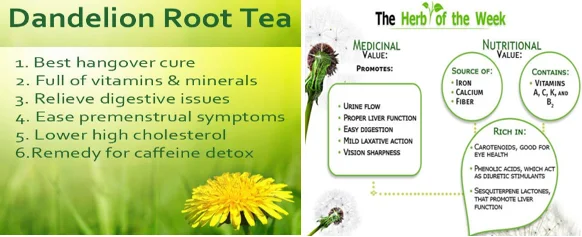
The mild diuretic effect attributed to dandelion leaf has actually been studied in a small human pilot trial, which found that participants produced more urine in the hours after taking a dandelion leaf extract compared to baseline. It’s a modest effect compared to prescription diuretics like furosemide or hydrochlorothiazide, but it’s one of the few areas where dandelion has at least some human data behind it. For seniors who experience mild, occasional bloating or puffiness—say, after a salty meal—a cup of dandelion leaf tea is a low-stakes option many people find pleasant as part of a routine.
That said, “mild diuretic” still means it changes fluid and electrolyte balance, which is exactly the territory where prescription diuretics, ACE inhibitors, and blood pressure medications also operate. Combining a natural diuretic with these medications could theoretically compound their effects, leading to dehydration, low blood pressure, or electrolyte shifts like low sodium or potassium imbalances. If you’re on a “water pill” for heart failure, high blood pressure, or swelling in the legs, this is a conversation to have with your prescriber before adding dandelion leaf to your daily routine—not because it’s dangerous outright, but because two diuretics together deserve monitoring.
2) Digestion & bile flow
European/Canadian references list root for dyspepsia and bile stimulation. A small after-meal cup is a common approach.
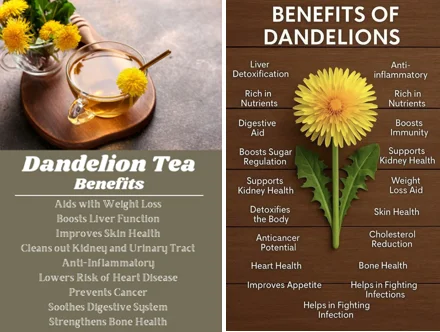
Dandelion root’s reputation as a digestive aid comes largely from its traditional classification as a “bitter”—a category of herbs that includes gentian, dandelion, and artichoke leaf, all believed to stimulate digestive secretions when tasted. The theory, supported by some physiological research, is that bitter compounds trigger receptors in the mouth and stomach that prompt the release of saliva, stomach acid, and bile, potentially easing the heavy, sluggish feeling some people get after a rich meal. Health Canada has approved dandelion root products with claims related to digestive support, based on this traditional-use evidence.
For seniors who notice more frequent bloating, fullness, or sluggish digestion as they age—a very common complaint, often related to slower gut motility and reduced stomach acid production over time—a small cup of roasted dandelion root tea after a meal is a gentle, low-risk way to explore whether bitters help. However, anyone with active gallstones, bile duct blockages, or gallbladder inflammation should steer clear of bile-stimulating herbs entirely, since increasing bile flow in a blocked system can worsen pain or trigger a gallbladder attack—more on this in the safety section below.
3) Nutrition from greens
Dandelion greens add fiber and minerals (notably potassium). Food benefits don’t map one-to-one to capsules.
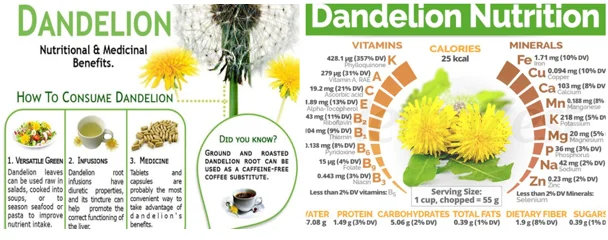
Dandelion greens are nutritionally similar to other dark leafy vegetables like kale or spinach—rich in vitamin K, vitamin A (as beta-carotene), calcium, and potassium, along with a meaningful dose of fiber. For seniors focused on bone health, the vitamin K content is notable, since this vitamin plays a role in bone mineralization alongside calcium and vitamin D. A half-cup of cooked dandelion greens provides a respectable amount of fiber, which supports the steady digestion and healthy gut bacteria that become increasingly important for immune function and regularity after 60.
It’s worth emphasizing the distinction the heading makes: eating dandelion greens as part of a salad or sautéed side dish is simply eating a nutrient-dense vegetable, with the same general safety profile as any leafy green. Capsules, tinctures, and concentrated extracts are a different story—they deliver a much more concentrated dose of active compounds, which is where most of the interaction concerns (especially with warfarin and the vitamin K content of greens) come into sharper focus. If you enjoy dandelion greens in cooking, that’s a reasonable and traditional way to use this plant; just keep portions consistent if you’re on blood thinners, the same way you would with spinach or kale.
Related reading on KeepFitQuote (inbound):
Best Foods for Body Detox
What Foods Cause Inflammation?
Best Gentle Constipation Relief for Seniors
Safety first: who should pause or avoid
- Warfarin (Coumadin®): Keep vitamin-K intake steady if you add greens; sudden changes can move your INR. Guidance: https://uihc.org/educational-resources/warfarin-your-diet-and-vitamin-k-foods
- Lithium: Diuretic-like effects can alter levels—get medical advice.
- Quinolone antibiotics (e.g., ciprofloxacin): Absorption may drop; spacing or avoidance may be needed.
- Bile-duct obstruction, cholangitis, gallstones: EMA advises against root here: https://www.ema.europa.eu/en/medicines/herbal/taraxaci-officinalis-radix
- Asteraceae allergy: Possible cross-reaction.
- Kidney disease / potassium limits: Leaf can add meaningful potassium—review with your clinician.
- U.S. supplements aren’t FDA-approved before sale; quality varies. Background: https://www.nccih.nih.gov/health/dandelion • Interactions: https://www.drugs.com/mtm/dandelion.html
Let’s unpack the warfarin interaction a bit further, since it’s the one that generates the most questions. Warfarin works by blocking the activity of vitamin K, which your liver needs to produce certain clotting factors. Your doctor calibrates your warfarin dose based partly on your typical, consistent vitamin K intake—not on eliminating vitamin K entirely. The danger isn’t eating greens; it’s suddenly changing how much you eat. If you’ve never eaten dandelion greens and decide to start having a cup daily, that shift could nudge your INR (the blood test that monitors warfarin’s effect) in ways that matter. The safest approach is to keep your intake of any vitamin K-rich food, including dandelion greens, kale, spinach, and broccoli, roughly consistent week to week, and to mention any new addition to your anticoagulation clinic so they can watch for changes at your next INR check.
The lithium and quinolone antibiotic cautions stem from how dandelion may affect kidney handling of these drugs and gut absorption, respectively—both are narrow-therapeutic-index situations, meaning the difference between a helpful and harmful blood level is small, so even modest interactions can matter. The gallbladder caution is more mechanical: if bile can’t flow freely due to a blockage or stones, stimulating more bile production (which dandelion root traditionally does) can increase pressure and pain rather than help. And for the roughly 1-2% of adults with a known ragweed or Asteraceae family allergy (which also includes chamomile, marigold, and chrysanthemum), dandelion shares enough botanical similarity that cross-reactions—ranging from mild skin irritation to more significant allergic responses—are a real possibility worth discussing with an allergist before trying any part of the plant.
How older adults typically take dandelion root
- Tea (decoction / roasted “coffee”): Simmer 1 tsp (≈2–3 g) dried, chopped root in 8–10 oz water for 10–15 min; strain. Start with 1 cup/day and review medications.
- Capsules/tinctures: Products vary; traditional references cluster around ~3–4 g/day dried root in split doses.
- Buying tips: Prefer third-party–tested brands; skip flashy multi-herb “detox” mixes if you’re on several prescriptions. MSK’s profile (above) is a solid reference.
More caffeine-light routines (inbound): Matcha Benefits for Older Adults — https://keepfitquote.com/matcha-benefits-for-older-adults/
If you and your healthcare provider decide dandelion root is reasonable to try, starting low and going slow is the wisest approach—the same principle used when introducing any new medication or supplement to an older adult’s routine. A single cup of roasted dandelion root “coffee” in the morning, continued for a week or two while you note any digestive changes, bowel habit shifts, or unusual symptoms, gives you a chance to notice an individual reaction before increasing frequency. Roasted dandelion root has a deep, slightly bitter, coffee-like flavor without caffeine, which makes it appealing to seniors who are cutting back on caffeine for sleep or blood pressure reasons but still enjoy a warm ritual beverage.
When it comes to capsules and tinctures, “third-party tested” means a brand has paid an independent laboratory (such as USP, NSF, or ConsumerLab) to verify that the product actually contains what the label claims, without contamination from heavy metals, pesticides, or undeclared ingredients—an important consideration since the FDA does not test supplements before they reach store shelves. Multi-herb “detox” or “cleanse” blends often combine dandelion with other diuretic, laxative, or stimulant herbs, which multiplies the number of potential interactions with your existing medications. For someone managing several prescriptions, a single-ingredient dandelion product is far easier for a pharmacist or doctor to evaluate than a proprietary blend with a dozen botanicals.
Doctor-visit prompts
- “I’m considering dandelion root tea for mild bloating. Any issues with potassium or my diuretic/BP meds?”
- “I’m on warfarin. If I add dandelion greens, how do I keep vitamin-K intake steady?”
- “History of gallstones—is root tea appropriate for me?”
These three prompts are designed to do a lot of work in a short appointment. Bringing a written question to a doctor’s visit—rather than mentioning it in passing on your way out the door—signals that you’re genuinely considering this and want a real answer, which tends to get a more thorough response. It also gives your provider a chance to check your medication list and recent lab work (like kidney function or INR) before answering, rather than guessing from memory.
If your doctor isn’t familiar with dandelion root specifically, that’s not unusual—herbal supplements aren’t a major focus of most medical training. Asking your pharmacist is often just as useful, since pharmacists have easy access to interaction-checking databases that include herbal supplements alongside prescription drugs. Many community pharmacies now offer free medication reviews, sometimes called “brown bag” consultations, where you bring in everything you take—prescriptions, over-the-counter products, and supplements—for a comprehensive check. This is an ideal time to ask about dandelion root or any other herbal product you’re curious about.
Useful outbound resources
- NCCIH — Dandelion: https://www.nccih.nih.gov/health/dandelion
- MSK — About Herbs: Dandelion: https://www.mskcc.org/cancer-care/integrative-medicine/herbs/dandelion
- PLOS ONE (2016): https://journals.plos.org/plosone/article?id=10.1371/journal.pone.0157824
- Scientific Reports (2023): https://www.nature.com/articles/s41598-023-42177-z
- EMA monograph: https://www.ema.europa.eu/en/medicines/herbal/taraxaci-officinalis-radix
- UI Health Care — Warfarin & Vitamin K: https://uihc.org/educational-resources/warfarin-your-diet-and-vitamin-k-foods
- Drugs.com — Interactions: https://www.drugs.com/mtm/dandelion.html
Each of these resources serves a slightly different purpose, and knowing which one to reach for can save time. The EMA (European Medicines Agency) monograph is a regulatory-style document that summarizes traditional use, dosing, contraindications, and safety data in a fairly technical but thorough way—useful if you want the closest thing to an “official” European safety assessment. The NCCIH page, from the National Institutes of Health, is written in plain language for the general public and is a good starting point for most readers. MSK’s “About Herbs” database is specifically designed for cancer patients and their care teams, with a consistent format covering mechanism, interactions with cancer treatments, and an overall evidence summary—making it especially relevant given this guide’s focus on cancer-related questions. The Drugs.com interaction checker lets you enter your specific medications alongside dandelion to see flagged interactions, which can be a helpful first pass before a pharmacist conversation.
Related inbound reading on KeepFitQuote
- Matcha Benefits for Older Adults — https://keepfitquote.com/matcha-benefits-for-older-adults/
- Best Foods for Body Detox — https://keepfitquote.com/best-foods-for-body-detox-expert-guide-to-natural-internal-cleansing/
- What Foods Cause Inflammation? — https://keepfitquote.com/foods-that-cause-inflammation/
- Best Gentle Constipation Relief for Seniors — https://keepfitquote.com/best-gentle-constipation-relief-for-seniors/
If dandelion root’s digestive or fluid-balance properties caught your interest, these related articles round out the picture with complementary approaches. Matcha offers a different caffeine-light ritual with its own antioxidant profile; the detox and anti-inflammatory food guides explore how everyday dietary choices—not just single herbs—shape how seniors feel day to day; and the constipation relief guide addresses one of the most common digestive concerns among older adults with gentle, evidence-informed strategies that pair well with the bitter-herb approach discussed above.
Q&A
- Does dandelion root cure cancer? No—evidence is preclinical.
- Is it safe for older adults? Often tolerated; certain drugs/conditions can rule it out.
- Leaf vs. root? Leaf for diuresis; root for digestion/bile (traditional).
- Blood thinners? Keep vitamin-K intake consistent if you eat greens; coordinate with your clinic.
- Water retention? May help mildly; don’t pair with prescription diuretics without approval.
- Gallbladder issues? Avoid root with bile-duct obstruction, cholangitis, or active gallstones unless cleared.
- Allergies? Asteraceae-sensitive individuals may react.
- Typical amounts? About 3–4 g/day dried root (split doses) is commonly cited in traditional sources.
- Daily roasted-root “coffee”? Reasonable in modest amounts if meds/labs are reviewed.
- Blood sugar effects? Hints exist; strong human data are limited—monitor if on diabetes meds.
- Choosing a product? Look for third-party testing; avoid complicated blends with many actives.
- When to stop? Rash, GI upset, dizziness, or unusual urination changes—stop and contact your clinician.
Quick “how-to” (if cleared by your clinician)
Roasted-root cup: Add 1–2 tsp roasted, chopped root to 10 oz water; simmer 12 minutes, strain, sip after meals.
A few small touches can make this routine more enjoyable and sustainable. Many people find roasted dandelion root tastes pleasantly earthy and slightly nutty—closer to a mild coffee or roasted chicory than to typical herbal teas—and it pairs well with a splash of milk or a non-dairy alternative if you enjoy your coffee that way. Because it’s caffeine-free, it’s a reasonable option for an after-dinner ritual without the sleep disruption that regular coffee can cause, which matters for seniors already managing lighter, more easily disrupted sleep patterns. If you’re using loose dried root rather than tea bags, a small tea infuser or French press makes straining simple, and leftover brewed tea keeps in the refrigerator for a day if you’d rather make a small batch at once.
Bottom line for seniors
If it’s safe with your meds and history, dandelion root tea can be a caffeine-free ritual. Treat it as complementary, not a cancer therapy, and decide alongside your clinician.
The overall picture for dandelion root is neither a
Written by Allan Smith · Medically reviewed by Dr. Mark McGarey, MBBS · Last Updated: September 13, 2026
Sources: NIH NCCIH: Dandelion; CDC: Healthy Aging; MedlinePlus: Dandelion.
miracle nor a danger—it’s an old, generally mild herb with a few traditional uses that have modest support, a couple of genuinely interesting but very early cancer-related lab findings, and a short, manageable list of interaction concerns that mostly affect people on specific medications or with specific conditions. For most healthy older adults not on warfarin, lithium, certain antibiotics, or with gallbladder disease, an occasional cup of dandelion root tea is unlikely to cause harm and may offer a small digestive comfort. The key is treating it the way you’d treat any new addition to your routine after 60: start small, watch how you feel, keep your care team in the loop, and never let curiosity about a supplement substitute for proven medical care—especially when it comes to cancer.
⚕️ Medical Disclaimer
The information provided on this page is for educational purposes only and is not intended as medical advice, diagnosis, or treatment. Always consult a qualified healthcare professional before making changes to your diet, starting any supplement, or if you have an existing medical condition. KeepFitQuote does not provide medical diagnoses or treatment recommendations. Read our full disclaimer.
Related Posts







I appreciate, cause I found exactly what I was looking for. You’ve ended my four day long hunt! God Bless you man. Have a great day. Bye