
Leg cramps can stop you mid-step, and if you’re past 50, you’ve probably felt it — those tight calves at night, the weak feeling in your thighs, or the sudden spasm that wakes you at 2 a.m. The right vitamins and minerals can make a real difference, and most are available through food and simple supplementation.

Why Legs Give You Trouble as You Age
Muscles change with age. They tire faster, don’t bounce back like they used to, and blood flow slows. Some medications common in older adults — diuretics, statins, and certain blood pressure drugs — deplete key minerals that keep muscles working smoothly. Add in reduced appetite, lower stomach acid (which impairs mineral absorption), and less time outdoors, and it’s easy to see why leg cramps and weakness become more common after 50.

The technical term for age-related muscle loss is sarcopenia — and it begins as early as your 30s, accelerating after 60. Adults lose roughly 3–5% of muscle mass per decade after 30, and up to 15% per decade after 70 without intervention. This isn’t just about strength; less muscle means reduced balance, slower metabolism, and greater vulnerability to falls — the leading cause of injury-related death in Americans over 65.
The micronutrient piece is often underappreciated. Muscle contraction is an electrochemical process: electrical signals from the nervous system trigger the release of calcium ions inside muscle fibers, which then initiate the contraction — and magnesium, potassium, and sodium are all required to reset the system for the next contraction. When any of these electrolytes runs low, the muscle can’t fully relax between contractions, producing the sustained involuntary contraction we experience as a cramp. Understanding this cascade explains why no single vitamin or mineral fixes cramps — optimal leg health requires addressing the whole picture.
One often-overlooked contributor: certain widely prescribed medications actively deplete these key nutrients. Thiazide diuretics (hydrochlorothiazide, chlorthalidone) lower both potassium and magnesium. Proton pump inhibitors (omeprazole, pantoprazole) impair magnesium absorption over time. Statins have been associated with muscle pain and cramps in 5–10% of users, possibly through CoQ10 depletion. If you take any of these and experience frequent leg cramps, mention it specifically to your doctor — a medication review or targeted supplementation may resolve the problem directly.
Vitamin D – Keeps Legs From Feeling Wobbly
Low vitamin D is sneaky. It doesn’t just hurt bones; it makes muscles feel weaker. If balance feels off or legs feel heavy on stairs, vitamin D deficiency may be a contributing factor. Ask your doctor for a 25-OH vitamin D blood test — it’s the definitive way to know your levels.
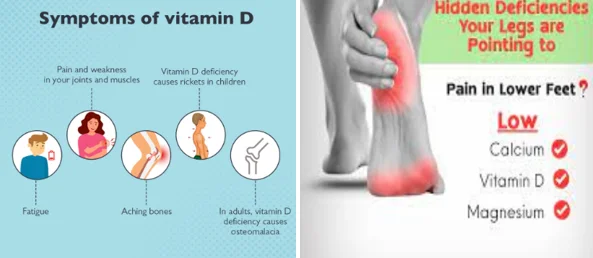
Vitamin D receptors are found in muscle tissue throughout the body, and adequate vitamin D is required for normal muscle fiber development, calcium signaling within muscle cells, and the synthesis of muscle proteins. A landmark meta-analysis of 13 randomized trials in BMJ (2009) found that vitamin D supplementation reduced fall risk by 19% in adults over 65 — a clinically meaningful reduction driven by improved muscle strength and reaction time, not just bone density.
Deficiency is remarkably common in older adults: an estimated 41% of U.S. adults are deficient, rising to over 60% in adults over 65, particularly those who spend limited time outdoors, have darker skin, or live in northern latitudes. The skin’s ability to synthesize vitamin D from sunlight also declines with age — a 70-year-old produces roughly 75% less vitamin D from the same sun exposure as a 20-year-old.
The recommended dietary allowance for adults over 70 is 800 IU daily, but many clinicians now target 1,500–2,000 IU for deficient individuals, guided by blood levels. Food sources alone (fatty fish, egg yolks, fortified dairy) are rarely sufficient to correct deficiency; supplementation is typically necessary. Vitamin D3 (cholecalciferol) raises blood levels more effectively than D2 and is the preferred supplement form. Take it with a meal containing fat for best absorption, as it’s a fat-soluble vitamin.
Magnesium – Best Friend for Cramp Relief
If you wake up with tight calves, think magnesium. It helps muscles relax after they tighten. Without enough of it, muscles stay in a contracted state longer than they should — the biological root of nighttime leg cramps. Good food sources include spinach, almonds, pumpkin seeds, black beans, and dark chocolate.
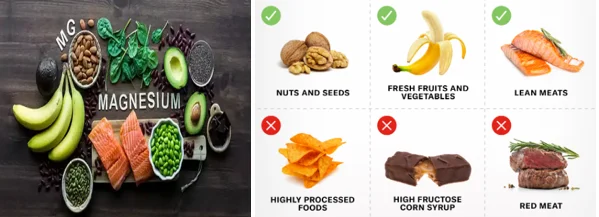
Magnesium is the fourth most abundant mineral in the body and participates in over 300 enzymatic reactions, including every step of ATP (cellular energy) production. Its role in muscle function is specific: magnesium acts as a natural calcium antagonist inside muscle cells. Calcium triggers contraction; magnesium enables relaxation. When magnesium is low, calcium dominates — keeping muscles in a state of heightened excitability that makes cramping far more likely, particularly during sleep when circulation slows and muscles cool slightly.
Approximately 48% of Americans consume less than the recommended amount of magnesium, and older adults are disproportionately affected due to reduced dietary intake, lower gut absorption efficiency, and medication-related depletion. The RDA for adults over 51 is 420 mg/day for men and 320 mg/day for women. A 2017 review in Nutrients confirmed that magnesium supplementation significantly reduced the frequency and intensity of nocturnal leg cramps in older adults, with effects typically noticeable within 4–6 weeks of consistent supplementation.
If you supplement, magnesium glycinate or magnesium malate are the best-tolerated forms — they absorb well and are least likely to cause the loose stools associated with magnesium oxide and magnesium citrate at higher doses. Start at 200–300 mg taken in the evening (magnesium’s muscle-relaxing effect also supports better sleep) and increase slowly as tolerated. Topical magnesium oil applied to the calves before bed is an alternative for those with sensitive digestion, though the evidence for transdermal absorption is less robust than for oral forms.
Potassium – Calms Muscle Twitching
Potassium keeps muscles and nerves working together. Low potassium often shows up as calf cramps or twitchy legs — especially in people who take diuretics, have heavy sweat loss, or eat a diet low in fruits and vegetables. Bananas are the classic source, but white potatoes, avocados, and cooked spinach actually contain more potassium per serving.
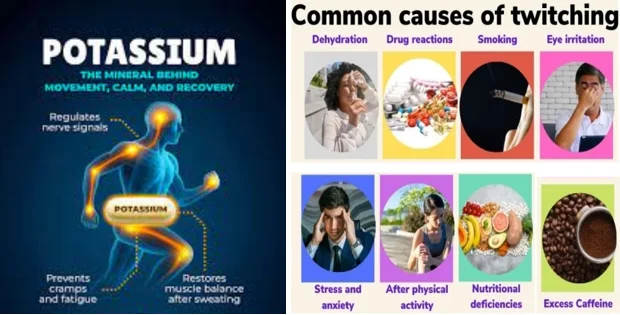
Potassium’s role in muscle function is inseparable from the sodium-potassium pump — the cellular mechanism that maintains the electrical charge difference (resting membrane potential) across muscle and nerve cell membranes. Every time a muscle contracts, sodium rushes in and potassium rushes out; the pump then restores the balance using ATP. When potassium is depleted, this pump malfunctions, making muscle cells hyperexcitable and prone to spontaneous discharge — experienced as twitching, cramping, or weakness.
Hypokalemia (clinically low potassium) is particularly common in adults taking loop diuretics (furosemide/Lasix) or thiazide diuretics for heart failure or hypertension. Even mild potassium depletion — below the clinical threshold for hypokalemia — can produce symptomatic leg cramps in susceptible individuals. If you take a diuretic and experience frequent leg cramps, ask your doctor about a potassium blood test and whether a potassium-sparing diuretic or potassium supplement would be appropriate.
The adequate intake for potassium is 2,600 mg/day for women and 3,400 mg/day for men — amounts achievable through diet alone with consistent fruit and vegetable intake. One medium baked potato with skin provides 926 mg; one cup of cooked white beans provides 1,004 mg; one avocado provides 975 mg. Potassium supplements above 99 mg per serving require a prescription or label warning in the U.S. due to the risk of cardiac arrhythmia in people with kidney disease — another reason to pursue potassium through food first.
Calcium – Not Just for Bones
Strong bones make you steady, but calcium also helps muscles contract. Too little can mean shaky legs or even muscle spasms. Dairy, fortified plant milks, canned sardines with bones, and leafy greens like kale and bok choy are excellent dietary sources.
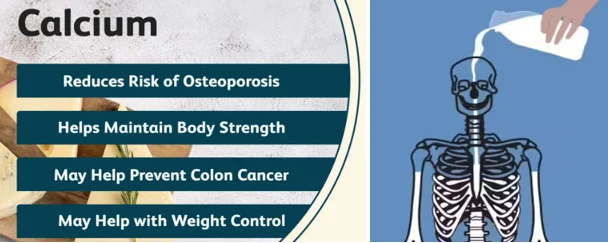
Calcium is the direct trigger for muscle contraction: when a nerve signal arrives at a muscle fiber, it releases a flood of calcium ions from the sarcoplasmic reticulum (the muscle cell’s internal calcium store) into the cell interior. These ions bind to a protein called troponin, which physically moves the structures that generate contraction. Without adequate calcium — both in the stores and circulating in the blood — this trigger mechanism is impaired, leading to weakness, spasm, and in severe cases (hypocalcemia) muscle tetany.
For adults over 50, the RDA is 1,200 mg/day for women and 1,000 mg/day for men. Two important caveats: first, calcium absorption requires vitamin D — the two must be considered together, not in isolation. Second, calcium from food is absorbed and utilized more efficiently than calcium from supplements; exceeding 500 mg in a single supplement dose saturates the absorption mechanism. If you supplement, split doses and take them with meals for best uptake.
Recent concern has emerged about high-dose calcium supplementation and cardiovascular risk. A 2019 update from the U.S. Preventive Services Task Force found insufficient evidence to recommend calcium supplementation for fracture prevention in community-dwelling postmenopausal women, and some analyses have associated supplement doses above 1,000 mg/day with elevated cardiovascular risk. The consensus: prioritize calcium from food, supplement only if dietary intake is genuinely inadequate, and avoid mega-doses. Your doctor can assess your actual intake and bone density before recommending supplementation.
B Vitamins – Nerves Need Them
Tingling or numb legs? Could be low B12. It’s common because older bodies don’t absorb it as well — stomach acid production declines with age, and B12 requires a protein called intrinsic factor (produced by stomach cells) to be absorbed. Eggs, lean meat, dairy, and fortified cereals are good sources; those on metformin or proton pump inhibitors are at particular risk of depletion.

B12 deficiency produces neurological symptoms through a specific mechanism: B12 is required for myelin synthesis — the fatty sheath that insulates nerve fibers and enables rapid signal transmission. Without adequate B12, myelin degrades, causing the tingling, numbness, burning sensations, and leg weakness characteristic of peripheral neuropathy. These nerve symptoms can be irreversible if deficiency is prolonged, making early detection critically important. The National Institute on Aging recommends B12 testing for any adult over 50 with unexplained neurological symptoms.
B6 (pyridoxine) contributes to neurotransmitter synthesis and red blood cell production, both relevant to nerve function and muscle oxygenation. B1 (thiamine) is essential for nerve conduction and energy metabolism in muscle tissue; deficiency (most common in people who drink heavily) can cause a painful peripheral neuropathy clinically similar to B12 deficiency. The entire B-complex works synergistically — supplementing with a B-complex rather than isolated B vitamins is often more practical and better tolerated.
For B12 specifically: adults over 50 are advised to get most of their B12 from fortified foods or supplements because the crystalline form in these products doesn’t require stomach acid for absorption — bypassing the absorption problem caused by declining intrinsic factor. Sublingual B12 (dissolved under the tongue) is equally effective to standard oral supplements and is a good option for those with significant absorption concerns. The recommended dose for deficiency correction is typically 500–1,000 mcg daily — far above the RDA of 2.4 mcg, because absorption efficiency at these higher doses makes up for impaired intrinsic factor function.
Vitamin E – Better Blood Flow
If legs feel heavy or achey, poor circulation might be part of it. Vitamin E helps blood move better by inhibiting platelet aggregation and supporting healthy blood vessel lining (endothelium). Nuts, seeds, wheat germ oil, and sunflower oil are excellent sources.
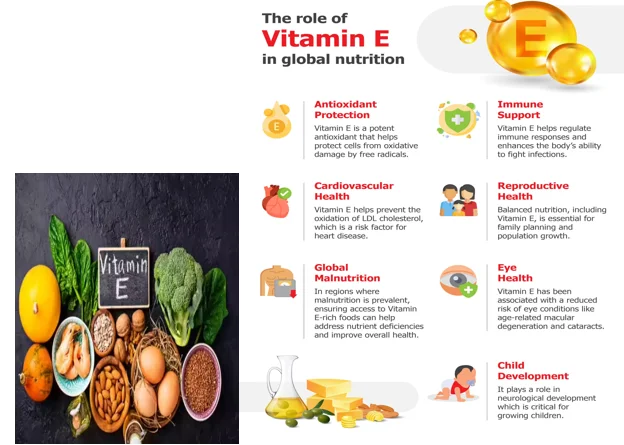
Vitamin E is a fat-soluble antioxidant that protects cell membranes — including those lining blood vessel walls — from oxidative damage. In the context of leg health, its most relevant action is reducing lipid peroxidation in the endothelium, which preserves the vessels’ ability to dilate in response to increased muscle demand during activity. Poor endothelial function is a key contributor to peripheral artery disease (PAD), which affects up to 12% of adults over 65 and produces exactly the leg heaviness, cramping with activity (claudication), and fatigue that many seniors attribute to simple aging.
A small but well-designed trial in the Journal of Vascular Surgery found that vitamin E supplementation improved walking distance in patients with PAD by approximately 15% over 6 months — a clinically meaningful improvement in functional mobility. Separately, a meta-analysis found that vitamin E’s antiplatelet properties reduced the risk of deep vein thrombosis (DVT) by 21% in high-risk adults. These are modest effects compared to medications, but relevant as part of a comprehensive leg health strategy.
One important caution: high-dose vitamin E supplementation (above 400 IU/day) has been associated with increased bleeding risk, particularly in adults taking blood thinners. The recommended dietary allowance is just 15 mg (22.4 IU) per day — easily achievable through diet. An ounce of sunflower seeds provides 7.4 mg; two tablespoons of wheat germ oil provides 20 mg. If you choose to supplement, stay at or below 200 IU daily unless guided by a physician.
Vitamin C – Helps Muscles Recover
Cramps and sore muscles need to heal. Vitamin C helps with tissue repair and supports tendons and ligaments through its essential role in collagen synthesis. Citrus fruits, bell peppers, strawberries, and broccoli are all excellent sources — and are often more bioavailable than supplements.
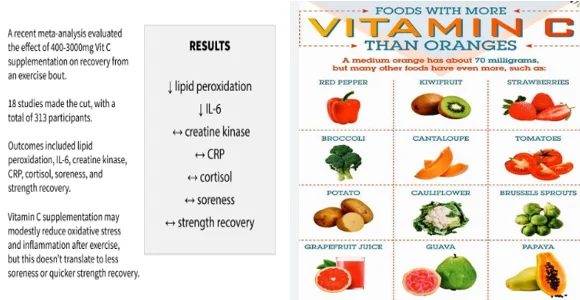
Vitamin C’s role in muscle health goes beyond antioxidant protection. It is the essential cofactor for two enzymes — prolyl hydroxylase and lysyl hydroxylase — that are required to build stable collagen cross-links. Collagen is the structural protein in tendons, ligaments, cartilage, and the connective tissue sheaths surrounding muscle fibers. Without adequate vitamin C, these structures weaken, increasing the risk of tendon injury, joint pain, and slow recovery from muscle strain or exercise soreness.
Vitamin C also supports carnitine biosynthesis — carnitine is the transport molecule that carries fatty acids into mitochondria for energy production. Low vitamin C leads to impaired carnitine synthesis, which can cause muscle weakness and fatigue that’s biochemically distinct from the electrolyte-driven cramping addressed by magnesium and potassium. This is one reason why low vitamin C status presents as generalized fatigue and muscle aching rather than the sharp nocturnal cramps more typical of electrolyte deficiency.
Recent research has highlighted a practical application: consuming 15–30 grams of collagen peptides with 50 mg of vitamin C approximately 60 minutes before exercise significantly increases collagen synthesis in tendons and ligaments compared to collagen alone. This “primed collagen” approach is increasingly used in sports medicine to support connective tissue repair in aging joints. For a senior dealing with recurring Achilles tendon pain, knee aching, or hip stiffness alongside leg cramps, this targeted protocol — collagen + vitamin C before activity — addresses both the muscle and the structural tissue simultaneously.
Small Daily Habits That Help Too
- Drink water — dehydration makes cramps worse by concentrating electrolytes unevenly across muscle cells.
- Stretch your calves and hamstrings every day — gentle standing calf raises and seated hamstring stretches before bed reduce nighttime cramping frequency.
- Check with your doctor about meds that lower mineral levels — diuretics, PPIs, and statins are common culprits.
- Eat full, balanced meals, not just snacks, so vitamins absorb well — many fat-soluble vitamins (D, E, K) require dietary fat present at the same meal to be absorbed.
Exercise — specifically resistance training — is the most powerful non-supplement intervention for leg strength in older adults. Even two sessions per week of bodyweight squats, step-ups, calf raises, and seated leg presses meaningfully increases muscle fiber size, improves neuromuscular coordination, and enhances blood flow to the legs within 6–8 weeks. The vitamins and minerals covered in this article support and amplify the results of that exercise; they are most effective as part of an active lifestyle, not as a substitute for it.
Compression stockings deserve a mention for seniors whose leg heaviness and cramping has a circulatory component. Medical-grade compression (15–20 mmHg for mild symptoms, 20–30 mmHg for more significant venous insufficiency) reduces pooling of blood in the lower legs, improves venous return to the heart, and reduces overnight swelling that can contribute to morning cramps and stiffness. Worn during the day (removed at night), they’re an inexpensive, drug-free complement to nutritional strategies.
✅ Quick Questions Seniors Ask
1. Which vitamin works best for leg cramps?
Magnesium and vitamin D are the top two for muscle strength and relaxation. Magnesium directly prevents the muscle hyperexcitability that causes cramps; vitamin D supports the structural integrity of muscle fibers. Most research supports addressing both simultaneously.
2. Can low vitamin D make legs weak?
Yes — it’s linked to poor balance and weak muscles in seniors. Vitamin D receptors in muscle tissue regulate the synthesis of key muscle proteins, and deficiency impairs the fast-twitch muscle fibers most responsible for balance and fall prevention.
3. Are bananas really helpful?
Yes, they’re full of potassium, which calms tight muscles. A medium banana provides about 422 mg of potassium — roughly 12% of the daily adequate intake. They’re most helpful as part of a potassium-rich diet, not as a standalone cramp cure.
4. Should seniors take calcium just for bones?
It helps bones and muscles, so yes — it’s important on both counts. Just prioritize food sources and avoid excessive supplementation above what’s needed to fill genuine dietary gaps.
5. Can low B12 cause tingling legs?
Absolutely — low B12 can cause nerve-related leg problems including tingling, numbness, burning, and weakness. Because these symptoms can become irreversible, testing and treating B12 deficiency early is important.
6. Does vitamin E help with cramps?
It improves circulation, which can reduce cramps over time — particularly in people whose leg symptoms have a vascular (blood flow) component. It’s most useful when dietary sources are low or when there is documented circulatory impairment.
7. How much water should I drink?
Six to eight glasses a day is a practical guideline, unless your doctor says otherwise (certain heart or kidney conditions require fluid restriction). Pale yellow urine is the simplest indicator of adequate hydration.
8. Are multivitamins enough?
Not always — specific deficiencies need targeted vitamins at therapeutic doses. Most multivitamins provide 400 IU of vitamin D and 100–200 mg of magnesium — useful for maintenance, but not enough to correct established deficiency. Blood testing guides targeted supplementation far better than a general multivitamin.
9. What foods give magnesium fast?
Spinach, almonds, and pumpkin seeds are great. One ounce of pumpkin seeds provides 156 mg of magnesium — 37% of the RDA in a single snack. Dark chocolate (70%+) also provides 64 mg per ounce.
10. When should you see a doctor?
If cramps happen frequently, hurt badly, or make walking hard, get checked. Also seek evaluation if leg symptoms are accompanied by swelling, discoloration, skin changes, or numbness — these can signal vascular or neurological conditions that require specific treatment beyond vitamins.
⚕️ Medical Disclaimer
The information provided on this page is for educational purposes only and is not intended as medical advice, diagnosis, or treatment. Always consult a qualified healthcare professional before making changes to your diet, starting any supplement, or if you have an existing medical condition. KeepFitQuote does not provide medical diagnoses or treatment recommendations. Read our full disclaimer.
Related Posts








This is the wave – the big wave.
This is my first time i visit here. I found so many helpful stuff in your website especially its discussion. From the tons of responses on your posts, I guess I am not the only one having all the enjoyment here! keep up the excellent work
I’ve read several good stuff here. Definitely worth bookmarking for revisiting. I surprise how much effort you put to make such a magnificent informative site.
fantastic post, very informative. I wonder why more of the ther experts in the field do not break it down like this. You should continue your writing. I am confident, you have a great readers’ base already!
We’re developing some community services to respond to this, and your blog is helpful.
Our local network of agencies has found your research so helpful.