After 70, small bedtime choices can make a big difference in safety and sleep quality. Avoid heavy late-night meals, excess fluids close to bedtime, alcohol or unreviewed sedatives, screen time in bed, and a cluttered path to the bathroom. Aim for a cool, dim bedroom; slip-resistant socks; soft night-lights; and a consistent routine. If you snore loudly, wake gasping, or feel dizzy when you stand up at night, speak with your clinician. The checklist and Q&A below give practical, low-effort steps you can try tonight.
Sleep changes naturally with age, but many of the riskiest nighttime habits are also some of the easiest to fix. Research from the National Institute on Aging shows that older adults spend less time in deep, restorative sleep and wake more often during the night, which makes the bedroom environment and pre-bed routine more important than ever. A 2022 review in Sleep Medicine Clinics found that simple environmental and behavioral changes — not medication — produced the most consistent improvements in sleep quality and nighttime safety for adults over 65. The good news: none of the changes below require special equipment or a big budget, just a little planning and a willingness to swap one habit for a gentler one.

Why Sleep Safety Matters After 70
A good night’s sleep isn’t just rest—it’s balance, reaction time, and clear thinking the next day. As we age, nighttime bathroom trips become more common, medications change, and vision adapts more slowly to darkness. The result? A higher chance of slips, stumbles, and poor-quality rest. The goal here is simple: fewer hazards, fewer awakenings, and gentler routines that keep nights calm.
The numbers explain why this matters so much. According to the CDC, more than one in four adults age 65 and older falls each year, and falls are the leading cause of injury-related death in this age group — many of these falls happen at night, on the way to or from the bathroom. Aging also changes the body’s internal clock: the suprachiasmatic nucleus, the brain’s master clock, becomes less responsive to light cues over time, which can shift sleep earlier and fragment it into shorter stretches. Add in normal-aging changes like reduced bladder capacity, lighter sleep stages, and slower pupil adjustment to darkness, and it’s easy to see how ordinary nighttime routines can quietly become safety risks. The encouraging part is that most of these risks respond well to small, low-cost adjustments — better lighting, a clearer path, and a wind-down routine that supports the body’s natural rhythms rather than fighting them.
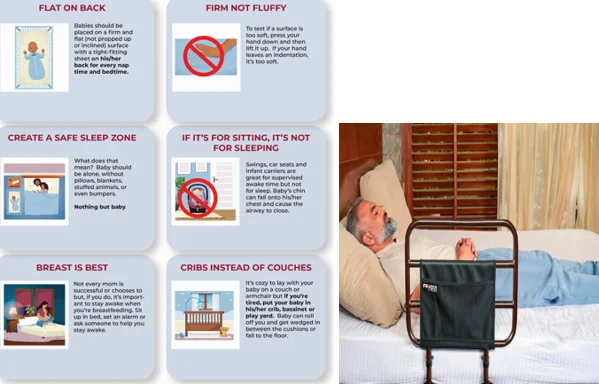
Nighttime Habits to Avoid (and what to do instead)
1) Heavy late-night meals
Avoid: Large dinners within two hours of bedtime—acid reflux and discomfort can fragment sleep.
Try instead: A lighter evening plate (soup, steamed vegetables, protein the size of your palm). If a snack helps, think yogurt, a few pumpkin seeds, or half a banana.
There’s solid science behind this advice. As we age, the lower esophageal sphincter — the muscle that keeps stomach acid where it belongs — tends to relax more easily, and stomach emptying slows down. A study published in the American Journal of Gastroenterology found that lying down within three hours of a large meal significantly increases the likelihood of acid reflux episodes, which can wake you repeatedly or leave you with a burning sensation in your chest or throat. For most older adults, finishing dinner by early evening and keeping portions moderate gives the digestive system time to do its work before you lie flat. If you take medications that relax muscles or slow digestion — including some blood pressure or anxiety medications — talk with your pharmacist about whether evening timing should be adjusted. Frequent nighttime reflux that doesn’t improve with these changes is worth mentioning to your doctor, since it can sometimes be managed with simple adjustments to diet or medication timing.

2) Too many fluids before bed
Avoid: Big mugs of tea or water right before lights out; frequent bathroom trips raise fall risk.
Try instead: Front-load hydration earlier in the day. Sip, don’t chug, after dinner.
Nocturia — waking up one or more times a night to urinate — affects a large majority of adults over 70, and it’s one of the most common reasons for nighttime falls. Part of this is due to age-related changes in antidiuretic hormone (ADH), which normally helps concentrate urine overnight; as ADH production declines with age, the kidneys produce more urine at night regardless of how much you drink in the evening. That’s exactly why front-loading fluids earlier in the day matters: getting most of your water, tea, and other drinks in before mid-afternoon supports good hydration without adding to overnight trips. If you notice ankle swelling during the day, elevating your feet for 30 minutes before dinner can help your body process that extra fluid before bedtime instead of overnight. Caffeine and alcohol both have a mild diuretic effect, so cutting them off by early afternoon can make a noticeable difference. If nighttime urination happens more than two or three times and disrupts your sleep regularly, it’s worth discussing with your doctor — it can sometimes signal something easily treatable.

3) Alcohol or unreviewed sedatives
Avoid: A “nightcap” or mixing sleep aids without a clinician’s guidance—these can worsen balance and breathing.
Try instead: Herbal tea earlier in the evening; if you use sleep medication, ask your doctor to review dose, timing, and interactions.
The body’s ability to process alcohol slows with age, partly because liver enzyme activity decreases and body composition shifts toward less muscle and more fat, which changes how medications and alcohol distribute and clear from the bloodstream. This means a glass of wine that was easily tolerated at 50 may linger longer and hit harder at 75 — increasing drowsiness, unsteadiness, and the odds of a fall. Many common sleep aids, including over-the-counter antihistamines and prescription sedatives, appear on the American Geriatrics Society’s Beers Criteria list of medications that carry extra risk for older adults, largely because they can cause next-day grogginess, confusion, and impaired balance. Combining any of these with alcohol multiplies the risk. A yearly “brown bag” medication review with your pharmacist — bringing in everything you take, including over-the-counter products and supplements — is one of the simplest ways to catch risky combinations before they cause a problem. Chamomile, valerian, or other calming herbal teas earlier in the evening are a gentler way to wind down without the same risks.

4) Blue-light screens in bed
Avoid: Scrolling under the covers—light and alerts keep the brain awake.
Try instead: A paper book, e-reader in “night” mode, or short audio. Put the phone on Do Not Disturb and charge it off the nightstand.
Blue wavelengths of light are particularly effective at suppressing melatonin, the hormone that signals to your body that it’s time to sleep. Research from Harvard Medical School has shown that exposure to blue light in the evening can delay melatonin release by an hour or more and shift your internal clock later, making it harder to fall asleep and reducing the amount of deep sleep you get. For older adults, who already tend to produce less melatonin overall, this effect can be even more disruptive. Beyond the light itself, the mental stimulation of reading news, emails, or social media tends to raise alertness right when your body needs to be winding down. A simple swap — a paper book, an e-reader set to a warm “night” color mode, or a calming audiobook or podcast at low volume — avoids both problems. Setting your phone to Do Not Disturb (with emergency contacts still allowed through) and charging it across the room removes the temptation to check it and the disruption of late-night notifications, while still keeping it within reach if you need to call for help.

5) Cluttered pathways
Avoid: Rugs that curl, cords near the bed, pet toys on the floor.
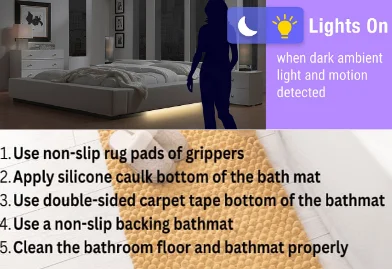
Try instead: A clear, straight path from bed to bathroom with low, warm night-lights and non-slip mats.
Home hazards are involved in a large share of falls among older adults, and the bedroom-to-bathroom path is one of the most common locations because it’s traveled in low light, often while still half-asleep. The CDC’s STEADI (Stopping Elderly Accidents, Deaths & Injuries) program specifically recommends a “fall-proofing” walkthrough of the home, with particular attention to throw rugs, loose cords, and clutter along frequently used nighttime routes. Curled rug edges and stray cords are tripping hazards that are easy to overlook during the day but become dangerous when navigating in the dark or with sleep-impaired balance. A straight, obstacle-free path — ideally without needing to turn corners in the dark — combined with low-wattage, warm-toned night-lights placed at ankle height (rather than bright overhead lights that can cause glare and temporarily blind night-adapted eyes) makes a real difference. Non-slip mats at the bedside and in the bathroom add extra security on what are often the two most slippery surfaces in the house. If you share your home with pets, keeping their toys and bowls out of walkways at night is a small step that prevents a surprisingly common cause of nighttime trips.
6) Overheated bedrooms
Avoid: Very warm rooms; heat can cause restlessness and dehydration.
Try instead: A cooler setting, breathable bedding, and layered sleepwear.
Your body naturally drops its core temperature by about one to two degrees as part of falling and staying asleep, and a warm bedroom can work against this process, leading to more tossing, turning, and lighter sleep. The National Sleep Foundation recommends a bedroom temperature between roughly 60 and 67°F for most adults, though individual comfort varies. Aging also affects how efficiently the body regulates its own temperature — sweat glands become less responsive and circulation changes slightly, which can make some older adults more sensitive to both overheating and feeling cold. Rather than cranking the thermostat up for comfort, layering — a breathable cotton or moisture-wicking sleepwear with extra blankets that can be added or removed during the night — lets you adjust without overheating the whole room. A cooler room also helps reduce overnight dehydration from sweating, which in turn supports the bladder and circulation changes discussed elsewhere in this guide. If you wake up overheated and sweating regularly, it’s worth mentioning to your doctor, as it can occasionally be related to medications or other conditions worth checking.

7) High pillows or awkward sleep positions
Avoid: Stacked pillows that crank the neck, or positions that worsen snoring.
Try instead: A single supportive pillow; side-sleeping usually reduces snoring. If you suspect sleep apnea, ask your clinician about a home sleep test.
Stacking pillows to prop yourself up may feel comfortable in the moment, but it can bend the neck and airway into a position that narrows the throat, making snoring and breathing pauses more likely. Sleep apnea is often thought of as a concern mainly for men, but research published in the Journal of Clinical Sleep Medicine shows that its prevalence in women rises sharply after menopause, and it’s frequently underdiagnosed in older women because symptoms like fatigue or insomnia get attributed to “just getting older.” A single, supportive pillow that keeps the neck in a neutral position — roughly in line with the spine — helps keep the airway open. Side-sleeping is generally the best position for reducing snoring and mild apnea symptoms, partly because it prevents the tongue and soft tissues from falling backward into the airway the way they can when lying flat on the back. Warning signs worth raising with your doctor include loud snoring, gasping or choking sounds during sleep, morning headaches, and excessive daytime sleepiness — a home sleep test is a simple, non-invasive way to check, and treatment can meaningfully improve both sleep quality and daytime alertness.

8) Jumping up too fast
Avoid: Standing in one motion—dizziness can strike at night.
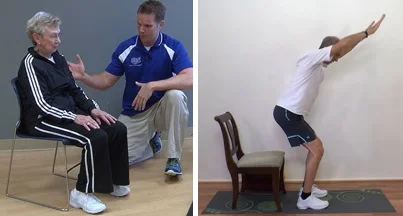
Try instead: “Sit, pause, stand.” Dangle feet for 10–15 seconds, take a breath, then rise.
This habit addresses orthostatic hypotension — a sudden drop in blood pressure when moving from lying or sitting to standing. Studies suggest this affects roughly 20 to 30 percent of adults over 70, and it’s even more common immediately after lying flat for hours overnight, when blood has settled in the lower body and the cardiovascular system needs a moment to adjust to the change in position. Certain medications, including some blood pressure drugs and antidepressants, can make this effect more pronounced. The “sit, pause, stand” sequence works because it gives your blood vessels and heart rate time to adjust gradually rather than all at once: sitting on the edge of the bed lets blood pressure begin stabilizing, dangling your feet and taking a slow breath or two allows your heart rate to adjust, and only then standing reduces the sudden drop that causes the lightheaded, “gray-out” feeling many people describe. If you feel dizzy, lightheaded, or unsteady most times you stand — especially at night — mention it to your doctor, since it’s both a fall risk and sometimes a sign that a medication dose or timing needs adjusting.
9) Slippery socks or bare feet
Avoid: Smooth socks and slick floors.
Try instead: Non-skid socks or supportive slippers with grip.
Footwear is a frequently overlooked piece of the fall-prevention puzzle. A study in the Journal of the American Geriatrics Society found that wearing socks or going barefoot on hard flooring significantly increases slip risk compared to wearing shoes or slippers with a non-slip sole, particularly on tile, hardwood, or laminate floors that are common in bathrooms and hallways. Smooth-soled socks reduce friction exactly where you need it most — during the transition from bed to floor, often while still groggy and in dim light. Non-skid socks with rubberized grip patterns on the sole, or slippers with a firm, supportive sole and a back strap (rather than open-backed slip-ons, which can catch on the foot and cause a stumble), provide meaningful traction without sacrificing comfort. Keeping a pair within arm’s reach of the bed means you’re not tempted to walk barefoot “just this once” during a half-asleep nighttime trip. This is a small, inexpensive change — non-skid socks typically cost just a few dollars — but it directly addresses one of the most common, preventable contributors to nighttime falls.

10) Bed rails without review
Avoid: Improvised rails that can trap limbs.
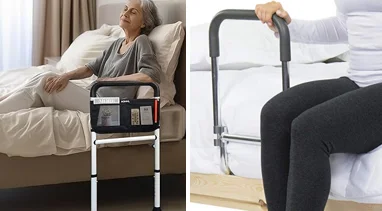
Try instead: Talk to an occupational therapist about safe bed-assist handles or a sturdy bedside cane.
While bed rails might seem like an obvious safety upgrade, the FDA has issued specific safety communications about portable bed rails after documenting cases of entrapment, where a limb, head, or neck becomes caught between the rail and the mattress, sometimes with serious consequences. The risk is highest with rails that aren’t designed to fit a specific bed and mattress combination, or that create gaps where a body part can slip through. This doesn’t mean bed-assist devices are off the table — it means they should be selected carefully. An occupational therapist can assess your specific bed, mattress, and mobility needs and recommend properly fitted bed-assist handles (which attach securely to the bed frame without creating gaps), grab bars mounted to a wall stud near the bed, or a sturdy bedside cane or walker positioned for easy reach. Medicare often covers an occupational therapy evaluation, especially after a fall or hospital stay, making this a practical and accessible step. The goal is the same as an improvised rail — something stable to hold onto when getting in or out of bed — but achieved safely.
Bedroom Setup That Helps You Sleep Safer
- Night-lights: Low, warm bulbs along the path to the bathroom.

- Bed height: Roughly knee-height makes standing easier.
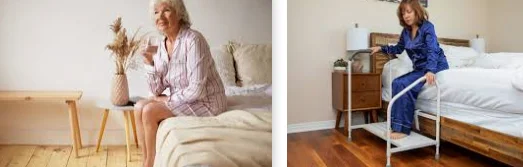
- Non-slip mats: At the bedside and in the bathroom.

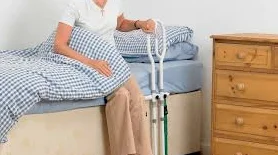
- Grab points: A stable dresser edge or approved bed-assist handle.
- Reach zone: Glasses, water, tissues, and phone within easy reach (and phone set to silent/emergency-only).

Small environmental tweaks add up to a meaningfully safer bedroom. Lighting color matters as much as brightness: warm-toned bulbs (in the amber or “soft white” range, generally below 3000K) are far less disruptive to melatonin production than cool white or blue-tinted lights, which is why warm night-lights are recommended over bright white ones. Bed height matters more than people expect — when the mattress sits at roughly knee height, your feet can reach the floor while your knees stay close to a right angle, making it easier to push up to standing without straining or losing balance, an ergonomic principle occupational therapists use when assessing fall risk. Non-slip mats should have a rubberized, grippy underside (not just a soft top) so they stay in place under bare feet. Grab points don’t need to be expensive medical equipment — even a securely anchored furniture edge can work if it’s stable and within reach from the bed — though a properly installed grab bar is sturdier. Finally, the “reach zone” concept comes from occupational therapy: keeping essentials like glasses, water, and a phone within an arm’s length reduces the number of times you need to get up at all, and reduces fumbling in the dark when you do.
A Simple “Safe Sleep” Routine (5 minutes)
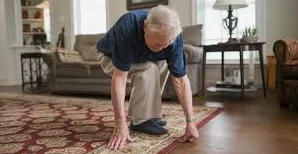
- Clear the path: Shoes under a chair, cords tucked away, rug flat.
- Hydration check: Last full glass at least 1–2 hours before bed; one small sip by the bedside if needed.

- Wind-down: Screen off, gentle stretch, two slow breaths with longer exhales.

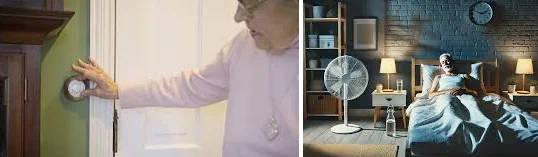
- Room set: Thermostat cooler, night-lights on, non-skid socks ready.
- Rise plan: Sit first, breathe, then stand.
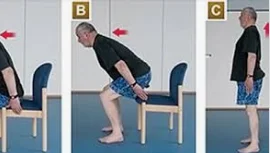
What makes this five-minute routine effective is repetition — sleep researchers call this “habit stacking,” linking a new behavior to an existing one so it becomes automatic rather than something you have to remember. Doing the same five steps in the same order each night sends a consistent signal to your body that it’s time to wind down, which is the foundation of good sleep hygiene according to the American Academy of Sleep Medicine. The breathing step deserves a closer look: slow breathing with a longer exhale than inhale (for example, breathing in for four counts and out for six) activates the parasympathetic nervous system — the body’s “rest and digest” mode — which can lower heart rate and ease the transition into sleep. None of these steps require special equipment, and most people find that once the routine becomes familiar, it takes less than the full five minutes. If you have a fall risk assessment or home safety visit from a healthcare provider, this routine is a great example to share — it shows you’re already taking practical steps, and they may have a few more tailored suggestions to add.
Gentle Nutrition for Nighttime Comfort
- Light evening meals: Focus on vegetables, lean protein, and easy-to-digest carbohydrates.
- Soothing add-ons: Chamomile or ginger tea earlier in the evening; avoid large mugs right before bed.
- Salt & spice check: Very salty or spicy dinners can cause thirst and reflux later.
What you eat in the few hours before bed can influence both how easily you fall asleep and how often you wake. Foods naturally containing tryptophan — an amino acid the body converts into serotonin and then melatonin — include turkey, eggs, dairy, and pumpkin seeds, and pairing a small amount with a complex carbohydrate (like a slice of whole-grain toast) may help the body absorb it more efficiently, according to research summarized by the Sleep Foundation. Magnesium-rich foods such as leafy greens, almonds, and bananas have also been studied for a possible calming effect on the nervous system, though the evidence is still developing. On the flip side, salty meals increase thirst, which can lead directly back to the fluid-and-nocturia cycle described earlier, while spicy foods can trigger or worsen reflux for many older adults whose digestive systems are already more sensitive to it. Ginger tea has some evidence for easing mild digestive discomfort, while chamomile has mild calming properties — but both are best enjoyed an hour or two before bed rather than right at lights-out, so you’re not adding to your overnight fluid intake right when your body is trying to wind down.
Q&A
Q1: What bedtime habits should older women avoid?
Heavy late meals, large drinks before bed, alcohol, screens in bed, and cluttered walkways.
Q2: How can I make nighttime bathroom trips safer?
Use warm night-lights, keep a clear path, and put non-slip mats where you step first.
Q3: Is a nightcap helpful for sleep after 70?
It may fragment sleep and affect balance. Safer to skip or discuss with your clinician.
Q4: What’s a good bedroom temperature for sleep?
Slightly cool is best; layer blankets instead of raising the thermostat.
Q5: How do I cut down on nighttime awakenings to pee?
Front-load water during the day, sip after dinner, and avoid big drinks within two hours of bed.
Q6: Are blue-light glasses enough to use a phone in bed?
They help a little; shutting screens off is more effective.
Q7: I get dizzy if I stand up at night—what helps?
Sit and pause first, then stand slowly. If dizziness is frequent, ask your doctor.
Q8: Are bed rails safe?
Some can be; others aren’t. Get a product designed for adults and review it with a professional.
Q9: What should be on my nightstand?
Glasses, tissue, small water, a soft light, and phone on silent/emergency mode.
Q10: Does snoring mean I have sleep apnea?
Not always. Loud snoring plus choking or daytime sleepiness is a reason to ask about testing.
Q11: What socks are safest at night?
Non-skid socks or supportive slippers with grip.
Q12: How do I reduce reflux that wakes me up?
Smaller dinners, earlier mealtimes, and a calm wind-down; ask about pillow options if needed.
Quick Checklist (print-friendly)
- ☐ Dinner ends 2–3 hours before bed
- ☐ Last full glass of water 1–2 hours before bed
- ☐ Phone off or Do Not Disturb
- ☐ Night-lights on, path cleared
- ☐ Non-slip socks at bedside
- ☐ Room cool, bedding breathable
- ☐ Sit-pause-stand when getting up
Notes for U.S. Readers
- If you take multiple prescriptions (or an over-the-counter sleep aid), ask your pharmacist or clinician to review nighttime drowsiness and balance effects.
- Medicare Advantage and some community centers offer home safety checks—worth asking about if you’ve had a recent stumble.
Many Medicare Advantage plans include an annual in-home health risk assessment at no additional cost, and some go further by offering grab bar installation, non-slip mat kits, or referrals to occupational therapists as part of a fall-prevention benefit — coverage varies by plan, so it’s worth calling your plan directly to ask what’s included. Area Agencies on Aging, found through the Eldercare Locator (a free service of the U.S. Administration on Aging), can also connect you with local home-safety programs, sometimes at low or no cost. An annual Medicare Wellness Visit is another good opportunity to bring up sleep concerns, nighttime falls, or medication questions — these visits specifically include a falls-risk screening, so it’s a natural time to ask for the “brown bag” medication review mentioned earlier or a referral for a home safety evaluation.
Gentle Reminder
This guide shares general safety tips. If you have sudden new symptoms—chest discomfort, severe shortness of breath, vision changes, or a hard fall—seek medical care right away.
⚕️ Medical Disclaimer
The information provided on this page is for educational purposes only and is not intended as medical advice, diagnosis, or treatment. Always consult a qualified healthcare professional before making changes to your diet, starting any supplement, or if you have an existing medical condition. KeepFitQuote does not provide medical diagnoses or treatment recommendations. Read our full disclaimer.
Related Posts