Past 40, small things start to bug your eyes—menus in low light, oncoming headlights, tiny phone text. Glasses help with focus, but supporting the eyes through food, habits, and gentle care makes a real difference in how clearly and comfortably you see day to day.
Vision changes after 40 are among the most universal and least-discussed aspects of aging. The most common culprit is presbyopia—the progressive stiffening of the eye’s crystalline lens that makes near focus increasingly difficult. But presbyopia is just the beginning. Dry eye disease affects an estimated 16 million Americans, with prevalence rising sharply after 50. Age-related macular degeneration (AMD) is the leading cause of vision loss in adults over 60. Cataracts affect more than 24 million Americans over 40. The encouraging fact that rarely gets enough attention: all of these conditions are significantly influenced by nutritional status, lifestyle habits, and everyday eye care practices. You cannot stop the clock, but you can give your eyes the best possible support from within—and this guide shows you exactly how.
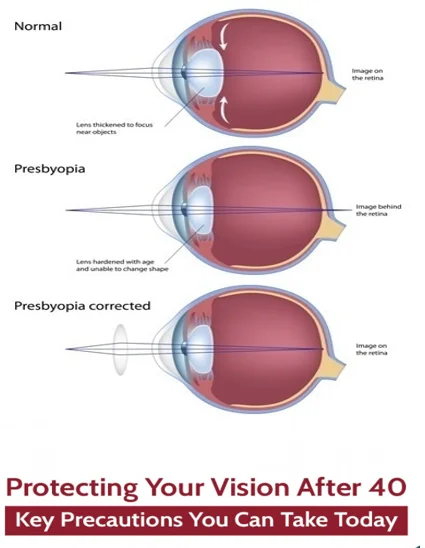
Table of Contents
Why Midlife Eyes Start Acting Differently
With age, the lens doesn’t flex like it used to, so shifting focus takes more effort. Dry offices, air-conditioning, and screen time reduce tear quality, making eyes feel tired, gritty, or blurry by afternoon. Light sensitivity and night-driving difficulty often come from slower pupil response and early lens changes—common, manageable, and worth telling your eye doctor about.
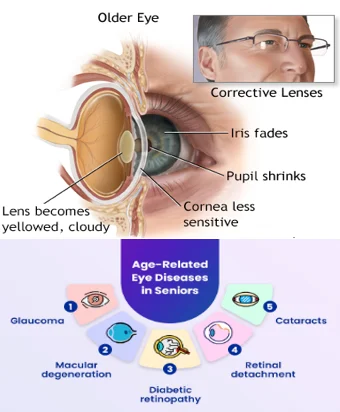
The biological changes behind these frustrations are well understood. The lens of the eye is unique in the body: it never sheds cells, so every new layer of lens cells pushes older ones toward the center, where they gradually lose water and flexibility—a process that produces presbyopia starting in the early 40s. Simultaneously, the cells that produce the eye’s lubricating tear film become less productive with age, and the composition of tears changes: the oil-producing Meibomian glands along the eyelid margins often become clogged, reducing the oily layer that prevents tear evaporation. This is why dry eye is so prevalent in the 50+ age group and why it worsens dramatically in heated or air-conditioned environments. The macular pigment—the yellow-orange layer at the center of the retina responsible for sharp central vision—thins with age unless constantly replenished by dietary lutein and zeaxanthin. Understanding these mechanisms makes the dietary and lifestyle recommendations below feel less like vague wellness advice and more like targeted maintenance for a precision optical system.
1. Superfoods That Give Your Eyes an Edge
Superfoods for Eye Sharpness
Kale & collards: Loaded with lutein and zeaxanthin that help the macula handle glare. Toss into a breakfast scramble or blend into a smoothie—cooking actually increases bioavailability.
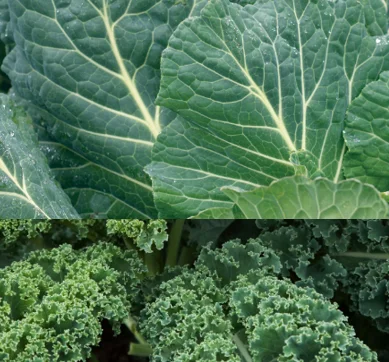
Lutein and zeaxanthin are carotenoids that accumulate directly in the macula and lens of the eye, where they function as a biological “blue light filter” and antioxidant shield. The landmark AREDS2 (Age-Related Eye Disease Study 2) trial, sponsored by the National Eye Institute, found that supplementing with lutein and zeaxanthin significantly reduced the risk of advanced AMD progression in people at high risk. Dietary sources are even more effective than supplements for people without established deficiency, because food-based carotenoids are packaged with complementary compounds that enhance absorption. One cup of cooked kale delivers approximately 23 mg of lutein—nearly four times the amount associated with the strongest protective effects in epidemiological studies. Cooking increases bioavailability because heat breaks down cell walls that would otherwise limit absorption. A breakfast scramble with one large kale leaf, two eggs, and a splash of olive oil covers your lutein and zeaxanthin needs for the day in one meal.
Wild salmon: Omega-3s support tiny vessels and ease that gritty, dry feel. Canned wild salmon makes quick salads or patties with little prep.
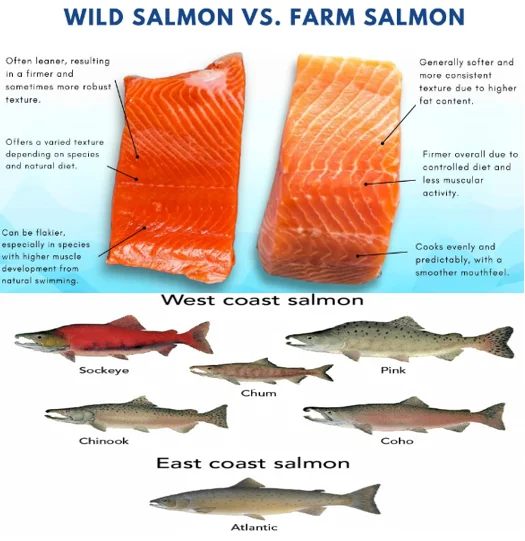
The omega-3 fatty acids in salmon—particularly DHA (docosahexaenoic acid)—are structural components of the retina. The photoreceptor cells in the retina have the highest concentration of DHA of any tissue in the body, and maintaining adequate levels supports both their structural integrity and their ability to respond to light. For dry eye specifically, a 2019 Cochrane review of 34 studies found that omega-3 supplementation significantly improved symptoms of dry eye disease, including the subjective sense of grittiness and visual fluctuation. Wild salmon (as opposed to farmed) has a higher omega-3-to-omega-6 ratio, making it the preferred choice. Two to three servings per week is the target recommended by the American Heart Association, a goal that serves both eye health and cardiovascular health simultaneously. Canned wild sockeye salmon—often available in most U.S. grocery stores—is a budget-friendly and convenient option.
Egg yolks: A convenient source of lutein and zinc. Two eggs with sautéed greens is an easy win.

Egg yolks are often overlooked in eye health conversations because people focus on leafy greens as the lutein source. But the lutein in egg yolks has higher bioavailability than plant-based lutein because it is packaged in a fat-rich matrix—and fat is required for carotenoid absorption. Zinc, also found in egg yolks, plays a critical role in transporting vitamin A from the liver to the retina to produce melanin, the protective pigment in the eyes. A zinc deficiency can manifest as night blindness, poor dark adaptation, and cloudy vision. The American Optometric Association recommends 40–80 mg of zinc daily for eye health. Two eggs contribute meaningfully toward that goal. Current evidence does not support restricting egg consumption for most healthy adults, and for the 50+ reader eating two to four eggs per week, the eye-health benefits are well-justified.
Natural Vision Booster Foods for Over 40
Sweet potatoes: Beta-carotene helps with dim-light adaptation. Roast wedges for dinner.

Beta-carotene is the precursor to vitamin A, which is essential for the production of rhodopsin—the photopigment in rod cells responsible for low-light and peripheral vision. Night blindness is one of the earliest signs of vitamin A deficiency, and while severe deficiency is rare in the U.S., mild insufficiency is more common in older adults who eat limited amounts of orange and yellow produce. One medium sweet potato provides over 100% of the daily recommended value of vitamin A as beta-carotene. Unlike preformed vitamin A (found in liver and fortified foods), beta-carotene from sweet potatoes is safe in large amounts because the body regulates how much it converts. Roasting concentrates the natural sugars and softens the texture—making it one of the most appealing and accessible eye-health foods for any age group.
Blueberries: Antioxidants that guard delicate tissues; frozen berries work fine.
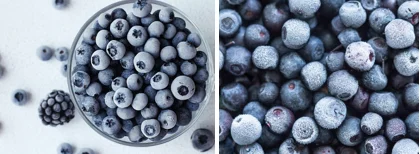
Blueberries contain anthocyanins—a class of flavonoid antioxidants that give them their deep blue-purple color and that have been studied specifically for their effects on eye microcirculation. The delicate capillaries that supply the retina and optic nerve are among the first tissues affected by oxidative stress and vascular aging. Anthocyanins appear to strengthen capillary walls and reduce oxidative damage to photoreceptor cells. A 2012 study in the Journal of Agricultural and Food Chemistry found that bilberry anthocyanins (closely related to those in blueberries) reduced eye fatigue and improved visual function in adults who worked long hours at screens. Frozen wild blueberries typically contain higher anthocyanin concentrations than fresh conventional varieties—a helpful fact for budget-conscious shoppers—and they work beautifully in oatmeal, yogurt, or smoothies year-round.
Pumpkin seeds: Zinc and magnesium for repair and nerve signaling—keep a small jar on your desk.
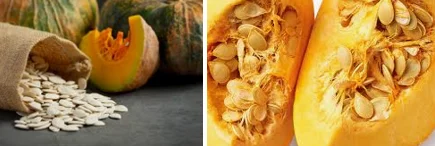
An ounce of pumpkin seeds (about a handful) provides approximately 2.2 mg of zinc—roughly 20% of the daily recommended intake—along with magnesium, which supports the health of the optic nerve and intraocular pressure regulation. Elevated intraocular pressure is the primary risk factor for glaucoma, the leading cause of irreversible blindness worldwide, and magnesium’s role in vascular smooth muscle relaxation may support healthy optic nerve blood flow. Pumpkin seeds are also one of the richest plant sources of vitamin E, an antioxidant that protects cell membranes in the lens and retina from free radical damage. Keeping a small jar of pumpkin seeds on your desk or kitchen counter is one of the simplest and most effective ways to add a daily dose of three key eye-health nutrients without any meal planning.
2. Gentle Home Remedies
Home Remedy for Blurry Vision After 40
Chamomile–cucumber compress: Warm tea bags, cool slightly, place over closed lids with cucumber slices. Calms puffiness and dry-eye discomfort in 10 minutes.

The chamomile-cucumber compress works through two overlapping mechanisms. Chamomile contains apigenin and chamazulene—compounds with documented anti-inflammatory and mild antimicrobial properties. When applied as a warm compress to the eyelids, the gentle heat helps melt the waxy deposits in the Meibomian glands along the lid margin, restoring the oily layer of the tear film and reducing dry eye symptoms. This is essentially the same principle behind the warm compress therapy recommended by ophthalmologists for meibomian gland dysfunction (MGD), one of the most common causes of dry eye in adults over 50. The cucumber slices add a cooling effect that reduces puffiness by constricting superficial blood vessels. To use: steep two chamomile tea bags in hot water for three minutes, let cool until comfortably warm (test on your wrist), place over closed eyes with cucumber slices on top, and rest for 10 minutes. Do this two to three times per week for ongoing dry-eye relief.
Blink breaks: Every so often, shift your gaze to the far side of the room and blink slowly 8–10 times. It resets tear distribution and reduces ciliary muscle fatigue.
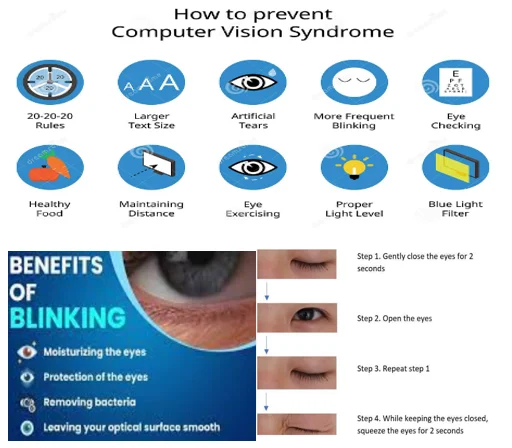
The 20-20-20 rule—widely recommended by eye care professionals—states that every 20 minutes of screen time, you should look at something 20 feet away for 20 seconds. The blink break extends this principle: slow, deliberate blinking ensures complete eyelid closure, which is necessary for the tear film to properly spread across the corneal surface. Research published in the Cornea journal found that people working at screens blink far less frequently and less completely than normal—an average of 3–4 incomplete blinks per minute versus the normal rate of 15 full blinks. This dramatically accelerates tear evaporation and explains why so many people experience blurry vision by mid-afternoon on heavy screen days. Setting a phone reminder every 25–30 minutes to do a “blink break” is one of the simplest, most evidence-backed steps any adult over 40 can take to protect daily vision comfort.
Light brow massage: Clean hands, feather-light circles along the brow bone—think relaxation, not pressure.

Gentle periorbital massage—the area around the brow bone and upper orbital rim—helps relieve tension in the frontalis and corrugator muscles that tighten during prolonged reading and screen work. This muscle tension contributes directly to tension headaches and the “eye strain” sensation that many people over 40 experience in the late afternoon. The massage also gently stimulates lymphatic drainage around the eyes, reducing morning puffiness that can temporarily affect vision clarity. Use the pads of your ring fingers (they naturally apply less pressure) and make very light circular motions from the inner brow outward. Never press on the eyeball itself. One to two minutes of this massage during a work break—combined with eye drops if needed—provides meaningful relief from digital eye strain without any equipment or cost.
3. Everyday Habits That Protect Your Sight
Low-Impact Eye Health Routine for Middle Age
- Hold screens and books at a comfortable arm’s length; raise font size instead of squinting.
- Sip water steadily; dry eyes blur faster.
- Guard your sleep—rested eyes tolerate glare and screen time better the next day.

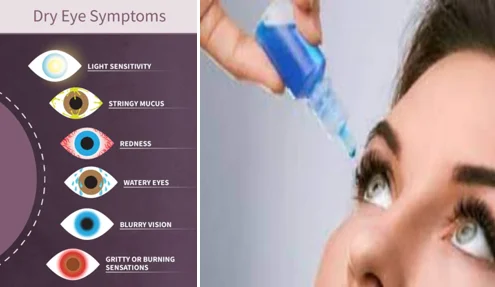
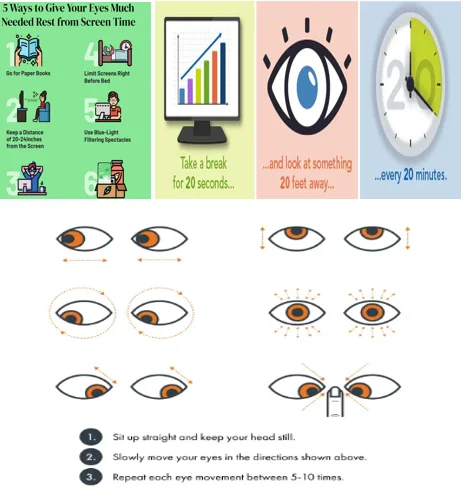
These three habits form a deceptively powerful daily foundation for vision health after 40. Screen distance matters because the ciliary muscle—which controls the lens shape for near focus—must work harder at closer distances, accelerating fatigue. The standard recommendation from optometrists is to hold digital devices no closer than 16 inches, and to position computer monitors at arm’s length (approximately 20–26 inches) with the screen slightly below eye level. Hydration’s effect on eyes is often underestimated: the tear film is approximately 98% water, and even mild dehydration reduces tear production measurably. Aiming for eight cups of fluid daily—with more in dry or heated environments—is one of the simplest interventions for reducing dry eye symptoms. Sleep is equally important: during deep sleep, the eyes perform their most significant restorative processes, clearing metabolic waste products and replenishing antioxidant defenses. Consistently sleeping less than seven hours accelerates oxidative damage in the retinal tissue that accumulates gradually into age-related vision changes.
4. When It’s Time to Call Your Eye Doctor
Keep routine exams every year or two. Don’t wait if blur is sudden, keeps worsening, or shows up in one eye only—those need same-day attention. New floaters, flashes of light, or a curtain across your vision are emergencies: call immediately.
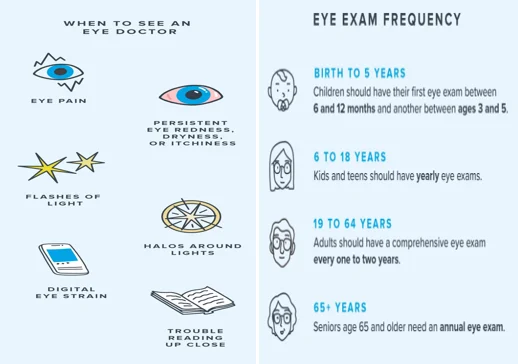
Knowing which symptoms can wait versus which require urgent attention is critical for preserving vision. The American Academy of Ophthalmology recommends that adults over 40 have a comprehensive dilated eye exam at least every one to two years, even without symptoms—because conditions like glaucoma and early diabetic retinopathy are often entirely painless until significant damage has occurred. Sudden, painless loss of vision in one eye; a new shower of floaters (black spots or strands drifting across your visual field); flashes of light particularly in peripheral vision; or a dark curtain or shadow across any portion of vision are all symptoms of potential retinal detachment or tear—true ophthalmic emergencies where hours matter. A retinal detachment is treatable if caught early; untreated, it causes permanent blindness. Never wait for a scheduled appointment for these symptoms. Call your eye doctor immediately or go to an emergency room.
Q&A
Q1: What everyday foods help keep sight crisp after 40?
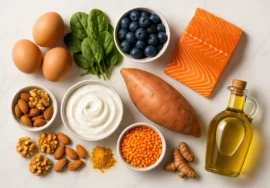
Leafy greens, salmon, eggs, sweet potatoes, blueberries, and pumpkin seeds cover the main eye-health nutrients.
Q2: I work at a screen—what’s a simple reset?
Look across the room and blink slowly for half a minute; let your eyes relax, then return to work.
Pair this with the 20-20-20 rule and a blink-reminder app, and most screen-related afternoon blur resolves within a week of consistent practice. If it persists despite these habits, mention it to your eye doctor—it may indicate a prescription update is needed, or that preservative-free artificial tears would help.
Q3: Do chamomile tea bags actually help tired eyes?
Yes—mild anti-inflammatory effects plus the warm/cool contrast ease Meibomian gland function and general puffiness.
Q4: Can diet replace reading glasses?
No. Food supports eye tissues; lenses correct focus. Both have their role.
Q5: Why do nights feel harsher on my eyes now?
Glare plus slower focus shift. A clean windshield and appropriate anti-reflective lenses help significantly.
Q6: Are supplements necessary if I eat well?
Often not. If your diet lacks color or fish, ask your clinician about targeted options. The AREDS2 formula is evidence-based specifically for those at risk of AMD progression—not for general prevention.
Q7: My eyes feel sandy in air-conditioning—tips?
Hydrate, do blink breaks, and consider a small humidifier at your desk. Preservative-free artificial tear drops used two to three times daily provide immediate relief.
Q8: Any quick snack ideas for eye nutrients?
Greek yogurt with blueberries, or trail mix with pumpkin seeds and walnuts. Both deliver multiple eye-health nutrients in under two minutes.
Q9: Why do sweet potatoes come up so often?
They’re an easy beta-carotene source that supports low-light function—and nearly everyone tolerates and enjoys them.
Q10: How often should I book an exam after 40?
Annually is smart; sooner if you notice sudden changes. After 60, annual exams with dilation are the standard recommendation.
Closing Thoughts
Think of this as maintenance, not a makeover: colorful produce, omega-3s, steady water, small breaks, good sleep, and yearly eye exams. Each one is a low-effort habit that quietly compounds over years into clearer, more comfortable vision.
The eyes are remarkable organs that adapt remarkably well to challenge—but they need consistent support to do so. The habits and foods in this guide are not treatments for eye disease; they are the environmental conditions under which your eyes can perform their best and age most gracefully. Many adults over 40 who adopt even two or three of these habits—more leafy greens, regular blink breaks, a humidifier at the desk—notice meaningful improvements in daily visual comfort within a few weeks. That improvement is real: it reflects better tear film quality, reduced ciliary muscle fatigue, and improved macular pigment density. The longer you sustain these habits, the more protective the cumulative effect becomes against the age-related conditions that cause lasting vision loss. Start with the easiest change—a handful of pumpkin seeds at your desk, a blink reminder on your phone—and let momentum build from there.
⚕️ Medical Disclaimer
The information provided on this page is for educational purposes only and is not intended as medical advice, diagnosis, or treatment. Always consult a qualified healthcare professional before making changes to your diet, starting any supplement, or if you have an existing medical condition. KeepFitQuote does not provide medical diagnoses or treatment recommendations. Read our full disclaimer.
Related Posts