An Apple a Day Keeps the Doctor Away: Real Benefits & Facts
Table of Contents
- Quick Answer: Does an Apple a Day Really Keep the Doctor Away?
- Key Takeaways
- Why Is the Proverb “An Apple a Day Keeps the Doctor Away” So Popular?
- What Does the JAMA Study Actually Say?
- What Makes Apples Healthy?
- Apple Nutrition Facts Per Medium Apple
- Main Health Benefits of Apples
- Which Apple Variety Is the Healthiest?
- Whole Apple vs Apple Juice vs Applesauce: Which Is Better?
- Should You Peel Apples?
- Best Time to Eat an Apple
- How Many Apples Should You Eat Per Day?
- Who Should Be More Careful with Apples?
- Bottom Line
- FAQs About “An Apple a Day Keeps the Doctor Away”
- Sources & References
Quick Answer: Does an Apple a Day Really Keep the Doctor Away?
“An apple a day keeps the doctor away” is not literally true. Eating one apple every day does not guarantee fewer doctor visits. However, apples are still one of the easiest healthy foods to include in your daily routine.
A whole apple provides fiber, water, vitamin C, potassium, antioxidants, and plant compounds. These nutrients may support heart health, digestion, blood sugar balance, weight management, and general wellness. For adults 60+, one whole apple with the skin adds about 4 grams of fiber, which helps digestion and cholesterol.
The key point is simple: apples are healthy, but they are not medicine. They work best as part of a balanced diet, not as a replacement for medical advice or regular healthcare.

Key Takeaways
| Main Point | Simple Explanation |
|---|---|
| Apples are healthy | They provide fiber, water, vitamin C, potassium, and antioxidants. |
| The saying is not literally proven | Research does not show that apple eaters automatically visit doctors less. |
| Whole apples are better than juice | Whole apples contain fiber and are more filling. |
| Apple peel matters | The peel contains fiber and many useful plant compounds. |
| Apples are low-GI | Whole raw apples generally have a low glycemic effect compared with many refined carbohydrates. |
| Moderation is still important | Too many apples may cause bloating or excess carbohydrate intake for some people. |
| Washing matters | Washing apples before eating may reduce dirt, microbes, and some surface residues. |
Why Is the Proverb “An Apple a Day Keeps the Doctor Away” So Popular?
The phrase became popular because apples are simple, affordable, portable, and naturally nutritious. Unlike many snacks, apples do not need cooking or preparation. You can carry one to work, school, the gym, or while traveling.
The saying also works because apples represent a bigger idea: daily healthy habits matter. One apple will not protect you from every illness. But eating more whole fruits, vegetables, fiber-rich foods, and minimally processed meals can support better long-term health.
What Does the JAMA Study Actually Say?
A well-known study published in JAMA Internal Medicine tested the old saying more directly. The researchers evaluated 8,399 eligible adult participants. Out of these, 753 were daily apple eaters, while 7,646 were non-apple eaters.
In the crude analysis, 39.0% of apple eaters avoided physician visits, compared with 33.9% of non-apple eaters. But after adjusting for factors such as age, sex, education, body mass index, smoking, and health insurance, the doctor-visit difference was not statistically significant.
However, daily apple eaters were still marginally more likely to avoid prescription medication use.
So the more accurate version of the proverb may be:
An apple a day may not keep the doctor away, but it may fit into a lifestyle that keeps the pharmacist a little farther away.
Methodological Note: Because the NHANES data relies on a cross-sectional observational framework, these findings demonstrate a statistical correlation, not direct clinical causation. The data suggests that daily apple consumption may be a marker of an overall health-conscious lifestyle, rather than a standalone medical cure.
What Makes Apples Healthy?
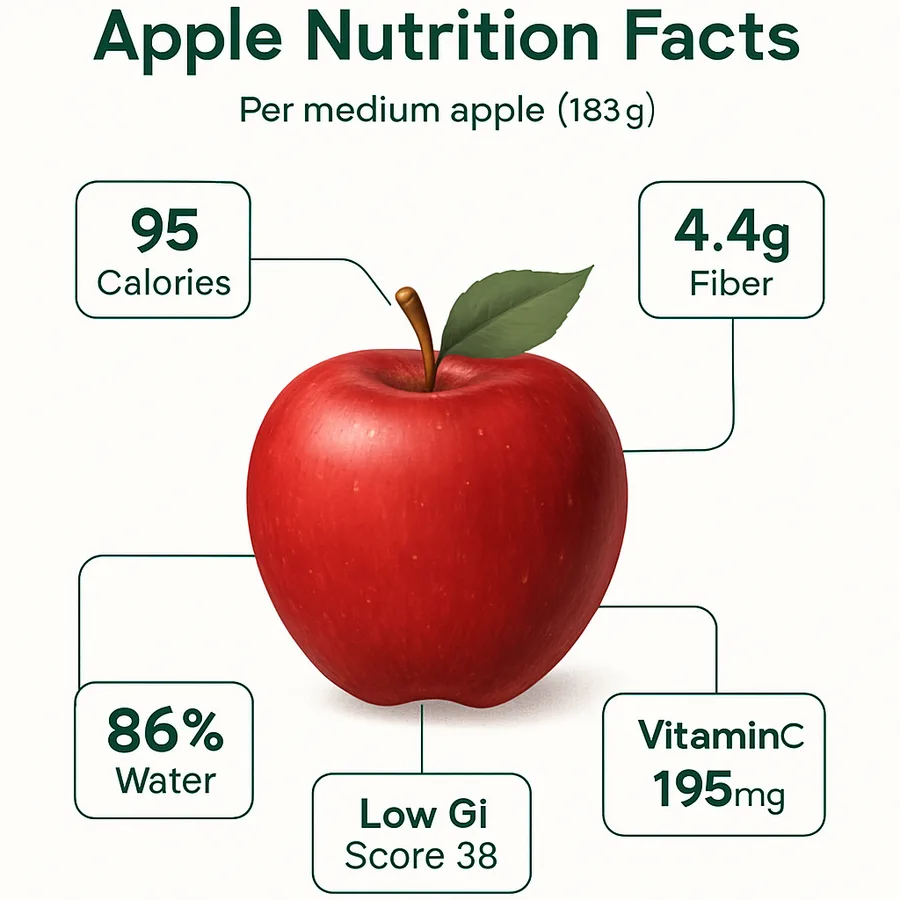
Apples are not magic, but they are nutrient-rich. A medium apple with skin, weighing around 182 grams, provides fiber, water, vitamin C, potassium, natural sugars, and beneficial plant compounds. According to USDA FoodData Central, apples are naturally low in calories, high in water, and a useful source of dietary fiber.
Apple Nutrition Facts Per Medium Apple
| Nutrient | Value Per Medium Apple (182g) | Daily Value / Health Meaning |
|---|---|---|
| Calories | 95 kcal | About 5% of a 2,000-calorie diet |
| Carbohydrates | 25 grams | About 9% DV |
| Dietary Fiber | 4.4 grams | About 16% DV |
| Sugars (Fructose, Glucose) | 19 grams | Naturally occurring fruit sugars |
| Vitamin C | 8.4 milligrams | About 9% DV |
| Potassium | 195 milligrams | About 4% DV |
| Vitamin K | 4.0 micrograms | About 3% DV |
| Water Content | 156 grams | High hydration value |
The most important point is that apples provide fiber and water together. This combination helps you feel full, supports digestion, and makes apples a better choice than many ultra-processed snacks. The peel is also important. Many beneficial plant compounds are found in or near the skin, so it is usually better to wash apples well and eat them unpeeled.
Main Health Benefits of Apples
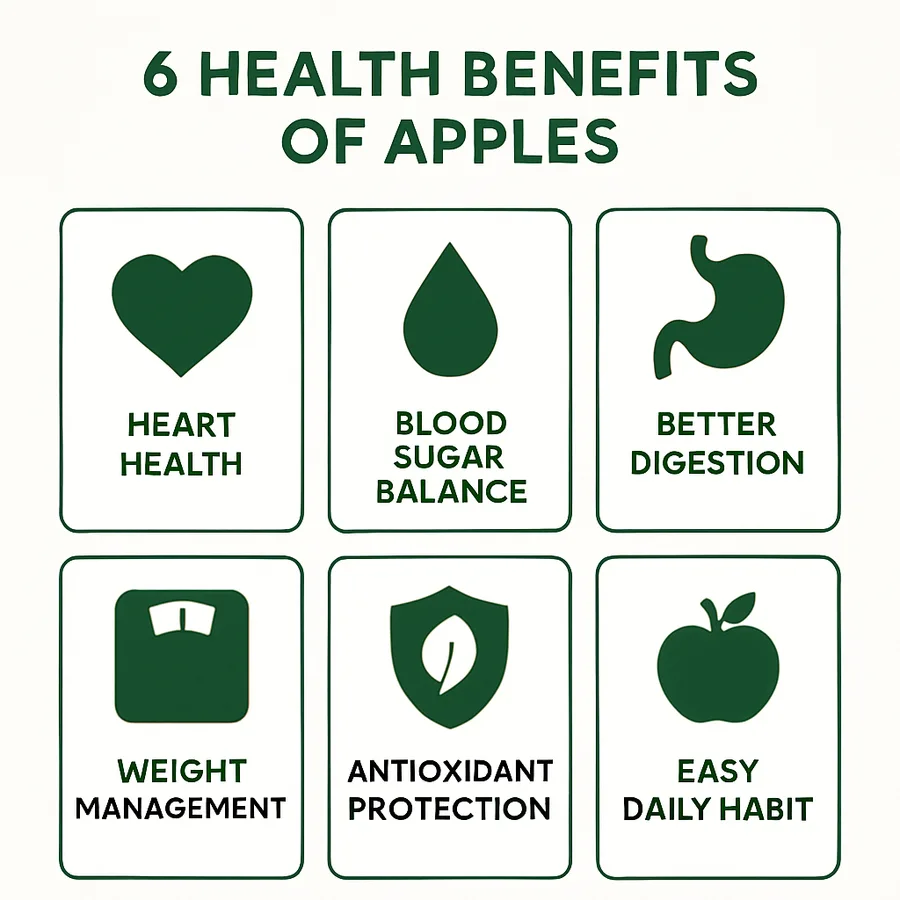
1. Apples May Support Heart Health
Apples contain soluble fiber, especially pectin. Soluble fiber may support healthy cholesterol levels by reducing cholesterol absorption in the digestive system. Apples also contain polyphenols, including quercetin, catechins, chlorogenic acid, and epicatechin. These compounds act as antioxidants and may help protect cells from oxidative stress. For heart health, apples should be viewed as one part of a bigger eating pattern. The NHLBI DASH eating plan recommends fruits, vegetables, whole grains, low-fat dairy, beans, nuts, fish, poultry, and limited saturated fat and added sugar. In simple words, apples help most when the rest of the diet is also healthy.
2. Apples May Help with Blood Sugar Balance
Apples taste sweet, but whole apples are different from candy, soda, or fruit juice. A whole apple contains fiber, water, and plant compounds that slow digestion. Whole raw apples generally have a low glycemic effect. Common glycemic-index references report apples around GI 38–40 and GL around 6, which places them in the low-GI and low-GL category. In simple words, a whole apple usually raises blood sugar more slowly than refined sweets or sugary drinks. That said, individual blood sugar responses vary. For people with diabetes, apples can fit into many meal plans, but portion size still matters. A small or medium apple paired with protein or healthy fat may be more balanced than eating it alone.
Good pairings include apple slices with nuts, peanut butter, Greek yogurt, or cheese. If you notice constant thirst or frequent urination, read about the warning signs of high blood sugar after 60.
3. Apples Are Good for Digestion
One of the strongest benefits of apples is their fiber content. Fiber helps support regular bowel movements, feeds beneficial gut bacteria, and helps you feel full. Pectin, the soluble fiber in apples, acts like a prebiotic. In simple words, it helps feed the good bacteria in your gut. However, people with sensitive digestion may feel gas or bloating if they suddenly eat too much fiber. If that happens, start with smaller portions and drink enough water.
4. Apples May Support Weight Management
Apples are high in water and fiber. That makes them filling for relatively few calories. An apple before lunch, with breakfast, or as an afternoon snack may reduce the desire for highly processed snacks. The crunch and natural sweetness also make apples satisfying. Better snack combinations include:
- Apple with peanut butter
- Apple with low-fat cheese
- Apple slices with Greek yogurt
- Apple with almonds or walnuts
- Apple in oatmeal or muesli
These combinations add protein or healthy fat, which may help you stay full longer.
5. Apples Provide Antioxidants
Apples contain antioxidants such as quercetin, catechins, chlorogenic acid, and anthocyanins. Different apple varieties may offer different antioxidant profiles. Red apples often contain more visible pigments, while green apples may taste more tart and contain slightly different plant compounds. Antioxidants help protect cells from damage caused by free radicals. This does not mean apples can prevent disease on their own. It means they can contribute to a healthier eating pattern. The World Health Organization recommends a balanced diet based on variety, moderation, and minimally processed foods.
6. Apples Are Easy to Add to Your Diet
A major reason apples are useful is convenience. You do not need to cook them. You do not need a recipe. You can keep them in your bag, on your desk, or in the fridge. Simple ways to eat more apples include:
- Eat one as a snack
- Add sliced apple to oatmeal
- Add apple cubes to salad
- Pair apple with peanut butter
- Add apple to homemade coleslaw
- Bake apples with cinnamon
- Add apple slices to a lunchbox
- Use apple slices with yogurt or cottage cheese
For broader fruit guidance, the USDA MyPlate fruit group page is a useful reference.
Which Apple Variety Is the Healthiest?
There is no single “best” apple for everyone. The healthiest apple is usually the one you enjoy eating regularly, preferably with the skin. Still, different apple varieties can help capture different nutrition goals, taste preferences, and long-tail search intent.
| Apple Variety | Best Known For | Practical Health Angle |
|---|---|---|
| Granny Smith | Tart flavor, firm texture, often lower sweetness | Good choice for people who prefer less sweet apples; useful for gut-health and lower-sugar keyword targeting. Granny Smith originated in Eastwood, New South Wales, Australia, giving it strong Southern Hemisphere food-history relevance. |
| Red Delicious | Deep red peel and high skin pigment | Strong variety for antioxidant and anthocyanin-related discussion. Eat with the peel when tolerated. |
| Fuji | Sweet, crisp texture and popular fresh-eating variety | Good for snack compliance; useful for people replacing candy or processed sweets. |
| Gala | Mild, sweet flavor and easy-to-eat texture | Good everyday apple for children, lunchboxes, and people who dislike tart fruit. |
| Honeycrisp | Juicy, crisp, sweet-tart balance | Good fresh snack apple; helpful for “best apple for snacking” searches. |
| Pink Lady / Cripps Pink | Tart-sweet profile and firm texture | Pink Lady / Cripps Pink was originally bred in Western Australia and is known for its crisp texture and longer growing-season profile. It is useful for “best crisp apple,” “Australian apple variety,” and “Pink Lady apple benefits” queries. |

Important note: apple polyphenol levels can vary by growing conditions, storage, ripeness, cultivar, and whether the peel is eaten. For most readers, the best advice is simple: choose different colors and varieties, wash them well, and eat the peel if tolerated.
Whole Apple vs Apple Juice vs Applesauce: Which Is Better?
A whole apple is usually the best choice. The reason is simple: whole apples contain fiber. Apple juice removes much of that fiber and is easier to drink quickly. That can lead to faster sugar intake and less fullness.

| Option | Fiber | Fullness | Sugar Absorption | Best Use |
|---|---|---|---|---|
| Whole Apple | High | High | Slower | Best daily choice |
| Apple Juice | Low | Low | Faster | Occasional drink, small amount |
| Unsweetened Applesauce | Moderate | Medium | Moderate | Useful soft-food option |
| Sweetened Applesauce | Lower value | Medium | Faster | Limit due to added sugar |
Whole apples are best for chewing satisfaction, gut health, and slower digestion. Apple juice can provide flavor and some nutrients, but it is less filling and easier to overconsume. Unsweetened applesauce can be useful, especially for children, older adults, or people who need softer foods. For everyday health, choose whole apples most often.
Should You Peel Apples?
In most cases, you should not peel apples. Apple peel contains fiber and many beneficial polyphenols. If you remove the peel, you lose some nutritional value. The best approach is to wash apples properly and eat the peel unless you have a medical, dental, or digestive reason to avoid it. If apple peel causes discomfort, try peeled apples, cooked apples, or unsweetened applesauce.
Evidence-Based Food Safety Tip: How to Wash Apples Properly
For normal food safety, rinse apples under cool running water and rub the surface with clean hands or a clean produce brush before eating or cutting. Do not wash apples with soap, detergent, bleach, or commercial cleaners unless a food-safety authority specifically approves the product for produce use.

For people especially concerned about surface pesticide residues, one research-backed method is a short baking soda soak. A practical method is:
- Mix 1 teaspoon baking soda into 2 cups cold water
- Soak whole apples for 12–15 minutes
- Gently rub or brush the apple skin
- Rinse again under clean running water
- Dry with a clean towel before eating
A Journal of Agricultural and Food Chemistry study reported that a sodium bicarbonate solution was more effective than tap water alone at reducing tested surface residues of thiabendazole and phosmet on apples. This does not mean baking soda removes every pesticide or eliminates all microbes. It means that, for tested surface residues, a baking soda soak may provide extra residue reduction while still allowing you to keep the fiber-rich peel.
For most people, one apple a day is safe and healthy. But there are situations where moderation matters. Apples may cause gas or bloating in people sensitive to FODMAPs, fructose, or sorbitol. People following a strict ketogenic or very low-carb diet may also need to limit apples because apples contain carbohydrates. People with apple allergy or birch pollen-related oral allergy symptoms should avoid apples or speak with a healthcare professional. Apple seeds should also not be eaten in large amounts. Accidentally swallowing a few seeds is usually not a concern, but chewing and consuming many seeds is not recommended. Read our comprehensive guide whether apple seeds are poisonous.
Best Time to Eat an Apple
There is no perfect time to eat an apple. The best time is the time that helps you maintain a healthy routine.
| Time | Why It May Help |
|---|---|
| Morning | Adds fiber and freshness to breakfast |
| Midday | Works as a simple work or school snack |
| Before workout | Provides light carbohydrates |
| Afternoon | Can replace sweets or processed snacks |
| After dinner | Helps satisfy a sweet craving |
If apples upset your stomach, try eating them with a meal instead of alone.
For a balanced look at the evidence, see Harvard Health Publishing — An Apple a Day May Not Keep the Doctor Away.
How Many Apples Should You Eat Per Day?
For most people, one apple a day is a reasonable habit. Two apples may also be fine for many people, depending on total diet, activity level, blood sugar goals, and digestion. But eating many apples daily is not automatically better. A healthy diet should include variety: berries, citrus fruits, bananas, pears, leafy greens, beans, nuts, seeds, whole grains, and protein-rich foods. The goal is not “only apples.” The goal is a balanced diet that includes apples.
Who Should Be More Careful with Apples?
Most people can enjoy apples regularly. However, some people may need extra care.
| Group | Why Caution May Be Needed | Practical Tip |
|---|---|---|
| People with IBS or FODMAP sensitivity | Apples may trigger gas or bloating | Try smaller portions or cooked apples |
| People with diabetes | Apples contain carbohydrates | Pair with protein or fat |
| People on keto diets | Apples may exceed carb limits | Choose smaller portions |
| People with oral allergy syndrome | Raw apples may trigger mouth/throat symptoms | Ask a healthcare professional |
| People with dental sensitivity | Crunchy apples may be uncomfortable | Try thin slices or cooked apples |
Bottom Line
An apple a day may not literally keep the doctor away, but it is still a smart daily habit. Apples are rich in fiber, water, vitamin C, antioxidants, and beneficial plant compounds. They may support heart health, digestion, blood sugar balance, weight management, and overall wellness. The healthiest choice is usually a whole apple with the skin, eaten as part of a balanced diet. Apple juice is not equal to a whole apple because it lacks the same fiber and fullness. So, the saying is not a medical guarantee. But the habit behind it is still worth keeping.
FAQs About “An Apple a Day Keeps the Doctor Away”
Does an apple a day really keep the doctor away?
Not literally. Research does not prove that eating one apple every day guarantees fewer doctor visits. However, apples are nutritious and can support long-term health as part of a balanced diet.
What did the JAMA apple study find?
The JAMA Internal Medicine study evaluated 8,399 eligible participants. It compared 753 daily apple eaters with 7,646 non-apple eaters. After adjustment, daily apple eating was not significantly linked with fewer doctor visits. However, apple eaters were marginally more likely to avoid prescription medication use.
Is it good to eat an apple every day?
Yes, for most people, eating one apple daily is a healthy habit. Apples provide fiber, water, vitamin C, potassium, and antioxidants.
What are the main health benefits of apples?
The main benefits include better digestion, improved fullness, heart health support, blood sugar balance, and antioxidant protection. Apples are most helpful when eaten as part of a varied and balanced diet.
Are apples good for heart health?
Yes. Apples contain soluble fiber and polyphenols. These may support healthy cholesterol levels and overall cardiovascular health.
Are apples good for people with diabetes?
Whole apples can fit into many diabetes-friendly diets because they contain fiber and have a low glycemic effect. However, portion size matters. People with diabetes should follow their healthcare provider’s meal advice.
What is the glycemic index of an apple?
Whole raw apples are commonly listed around GI 38 to 40, with an estimated glycemic load around 6. This makes apples a low-GI and low-GL fruit for most people, although individual glucose responses can vary.
Is apple juice as healthy as a whole apple?
No. A whole apple is usually healthier because it contains fiber and is more filling. Apple juice has less fiber and is easier to overdrink.
Should I eat apples with the skin?
Yes, if you can tolerate the peel. Apple skin contains fiber and many beneficial polyphenols. Wash apples well before eating.
Can apples help with weight loss?
Apples may support weight management because they are filling, high in water, and relatively low in calories. They work best when they replace less healthy snacks.
Can eating too many apples cause problems?
Yes. Too many apples may cause gas, bloating, stomach discomfort, or excess carbohydrate intake for some people. Moderation is better than overdoing any single food.
Are apples good for gut health?
Yes. Apples contain prebiotic fibers, especially pectin. Pectin can escape digestion in the upper gastrointestinal tract and help feed beneficial gut bacteria. This process may support short-chain fatty acid production, which is one reason apples can be useful for gut-health-focused eating patterns.
Which apple is the healthiest?
There is no single best apple. Granny Smith, Red Delicious, Fuji, Gala, Honeycrisp, and Pink Lady apples all offer useful nutrients. Granny Smith and Pink Lady / Cripps Pink also add useful Australian variety context for readers interested in apple origins. The healthiest apple is usually the one you enjoy eating regularly, preferably with the skin.
What is the best way to eat apples?
The best way is to eat a whole, thoroughly washed raw apple with the skin intact. For better fullness and balanced macros, pair apple slices with natural peanut butter, nuts, unsweetened Greek yogurt, or cheese.
Can apples replace medicine?
No. Apples cannot replace prescribed medicine or medical care. They are a healthy food, not a treatment or cure.
Sources & References
- JAMA Internal Medicine — Association Between Apple Consumption and Physician Visits
- USDA FoodData Central — Raw Apples Nutrition Data
- Harvard Health Publishing — An Apple a Day May Not Keep the Doctor Away
- World Health Organization — Healthy Diet
- NHLBI / NIH — DASH Eating Plan
- University of Sydney Glycemic Index Research Service — GI Database and Glycemic Load Search
- Journal of Agricultural and Food Chemistry Study Coverage — Baking Soda Wash and Apple Pesticide Residues
- FDA Produce Safety Guidance — Selecting and Serving Produce Safely
⚕️ Medical Disclaimer
The information provided on this page is for educational purposes only and is not intended as medical advice, diagnosis, or treatment. Always consult a qualified healthcare professional before making changes to your diet, starting any supplement, or if you have an existing medical condition. KeepFitQuote does not provide medical diagnoses or treatment recommendations. Read our full disclaimer.