
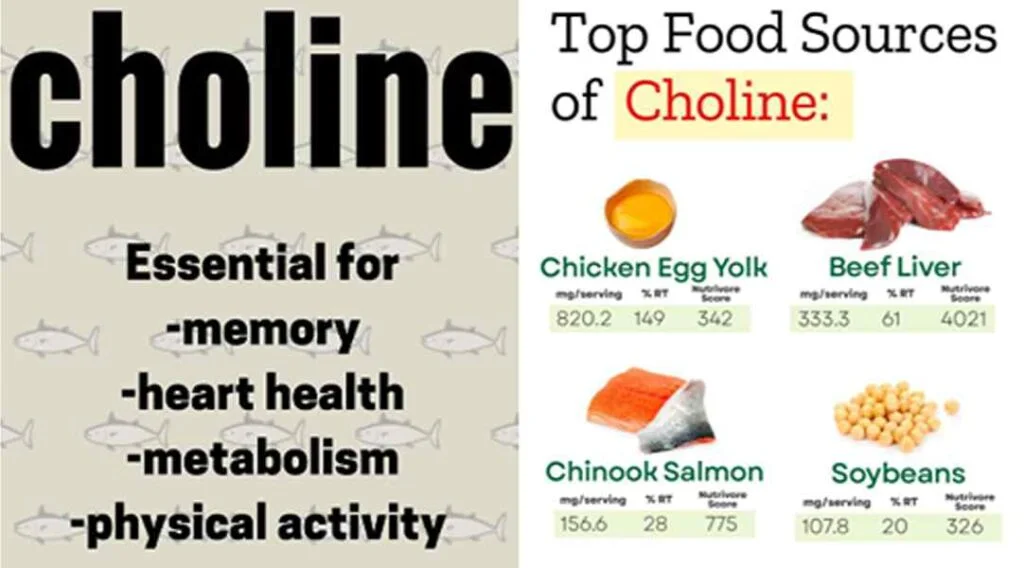
Choline helps your brain make acetylcholine (for memory and focus) and phospholipids (for healthy cell membranes). Top everyday food sources in U.S. kitchens include eggs (≈147 mg/egg), beef liver (≈356 mg/3 oz), salmon and white fish, chicken breast, shrimp, soy/edamame, and cruciferous vegetables like broccoli and Brussels sprouts. Aim for roughly 425 mg/day (women) and 550 mg/day (men) from real foods. Office of Dietary Supplements
Despite being classified as an essential nutrient since 1998, choline remains one of the most overlooked gaps in the American diet. National nutrition surveys consistently show that fewer than 10% of U.S. adults meet the Adequate Intake for choline — a shortfall with real consequences, particularly for brain function, liver health, and fetal development. For adults over 50, adequate choline intake is especially relevant: acetylcholine — the neurotransmitter choline produces — is the same chemical that is depleted in Alzheimer’s disease, and research suggests that long-term dietary choline intake may influence cognitive aging trajectories. The foods on this list are not exotic or expensive. They are the eggs, fish, chicken, and vegetables already familiar to most American households — and understanding their choline content gives you a concrete reason to keep them on the plate consistently.
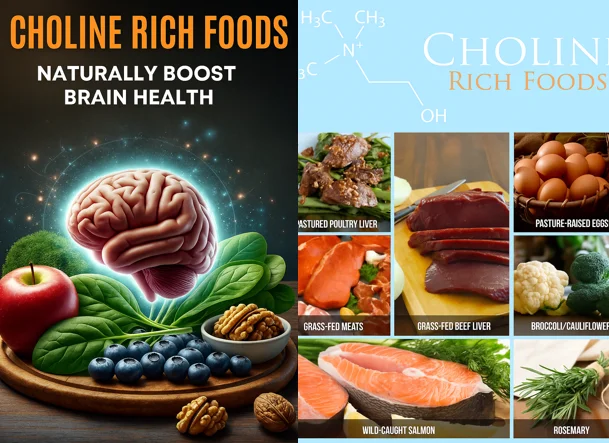
Table of Contents
What Is Choline (and Why Your Brain Loves It)
Choline is an essential nutrient. Your body uses it to make acetylcholine (a neurotransmitter crucial for memory, learning, and muscle control) and phosphatidylcholine/sphingomyelin (key parts of cell membranes, including brain cells). You make a little in your liver, but not enough, so diet matters. Office of Dietary Supplements
To understand why choline matters so much for brain health, it helps to appreciate what acetylcholine actually does. It is the primary neurotransmitter of the parasympathetic nervous system and plays a central role in the encoding and retrieval of memories, in sustained attention, and in coordinating the muscular signals that allow everything from fine motor control to swallowing. Cholinergic neurons — the brain cells that use acetylcholine — are among the first to deteriorate in Alzheimer’s disease, and research from the Framingham Heart Study found that higher dietary choline intake was associated with better cognitive performance and more favorable brain MRI markers in older adults. Beyond acetylcholine, phosphatidylcholine — the phospholipid that choline builds — makes up roughly 40% of the cell membrane of every cell in the body. In the brain, it provides the structural scaffolding that allows neurons to communicate efficiently. Choline also plays a key role in the methyl-donor pathway, supporting DNA expression and liver fat metabolism. It is, in short, a nutrient that does an extraordinary amount of work — and most Americans are not getting nearly enough of it.
How Much Choline Do You Need? (U.S. guidelines)
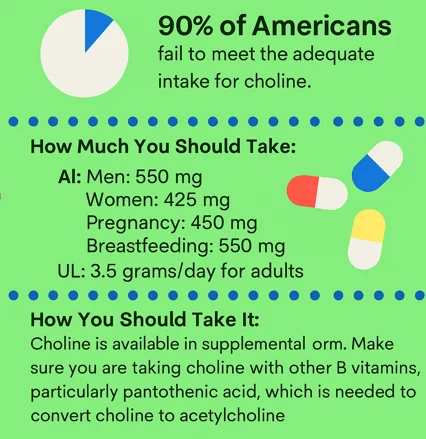
There isn’t an RDA, but the U.S. Food and Nutrition Board set Adequate Intakes (AI) to prevent deficiency: generally ~425 mg/day for women and ~550 mg/day for men (higher in pregnancy/lactation). Most Americans fall short of these intakes from food alone, so building a choline-smart grocery list helps. Office of Dietary Supplements
The absence of a formal Recommended Dietary Allowance (RDA) for choline does not mean the target is unimportant — it reflects the scientific complexity of establishing one, since choline needs vary significantly based on genetics. Roughly one in three Americans carries a genetic variant (in the PEMT gene) that makes them particularly dependent on dietary choline, because their bodies are even less efficient at synthesizing it endogenously. For these individuals, the AI is a meaningful minimum rather than a comfortable target. Choline deficiency in adults manifests as fatty liver disease, muscle damage, and — most relevant to this guide — impaired cognitive function. Signs of insufficient intake include brain fog, memory lapses, and poor concentration, symptoms that are easily attributed to aging but may partly reflect correctable nutritional shortfalls. The reassuring news: meeting the AI is very achievable through food alone. Two eggs cover roughly 60–70% of a woman’s daily target. Add a serving of fish at dinner and a cup of broccoli, and you’ve hit 425 mg without any special products or supplements.
The 7 Best Choline-Rich Foods
All nutrition figures below reflect typical U.S. servings from NIH/USDA tables; variability occurs by brand and preparation. Use these as practical estimates.
1) Eggs
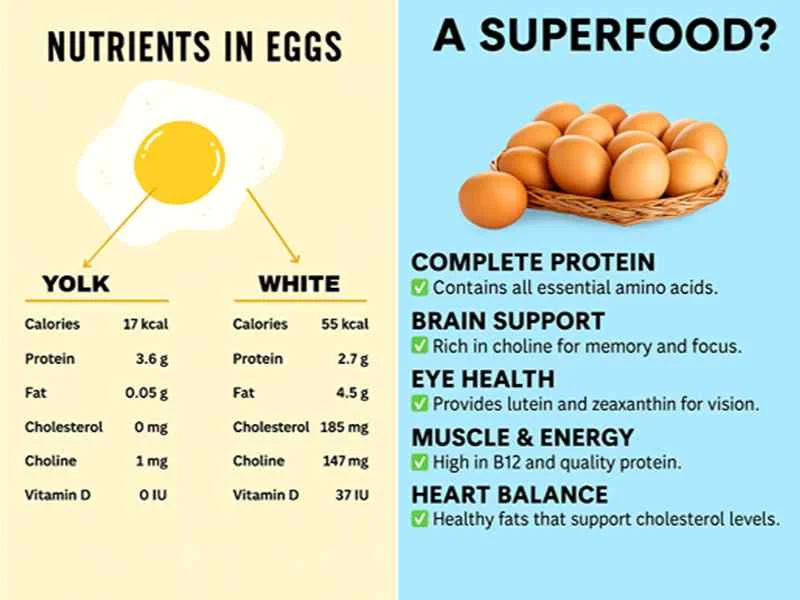
- Why they help: One large whole egg delivers about 147 mg of choline, mainly in the yolk—a fast track toward your daily goal. Office of Dietary Supplements
- Easy U.S. swaps: Breakfast scramble with spinach; hard-boiled eggs for lunch boxes; a veggie-loaded frittata for Sunday meal prep.
- Smart tip: If you’re watching heart health, pairing eggs with vegetables (instead of processed meats) fits modern guidance and preserves nutrients like choline and B12. Verywell Health
Eggs are the single most practical choline source available to the average American, and they have the additional advantage of delivering choline in the phosphatidylcholine form — the same form used in cell membranes — which research suggests is absorbed more efficiently than free choline or choline supplements. A 2019 study published in the American Journal of Clinical Nutrition found that the choline from egg yolks had a bioavailability of approximately 85%, significantly higher than many plant-based sources. Two whole eggs at breakfast therefore provide roughly 294 mg of highly absorbable choline, getting most women most of the way to their daily AI before lunch. The yolk is the key: egg whites contain essentially no choline, making whole-egg preparations far superior to egg-white-only options. For adults over 50 who are managing cholesterol, the current guidance from the American Heart Association does not categorically restrict eggs; most healthy people can include one egg daily within a heart-healthy diet rich in vegetables, legumes, and whole grains.
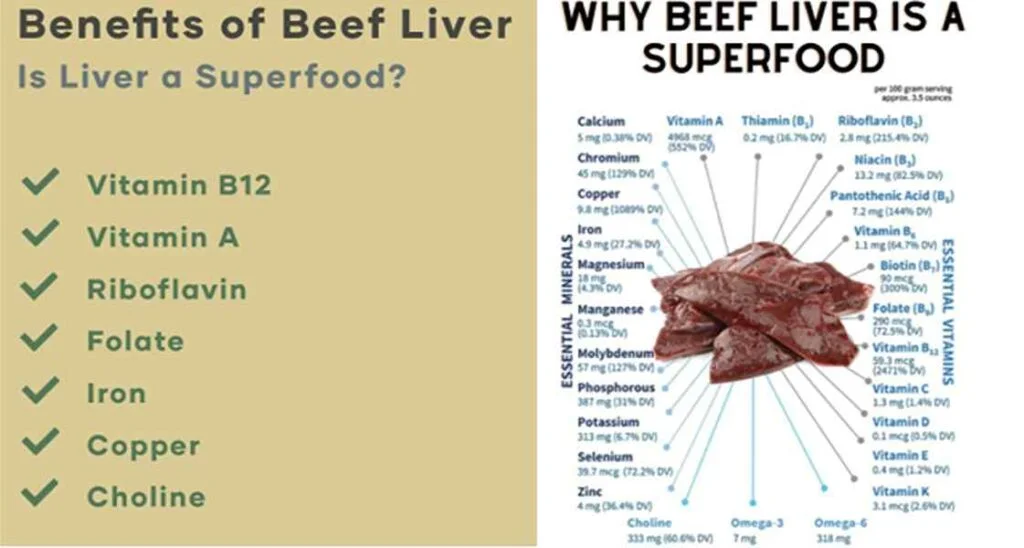
2) Beef Liver
- Why it helps: Top of the charts—~356 mg choline per 3 oz cooked. Even occasional servings move the needle. (It’s also packed with B-vitamins and iron.) Office of Dietary Supplements
- U.S. prep ideas: Sauté with onions; blend a small amount into chili or meatloaf for a nutrient boost.
- Note: Liver is nutrient-dense (notably vitamin A). Rotate with other proteins if you’re not used to it.
Beef liver is nutritionally extraordinary — in addition to its 356 mg of choline per three-ounce serving, it provides complete protein, iron (particularly heme iron, the most bioavailable form), vitamin B12 at levels that dwarf any other whole food, folate, copper, and preformed vitamin A (retinol). For adults over 60 who are at risk of B12 deficiency — a common and often undiagnosed issue in this age group due to declining stomach acid production — liver is one of the most efficient single-food interventions available. The vitamin A caveat is worth understanding clearly: a single three-ounce serving of beef liver provides approximately 444% of the daily recommended vitamin A as retinol. This is not a problem for an occasional serving (once or twice a week), but consuming large amounts daily could lead to vitamin A toxicity over time. For people who dislike the strong flavor, blending two tablespoons of cooked liver into a chili, tomato sauce, or meatloaf effectively conceals both the taste and texture while delivering a substantial choline and micronutrient contribution.
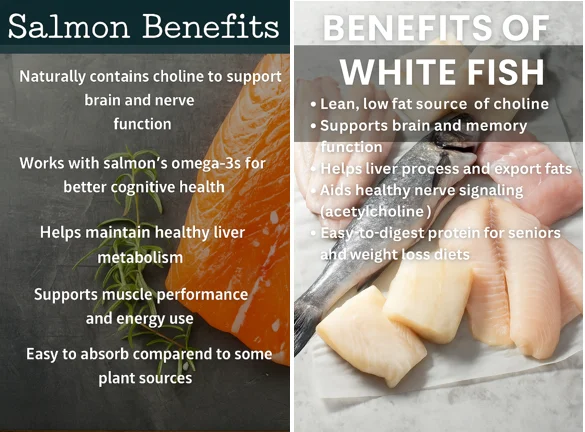
3) Salmon & White Fish
- Why they help: Salmon, cod, and other fish contribute meaningful choline while delivering omega-3s (salmon) for overall brain support. Example: cod ~71 mg/3 oz. Office of Dietary Supplements
- U.S. prep ideas: Sheet-pan salmon with broccoli; fish tacos with cabbage slaw; tuna-and-bean salad for a budget-friendly lunch.
- Bonus: Canned salmon is pantry-ready and affordable.
Fish is the rare food that delivers choline and omega-3 fatty acids simultaneously — two nutrients that work synergistically in the brain. DHA (docosahexaenoic acid), the omega-3 most concentrated in salmon, is a structural component of neuronal membranes and works alongside phosphatidylcholine to maintain the fluidity and signaling capacity of brain cell membranes. Research from the Rush Memory and Aging Project found that eating fish at least once per week was associated with significantly slower cognitive decline over a 4.9-year period. Three ounces of wild salmon provides approximately 187 mg of choline alongside 1,800 mg of omega-3s. Atlantic salmon farmed in the U.S. is a reliable and more affordable option, providing comparable omega-3 levels. For adults on a budget, canned light tuna provides roughly 37 mg of choline per three ounces plus omega-3s, and canned wild salmon provides about 138 mg — both cost-effective ways to incorporate fish multiple times per week. Aim for two or more fish servings per week to support both choline intake and cardiovascular health.
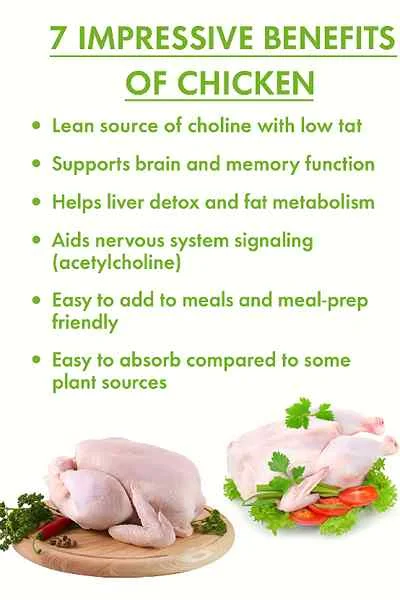
4) Chicken Breast
- Why it helps: Lean, versatile, and accessible—~72 mg choline per 3 oz roasted. Great for high-protein meal prep. Office of Dietary Supplements
- U.S. prep ideas: Grilled chicken bowls with brown rice and Brussels sprouts; rotisserie-style chicken wraps with veggies.
Chicken breast is the most widely consumed protein in the United States, making it a strategically important source of dietary choline simply because of how often it appears on American plates. At 72 mg per three ounces, it is not the most concentrated source — but a typical five- to six-ounce chicken breast at dinner delivers 120–145 mg, which adds meaningfully to the day’s total when combined with eggs at breakfast and a fish or soy source at lunch. The USDA reports that Americans eat an average of about 100 pounds of chicken per person per year, far more than any other meat — which means optimizing how it is prepared and what it is served alongside can have significant nutritional impact at the population level. Dark meat (thighs and drumsticks) contains slightly more choline than breast meat and is also higher in zinc and iron, making it a nutritionally richer choice. Pairing chicken with Brussels sprouts or broccoli creates a genuinely choline-dense meal: the chicken provides a medium-large animal-source contribution while the cruciferous vegetables add plant-based choline, fiber, and vitamin C.
5) Shrimp
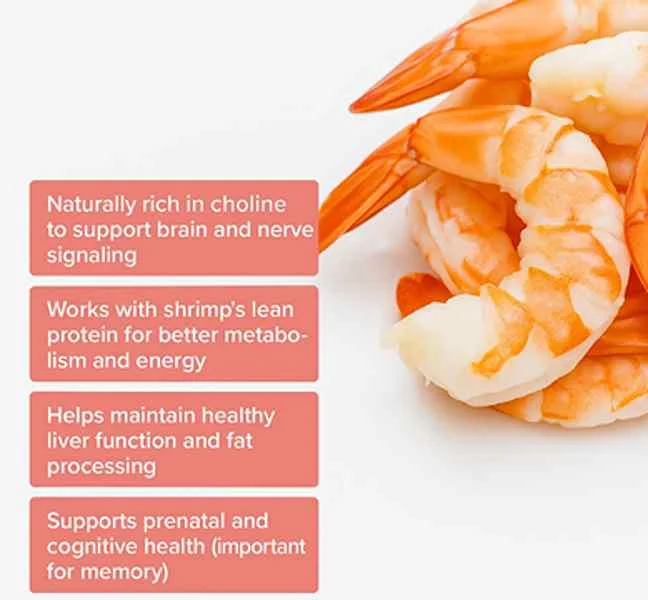
- Why it helps: Cooked shrimp can contribute roughly ~115 mg per 3 oz—a handy, low-calorie way to bump up choline. My Food Data
- U.S. prep ideas: Shrimp stir-fry with edamame; shrimp Caesar (use a lighter dressing); shrimp and veggie skewers.
Shrimp is the most popular seafood in the United States by volume, and its choline density is often underappreciated. At approximately 115 mg per three-ounce serving, it provides more choline per calorie than almost any other protein — a three-ounce serving contains only about 85 calories while delivering the choline equivalent of nearly one whole egg. Shrimp is also an excellent source of iodine (important for thyroid function, which is commonly affected in older adults), selenium, and vitamin B12. The cholesterol content of shrimp — approximately 166 mg per three ounces — was once a concern, but current research and dietary guidelines have shifted away from categorizing dietary cholesterol as the primary driver of cardiovascular risk for most people. For adults without specific cardiovascular contraindications, shrimp two to three times per week is consistent with heart-healthy dietary patterns. Frozen shrimp sold at U.S. grocery stores (particularly at club stores like Costco) offers excellent value, and because it is individually quick-frozen, it maintains its nutritional profile well through storage and reheating.
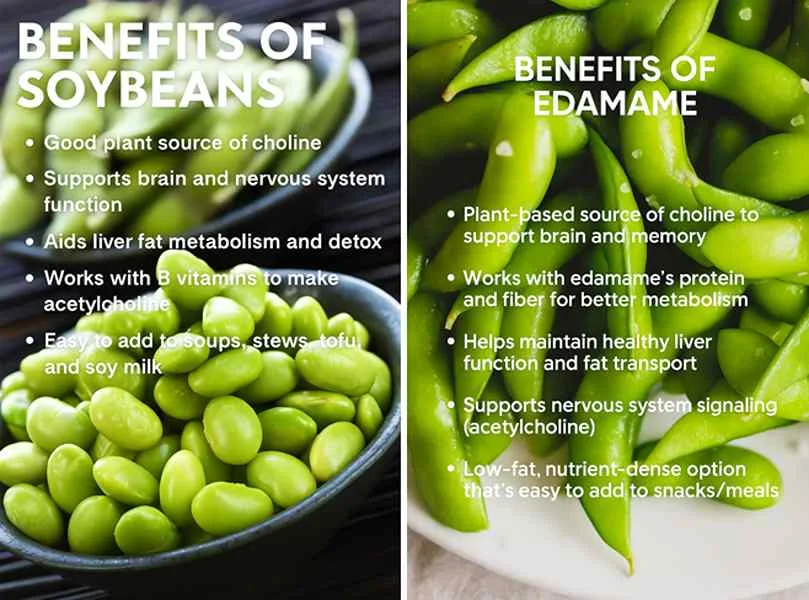
6) Soybeans & Edamame
- Why they help: Plant-forward and budget-friendly. Roasted soybeans ~107 mg per ½ cup; edamame adds a steady contribution in a cup of pods. Office of Dietary Supplements
- U.S. prep ideas: Frozen edamame tossed with sea salt; soybean/edamame added to grain bowls or noodle salads.
Among plant-based choline sources, soybeans and edamame stand apart — not just for their choline content but because soy is one of the very few plant proteins that is complete, meaning it provides all nine essential amino acids in adequate proportions. This makes edamame and soy foods particularly valuable for vegetarians and vegans seeking to meet both their protein and choline needs without animal products. A half-cup of roasted soybeans provides approximately 107 mg of choline; a cup of shelled edamame contributes roughly 87 mg. Tofu and soy milk also contribute, though at lower concentrations. Research from the Boston University Women’s Health Study found that higher dietary choline intake — including from soy sources — was associated with better cognitive performance, suggesting the plant-based form is physiologically effective. Frozen edamame is one of the most convenient whole-food proteins available: it cooks in three minutes in boiling water, pairs well with virtually any grain or salad, and costs less than two dollars per serving at most U.S. grocery stores. For adults who prefer plant-based eating, edamame is the closest whole-food equivalent to eggs in terms of choline contribution per serving.
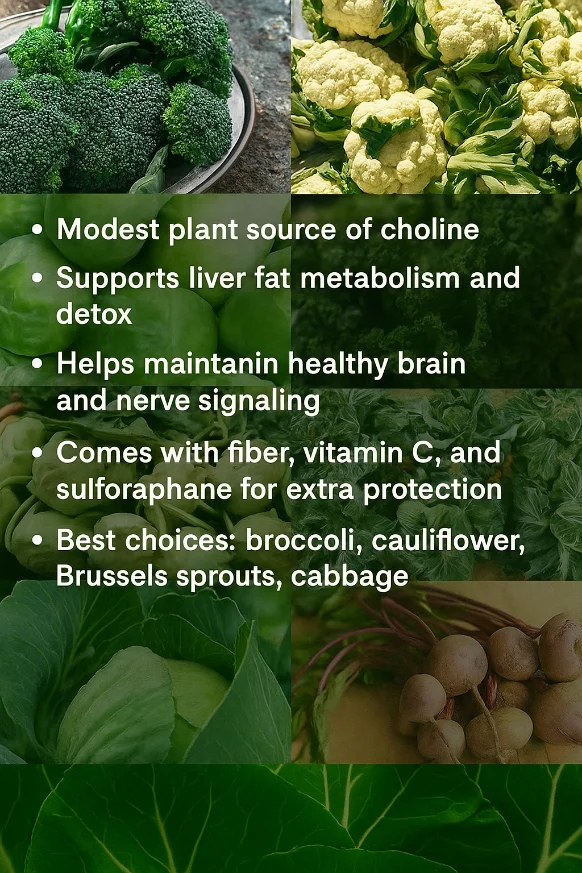
7) Cruciferous Veggies
- Why they help: Broccoli (~31–62 mg per ½–1 cup cooked) and Brussels sprouts (~32–63 mg per ½–1 cup) offer plant-based choline plus fiber and phytonutrients—ideal as the “green half” of your plate. Office of Dietary Supplements
- U.S. prep ideas: Roast broccoli with garlic; shred Brussels sprouts into a lemon-Parmesan salad; add cauliflower rice to burrito bowls.
Cruciferous vegetables are the most choline-rich foods in the plant kingdom outside of soybeans, and they bring an extraordinary supporting cast of nutrients with them. Broccoli, Brussels sprouts, cauliflower, and cabbage contain glucosinolates — compounds that convert to sulforaphane and indole-3-carbinol in the body, both of which have been studied for their protective effects on brain and cardiovascular tissue. A 2021 analysis in the Frontiers in Nutrition journal found that higher cruciferous vegetable intake was associated with lower rates of cognitive decline in older adults, an effect likely mediated by a combination of choline, folate, vitamin K, and the glucosinolate compounds. Cooked cruciferous vegetables provide slightly more bioavailable choline than raw, because heat breaks down cell walls. Roasting at high heat (425°F) caramelizes the natural sugars and dramatically improves palatability — even confirmed vegetable-avoiders tend to enjoy well-roasted broccoli or Brussels sprouts. Frozen cruciferous vegetables maintain their nutritional profile nearly as well as fresh and offer substantial cost savings, particularly useful for older adults on fixed incomes seeking maximum nutritional value per dollar spent.
A Real-World Celebrity Snapshot
Joe Rogan (comedian, UFC commentator, and podcaster) has publicly shared “elk and eggs for breakfast,” highlighting a practical, protein-forward plate many Americans already enjoy. While he didn’t cite choline specifically, eggs (a staple in that meal) are a leading choline source—demonstrating how public figures often lean on simple, whole-food breakfasts that also happen to support brain nutrition. facebook.com
The “eggs and protein at breakfast” pattern that Rogan describes is increasingly supported by research on cognitive performance and morning brain function. A 2021 study published in Nutrients found that participants who ate choline-rich breakfasts (including eggs) performed significantly better on working memory and attention tasks in the hours following the meal, compared to those who ate lower-choline breakfasts. The mechanism is straightforward: dietary choline is absorbed and enters the brain’s acetylcholine synthesis pathway within three to four hours of consumption. Starting the day with a choline-rich meal essentially pre-loads the neurotransmitter that drives focus, memory encoding, and mental energy. For the 50+ reader, this is actionable: making two whole eggs a consistent part of breakfast — whether scrambled with vegetables, hard-boiled, or folded into oatmeal — is one of the simplest daily investments in brain function available. It costs less than a dollar, takes less than five minutes, and delivers a more meaningful cognitive benefit than most supplements on the market.

Simple U.S. Meal Ideas (No Supplements Needed)
- 5-Minute Breakfast: 2 eggs scrambled with leftover broccoli + whole-grain toast (≈300 mg+ choline from eggs alone).
- Workday Lunch: Salmon pouch + quinoa + edamame + lemon-olive oil vinaigrette.
- Budget Dinner: Chicken breast tacos with cabbage slaw; side of roasted Brussels sprouts.
- Snack: Hard-boiled egg or a handful of roasted soybeans.
A practical day built around these four meals delivers approximately 450–550 mg of choline — enough to meet the AI for both women and men — without any specialized products, supplements, or unusual ingredients. The breakfast alone (two eggs + broccoli) provides roughly 330 mg. The salmon lunch adds another 130–190 mg depending on portion size. The chicken-and-Brussels-sprouts dinner contributes 150–200 mg. In total, this is a day of eating that most American adults would recognize as normal, affordable, and enjoyable — proof that meeting choline targets through food is entirely practical. For seniors who find cooking burdensome, hard-boiled eggs (which can be made in batches and kept refrigerated for a week), canned salmon pouches, and frozen edamame are all zero-prep or minimal-prep options that preserve the choline content fully. The roasted soybean snack — available at most U.S. grocery stores and online — is shelf-stable, portable, and delivers 107 mg per half-cup serving, making it an ideal option for snacking between meals.
10+ Quick Q&A
1) What does choline actually do for the brain?
It helps make acetylcholine, the neurotransmitter tied to memory and focus, and supports cell membranes in brain tissue. Without adequate choline, both the chemical signaling and the structural integrity of brain cells are compromised. Office of Dietary Supplements
2) How much choline do U.S. adults need daily?
General AI: ~425 mg/day for women and ~550 mg/day for men (higher in pregnancy/lactation). These are minimums to prevent deficiency, not necessarily optimal targets for cognitive performance. Office of Dietary Supplements
3) What’s the easiest way to meet choline needs without supplements?
Start with eggs (≈147 mg each). Add fish, chicken, shrimp, soy/edamame, and cruciferous veggies during the week. Two eggs at breakfast plus one other choline-rich food at lunch or dinner covers most adults’ needs.
4) Are egg yolks necessary?
Yes — most of an egg’s choline is in the yolk. Egg whites alone provide negligible choline. Consider pairing whole eggs with vegetables for a heart-smart, choline-rich meal. Office of Dietary Supplements
5) Is beef liver “too much” for everyday?
It’s extremely nutrient-dense (~356 mg choline/3 oz). Once or twice a week is appropriate; daily consumption of large amounts may provide excess vitamin A over time. Consult your clinician if you have vitamin A or iron concerns.
6) What if I’m pescatarian or vegetarian?
Fish (like cod or salmon) and soy foods/edamame are strong options; broccoli and Brussels sprouts help round out plant-based totals. Vegetarians eating eggs have a major advantage — eggs alone can nearly meet the daily AI.
7) Do most Americans get enough choline?
No. Analyses show many U.S. adults fall short of the AI from food alone, with estimates suggesting fewer than 10% of Americans meet the recommended intake. Building menus around the foods above is the most effective fix.
8) Can I rely on “superfoods” alone?
No single food covers everything. A balanced pattern — lean proteins, fish, eggs, legumes/soy, whole grains, vegetables — works best and delivers choline alongside the other nutrients it needs to function effectively.
9) Are there official U.S. nutrient tables I can check?
Yes: USDA FoodData Central (search specific foods) and NIH’s Office of Dietary Supplements Table 2 for quick choline estimates. FoodData Central
10) Any research linking choline intake and cognition in older adults?
Emerging studies — including work from the Framingham Heart Study and the Boston University cohort — explore associations between dietary choline and cognitive measures in older adults. Evidence is promising and consistently directional, though the research is still developing. PMC
11) Are plant sources meaningful?
Yes. Soybeans/edamame and cruciferous vegetables contribute real choline — particularly valuable for vegetarians and vegans — and bring fiber, phytonutrients, and additional micronutrients that support overall brain health alongside choline.
12) What about cholesterol and eggs?
Recent guidance allows moderate egg intake within heart-healthy patterns. Most current evidence does not support restricting eggs to one per week for healthy adults. Pair them with vegetables and whole foods, and discuss personal targets with your clinician. Verywell Health
Sources & Further Reading
- NIH Office of Dietary Supplements — Choline (Health Pros Fact Sheet)
ods.od.nih.gov/factsheets/Choline-HealthProfessional - USDA FoodData Central
fdc.nal.usda.gov - USDA/ARS Choline Database (PDF)
nal.usda.gov/sites/default/files/page-files/choline.pdf - Oregon State — Linus Pauling Institute: Choline
lpi.oregonstate.edu/mic/other-nutrients/choline - Cleveland Clinic: Choline-Rich Foods
health.clevelandclinic.org/choline-foods - MyFoodData: High-Choline Foods
myfooddata.com/articles/high-choline-foods.php - PMC — Dietary choline and cognitive measures in older adults
ncbi.nlm.nih.gov/pmc/articles/PMC12482226 - Verywell Health — Eggs, cholesterol & heart health
verywellhealth.com/what-to-know-eggs-cholesterol-heart-health
⚕️ Medical Disclaimer
The information provided on this page is for educational purposes only and is not intended as medical advice, diagnosis, or treatment. Always consult a qualified healthcare professional before making changes to your diet, starting any supplement, or if you have an existing medical condition. KeepFitQuote does not provide medical diagnoses or treatment recommendations. Read our full disclaimer.
Related Posts









Would you be focused on exchanging links?