Mustard Oil for Seniors in the US: Why You Shouldn’t Cook With It (and How to Use It Safely for Achy Knees)
Written by Allan Smith · Medically reviewed by Dr. Mark McGarey, MBBS · Last Updated: September 23, 2026
If you are searching for mustard oil for knee pain seniors in the United States, the grocery shelf can feel confusing. Many bottles say “for external use only.” That label is not marketing fluff—it is a safety signal.
For adults over 60—especially anyone managing blood pressure, heart concerns, or stiff knees—the practical US approach is simple:
- Do not cook with typical expressed (pressed) mustard oil sold for external use in the US.
- Gentle warm topical use for achy knees may be an option for some people, after a patch test and with realistic expectations.
This KeepFitQuote guide explains why the FDA treats many mustard oils differently from everyday cooking oils, what small joint studies actually show, and how to use a cautious massage routine—or skip it. It is educational, not a substitute for personal medical advice. If a knee is swollen, red, unstable, or suddenly much worse, talk with your clinician first.
Table of contents
- Quick answer for busy readers
- Why US mustard oil bottles say “external use only”
- Mustard oil for knee pain after 60: what research really says
- Safer warm mustard oil massage for achy knees
- Who should skip mustard oil on the skin
- Better-supported ways to ease stiff knees after 60
- What to cook with instead
- FAQ
- Red flags—see a clinician promptly
- Bottom line
- Sources
Quick answer for busy readers
| Question | Short answer (US) |
|---|---|
| Can I fry with mustard oil from the Indian grocery? | Usually no. Most expressed mustard oil here is not approved as a cooking oil because of erucic acid. Look for “external use only.” |
| Is mustard oil banned forever? | Not every mustard product. Expressed mustard oil with unsafe erucic acid levels is treated as an unsafe food additive; FDA Import Alert 26-04 covers detention. A different product—essential/volatile mustard oil—can be used as a tiny flavoring under food rules. |
| Is mustard oil for knee pain seniors worth trying? | Maybe, if skin is healthy, you patch-test, keep oil warm (not hot), and stop if irritation starts. Evidence of lasting benefit is limited. |
| Will it cure arthritis? | No. At best, some people feel short-term comfort from warmth plus massage. It does not reverse osteoarthritis. |
Why US mustard oil bottles say “external use only”
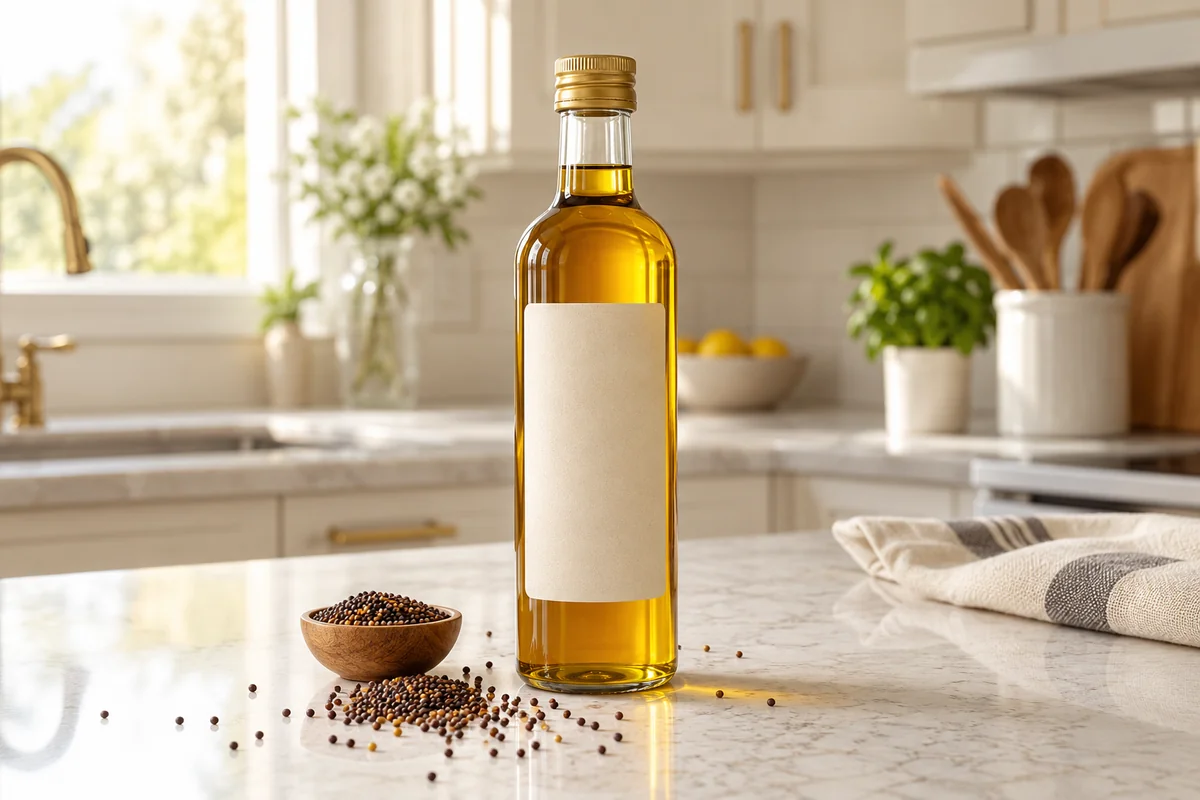
People casually call two different products “mustard oil,” and that mix-up drives most US confusion:
- Expressed (pressed / cold-pressed) mustard oil is squeezed from mustard seeds. In parts of South Asia it is a familiar cooking oil. Animal research linked high erucic acid intake to heart muscle changes. Because of that concern, the FDA treats mustard oil with unsafe erucic acid levels as an unsafe food additive. Import Alert 26-04 allows detention of expressed mustard oil shipments that appear to violate those rules.
- Essential (volatile) mustard oil is a concentrated flavoring made by distillation. Used in tiny flavor amounts, it is generally recognized as safe (GRAS) as a flavoring under US food regulations. That is not the same as pouring pressed mustard oil into a frying pan.
So when a US bottle says “for external use only,” take it seriously. Relabeling a cooking oil as “massage oil” does not make high-erucic-acid oil a heart-smart kitchen staple for seniors.
Practical shopping tip: If the label is for external use, keep it in the bathroom or bedside drawer—not next to your olive oil. For a plain-language overview of expressed versus essential mustard oil, see Poison Control’s mustard oil safety article.
Mustard oil for knee pain after 60: what research really says
Warm oil massage is comforting for many older adults. Heat can increase local blood flow, and gentle massage may ease muscle tension around a stiff joint. That does not mean mustard oil is a proven arthritis treatment.
What we have so far:
- Small nursing and community studies (often outside the US) compared warm mustard oil massage with olive oil or with mustard oil plus camphor. Some reported short-term drops in pain scores among adults with joint discomfort, including people in midlife and older age groups.
- Study sizes are often modest. Methods are not always as rigorous as large modern clinical trials, and results do not prove long-term joint repair or cartilage regrowth.
- Larger, carefully controlled trials specifically for US seniors remain limited.
Honest takeaway: Warm mustard oil massage may feel soothing for some people with mild knee stiffness. Treat it like a comfort habit, not a replacement for strength training, healthy weight support, physical therapy, or prescribed care. If you want mustard oil for knee pain seniors to be part of your routine, pair it with habits that have stronger evidence—not instead of them.
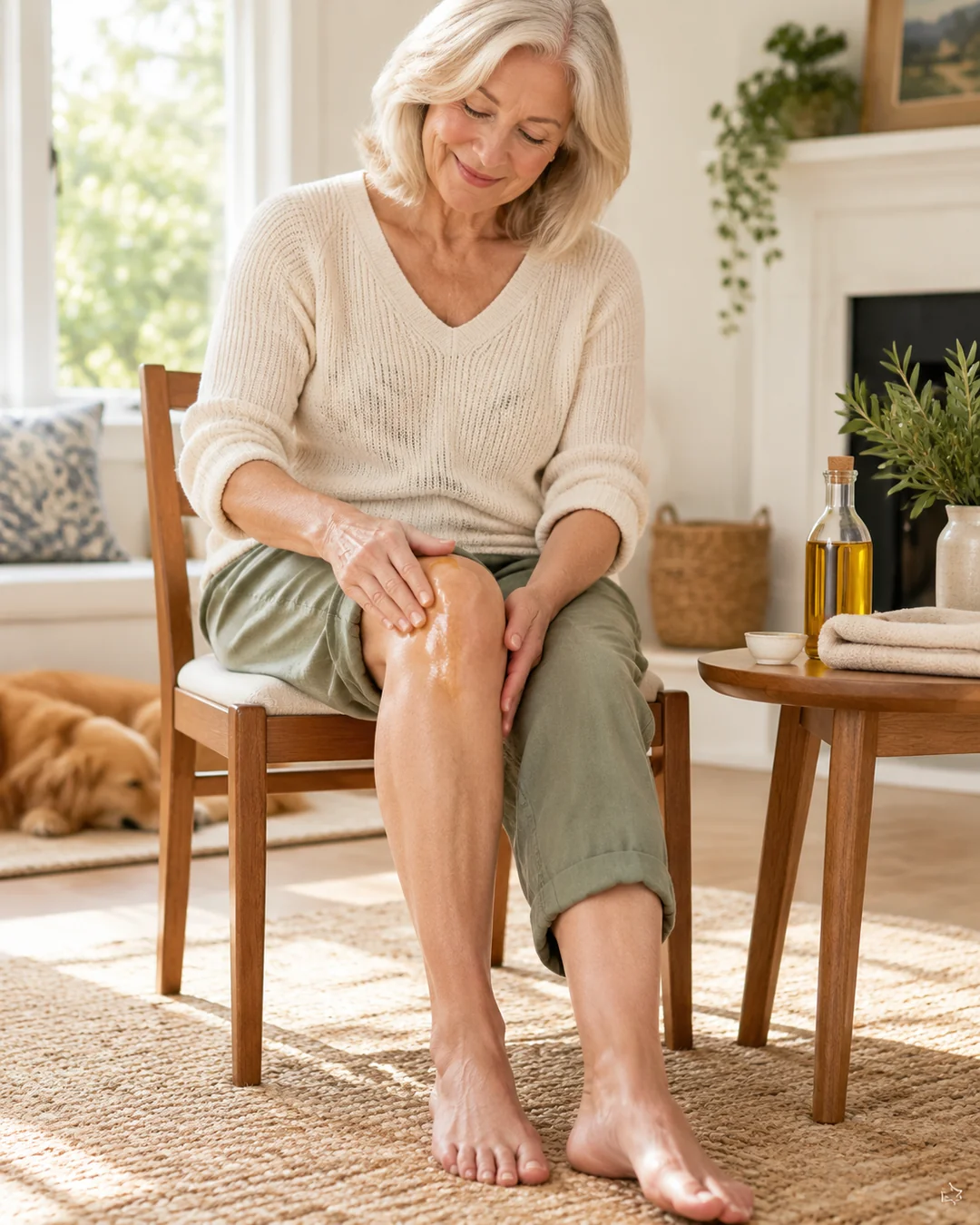
Safer warm mustard oil massage for achy knees (step by step)
Only try this if the skin on the knee is intact (no open cuts, rashes, or active infection), you are not allergic to mustard or related plants, and you can feel temperature safely—especially important if you have neuropathy.
- Patch test (day before). Rub a drop on the inner forearm. Wait 24 hours. If redness, itching, or burning appears, skip mustard oil.
- Warm the oil gently. Place a small amount in a glass bowl over warm (not boiling) water, or warm the closed bottle briefly in a bowl of warm water. Aim for body-warm to comfortably warm—never hot. Test on your wrist.
- Wash and dry the knee. Sit in a stable chair with feet flat on the floor.
- Apply a teaspoon or two. Use circular motions around (not grinding into) the kneecap for 5–10 minutes. Keep pressure light to moderate.
- Wipe excess with a soft cloth. Optional: loose cotton pants so fabric does not trap harsh heat.
- Frequency. Start 2–3 evenings a week. More is not better if skin gets irritated.
Do not: use mustard oil as a plaster under a heating pad (burn risk); put oil on cracked diabetic feet or numb skin; swallow external-use oil “for joints”; or mix in unknown essential oils without pharmacist clearance.
Who should skip mustard oil on the skin
Talk with your clinician before topical mustard oil if you have diabetes-related neuropathy or poor foot/leg sensation; thin, fragile, or steroid-thinned skin; a history of contact dermatitis or mustard allergy; medicines that make skin more sensitive; or a hot, swollen, red joint that could be an inflammatory flare.
If burning lasts more than a few minutes after you wipe the oil off, rinse with mild soap and cool water and stop using it.
Better-supported ways to ease stiff knees after 60
Mustard oil can sit beside these habits—not above them:
- Daily movement you can sustain — short walks, water exercise, or chair routines.
- Strength for hips and thighs — stronger muscles help unload the knee.
- Healthy weight range when appropriate — even modest loss can ease joint load.
- Heat or cold as directed — warm shower before movement; ice after a flare if recommended.
- Clinician-guided care — physical therapy, bracing, or medicines when needed.
For broader pain patterns after 60, see our guide on pain after 60. Circulation-friendly meals and heart habits also support mobility—see best foods for circulation and preventing clogged arteries.

What to cook with instead (heart-friendlier US kitchen swaps)
If you miss the flavor of mustard-oil cooking, keep both taste and heart health in mind:
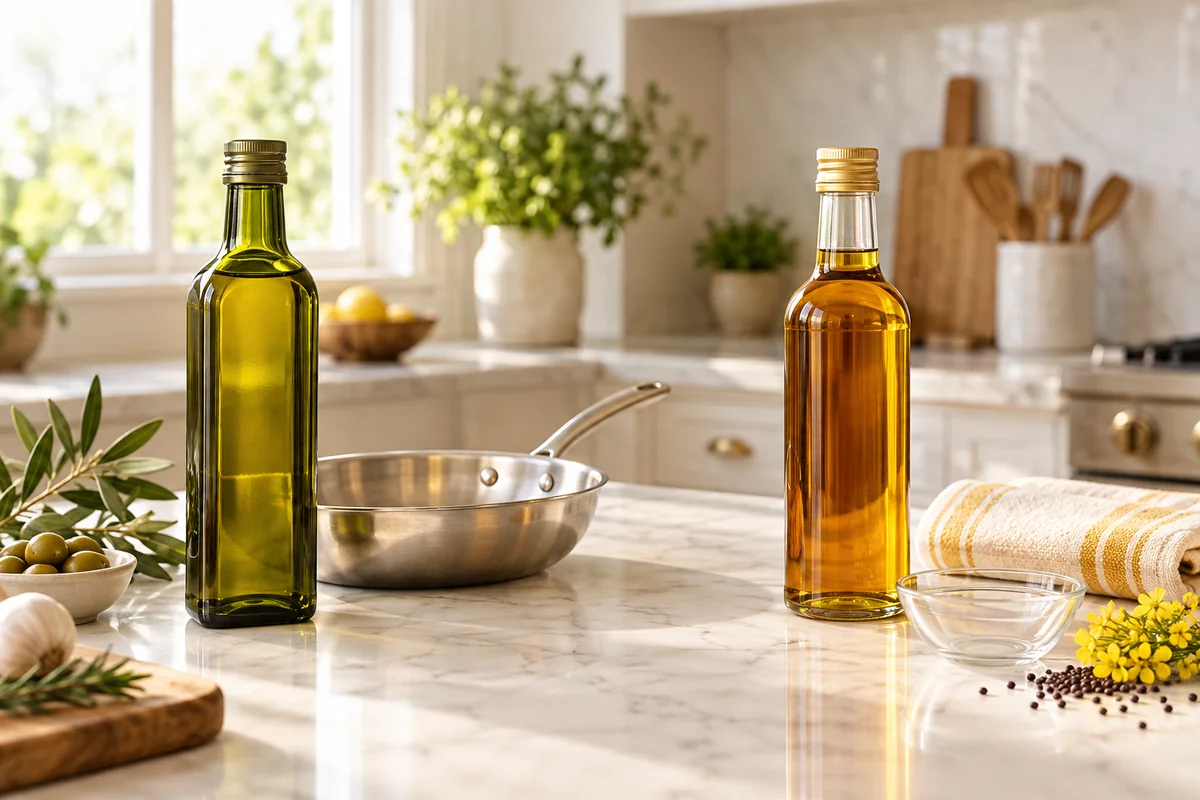
- Extra-virgin olive oil for everyday sauté and dressings
- Canola or high-oleic oils for higher-heat cooking when needed
- Avocado oil as another higher-smoke option for some recipes
- Mustard as a condiment or powdered spice for tang—very different from pouring expressed mustard oil into a hot pan
Homemade garlic-in-oil still needs careful storage because of botulism risk at room temperature. See our garlic-in-oil safety guide for seniors before making jarred infusions.
Erucic acid, heart concerns, and why seniors should care
Erucic acid is a fatty acid found in some mustard and related seed oils. Older animal studies raised concerns about heart muscle changes when diets were very high in erucic acid. Modern food rules in the US therefore treat expressed mustard oil with unsafe erucic acid levels as unsuitable for general cooking, which is why so many bottles arrive labeled for external use only.
For seniors, the takeaway is not panic—it is clarity. You do not need mustard oil in the frying pan to eat well after 60. Heart-smart patterns still center on vegetables, fiber, movement, sleep, and clinician-guided blood pressure and cholesterol care. Mustard oil for knee pain seniors belongs, if at all, in the topical comfort conversation—not in daily high-heat cooking.
How to read a US mustard oil label in 30 seconds
- Find the words external use only, for massage, or similar. Treat that as non-food.
- Ignore “cold-pressed” marketing alone—pressing method does not override FDA food-additive concerns about erucic acid levels.
- Do not assume an Indian or specialty grocery brand is automatically approved for US cooking just because family recipes used it abroad.
- If you want mustard flavor, use prepared mustard, mustard powder, or tiny culinary flavoring amounts of essential mustard oil in recipes designed for that—not spoonfuls of external-use oil.
This quick label check prevents the most common mistake we see among caregivers: pouring a massage-labeled oil into a hot pan “because mustard oil is traditional.” Tradition and US labeling rules can differ, and seniors deserve both cultural respect and clear safety.
FAQ
Is mustard oil completely illegal in the US?
Expressed mustard oil with unsafe erucic acid levels is not allowed as a general cooking oil. Many products are sold for external use. Essential mustard oil as a food flavoring is a different, regulated use.
Can seniors take mustard oil by the spoonful for joints?
No. We do not recommend ingesting external-use expressed mustard oil for knee pain or general “joint cleaning.” There is no strong evidence this is safe or effective for US seniors, and it conflicts with how these products are labeled.
Is mustard oil for knee pain seniors better than olive oil massage?
Olive oil is widely used for massage and may be gentler for sensitive skin. Some small studies favored mustard oil for short-term pain scores, but comfort and skin tolerance matter more than winning a study headline.
How long until my knees feel better?
If massage helps, people often notice warmth and easier movement the same day. If nothing changes after a couple of weeks of gentle use—or pain worsens—stop and get a clinical evaluation.
Does “external use only” mustard oil help blood pressure or cholesterol?
Do not use external-use expressed mustard oil as an oral remedy for blood pressure or cholesterol. Food-label and FDA concerns focus on ingestion. For heart-supportive habits, start with clinician-guided care plus lifestyle basics covered in our circulation and artery guides linked above.
Red flags—see a clinician promptly
- Knee that will not bear weight
- Sudden big swelling after a twist or fall
- Fever with a hot, red joint
- Calf pain or swelling that could suggest a clot
- Numbness, color change, or wounds that will not heal
Bottom line
In the US, expressed mustard oil is a topical product for most shoppers—not a frying oil. Searching mustard oil for knee pain seniors should lead to cautious, honesty-first advice: warm massage may offer temporary comfort for some people with mild stiffness, but it will not rebuild cartilage. Pair any oil ritual with movement, strength, and medical care when you need it—and keep cooking oils that match US food safety and heart health goals.
Sources
- U.S. Food and Drug Administration. Import Alert 26-04 — Detention Without Physical Examination of Expressed Mustard Oil.
- Poison Control — Mustard and mustard oil safety (expressed vs essential oil; erucic acid).
- Comparative nursing studies on warm mustard oil massage for joint or knee pain (small samples; short-term pain scores only—limitations noted above).
Written by Allan Smith · Medically reviewed by Dr. Mark McGarey, MBBS · Last Updated: September 23, 2026
⚕️ Medical Disclaimer
The information provided on this page is for educational purposes only and is not intended as medical advice, diagnosis, or treatment. Always consult a qualified healthcare professional before making changes to your diet, starting any supplement, or if you have an existing medical condition. KeepFitQuote does not provide medical diagnoses or treatment recommendations. Read our full disclaimer.