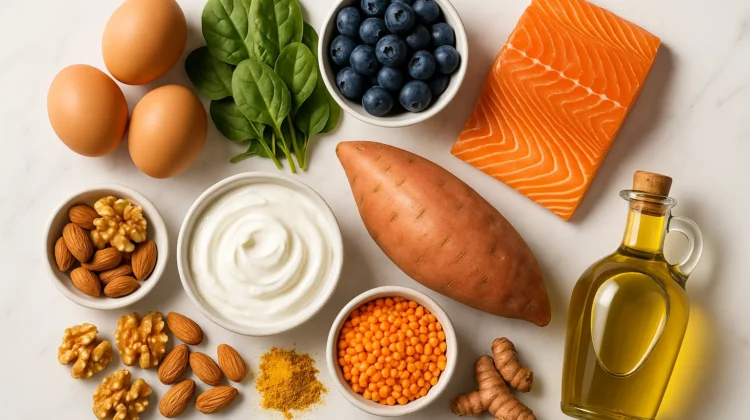
10 Best Foods to Eat Every Day After 60 for Energy, Strength and Longevity
What you eat after 60 matters more than at any other stage of life. Your body absorbs nutrients less efficiently, muscle mass decreases naturally, inflammation becomes a greater risk, and the foods that once felt harmless can now actively accelerate aging and disease.
The good news? A handful of specific, affordable foods can counteract all of these changes. These are not superfoods that require expensive health food shops — most are available in any supermarket, and many cost less per serving than processed alternatives.
Here are the 10 best foods nutritionists and geriatric health experts consistently recommend for seniors over 60 — along with exactly why each one matters at this stage of life, and how much to eat for maximum benefit.
Why Nutrition Changes After 60
Before looking at the specific foods, it helps to understand why nutritional needs shift so dramatically after 60:
- Reduced calorie needs but higher nutrient needs: Metabolism slows, so seniors need fewer calories — but the requirement for protein, calcium, vitamin D, B12, and other nutrients actually increases
- Muscle loss (sarcopenia): After 60, the body loses up to 1–2% of muscle mass per year without adequate protein and exercise. This affects strength, balance, metabolism, and blood sugar control
- Reduced nutrient absorption: Stomach acid production decreases with age, impairing the absorption of B12, calcium, iron, and zinc
- Increased inflammation: Chronic low-grade inflammation (inflammaging) accelerates after 60 and drives arthritis, heart disease, cognitive decline, and cancer — diet is the most powerful tool to control it
- Bone density loss: Bone loss accelerates after 60, particularly in women post-menopause — calcium and vitamin K become critical
With these changes in mind, here are the foods that directly address the most common health challenges of this age group.
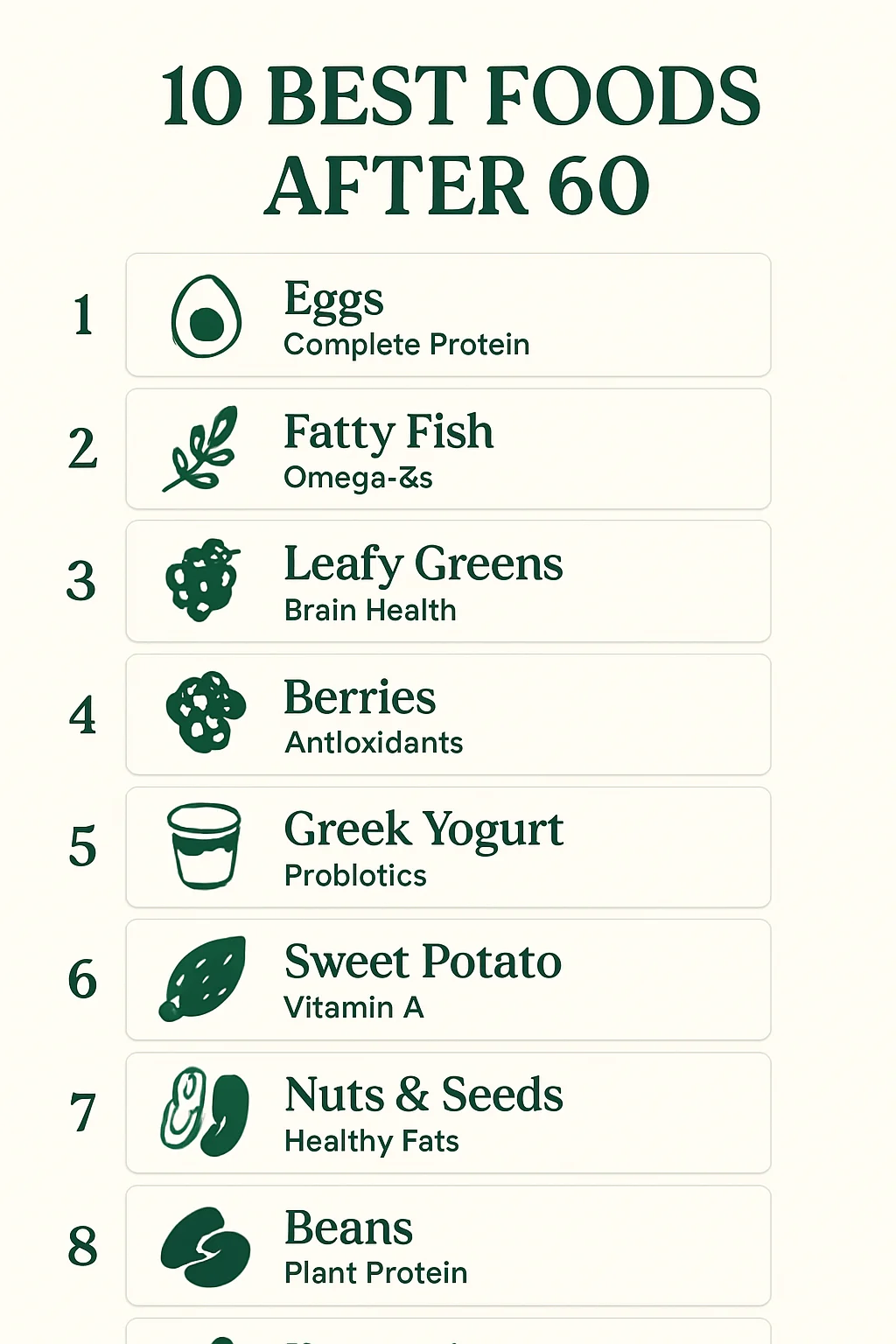
1. Eggs — The Perfect Protein for Seniors
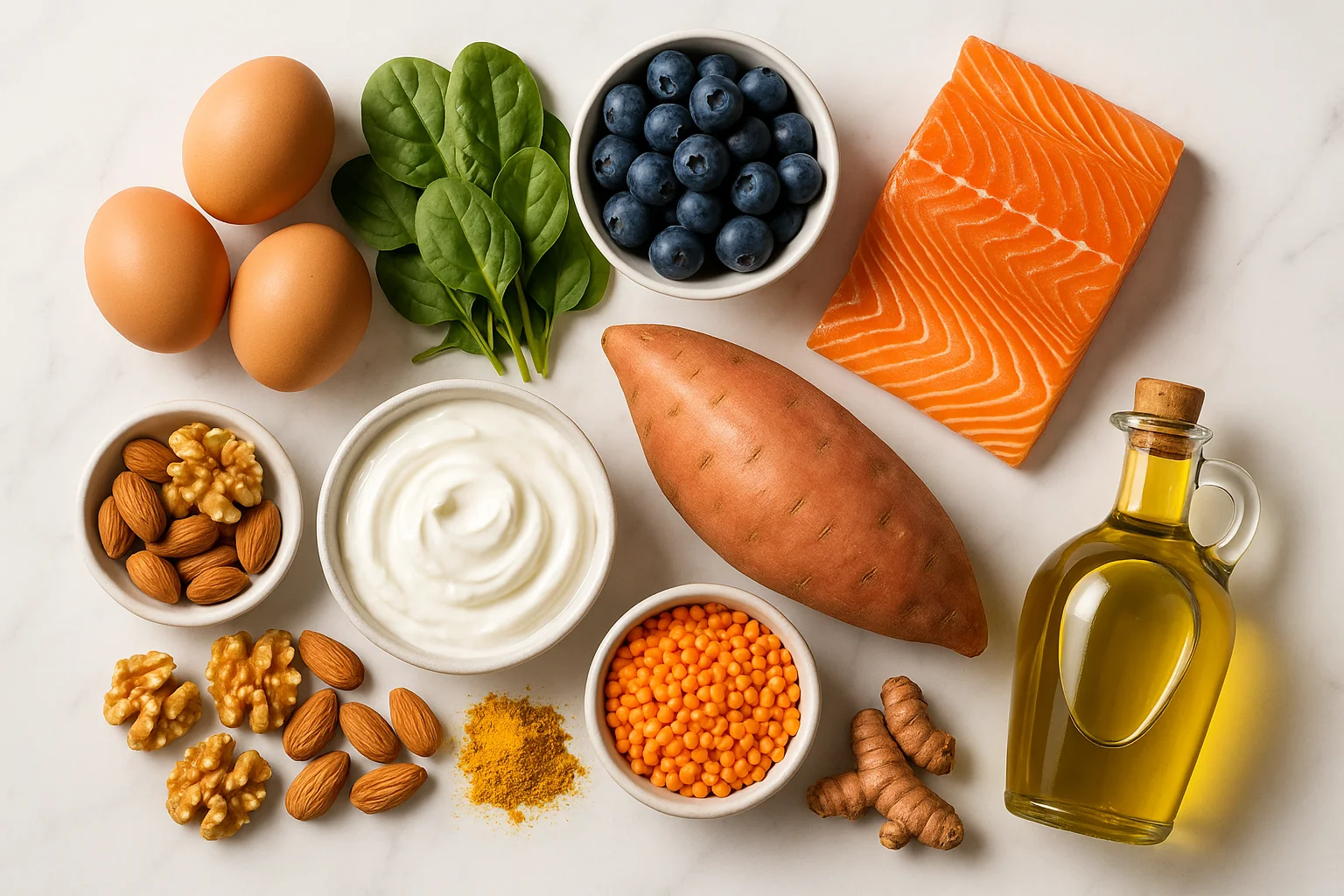
Eggs are one of the most nutrient-dense foods available and are especially valuable for seniors. One egg contains 6 grams of high-quality complete protein, plus choline (critical for brain health and memory), vitamin D, B12, and lutein for eye protection.
Research published in the American Journal of Clinical Nutrition found that older adults who ate eggs regularly maintained muscle mass better than those who did not. The leucine content of eggs is particularly important — leucine is the amino acid that most directly triggers muscle protein synthesis.
The cholesterol concern around eggs has largely been resolved by modern research. Multiple large studies have found no association between moderate egg consumption (1–2 per day) and heart disease risk in healthy adults.
How much: 1–2 eggs daily. Best prepared poached, boiled, or scrambled — these methods preserve nutrients without adding excess fat.
2. Fatty Fish (Salmon, Sardines, Mackerel)
Omega-3 fatty acids in fatty fish reduce inflammation, support heart health, protect brain function, and help with joint pain — all major concerns after 60.
The EPA and DHA found in fatty fish are the most bioavailable form of omega-3 — far more effective than plant-based sources like flaxseeds. DHA in particular is the primary structural fat in the brain, and research consistently links higher fish consumption with lower rates of cognitive decline, dementia, and depression in older adults.
Sardines are especially valuable for seniors because you eat the soft bones, delivering a significant calcium boost alongside the omega-3s. Tinned sardines in olive oil are one of the most nutrient-dense, affordable foods available.
The American Heart Association recommends two servings of fatty fish per week. Seniors with arthritis, heart disease, or cognitive concerns may benefit from even more.
How much: 2–3 servings per week. Wild-caught salmon is the premium option; tinned sardines or mackerel are excellent budget alternatives with equal nutritional value.
3. Leafy Greens (Spinach, Kale, Collard Greens)
Leafy greens are packed with vitamin K (essential for bone density and blood clotting), folate, magnesium, potassium, and antioxidants that fight cellular aging. They are also extremely low in calories, making them ideal for seniors who need high nutrient density without excess energy intake.
A 2018 study published in Neurology found that eating one serving of leafy greens daily was associated with brain function equivalent to being 11 years younger — a remarkable finding driven by the vitamin K, lutein, folate, and beta-carotene content of these vegetables.
Magnesium, found in high concentrations in spinach and Swiss chard, is critically important for seniors. It supports over 300 enzymatic reactions in the body, improves insulin sensitivity, regulates blood pressure, and supports sleep quality — and deficiency is extremely common in older adults.
How much: At least one large serving daily. If you find them bitter, sauté with garlic and olive oil — this significantly improves palatability and increases the absorption of fat-soluble vitamins.
4. Berries (Blueberries, Strawberries, Raspberries)
Berries contain some of the highest antioxidant concentrations of any food. Blueberries in particular have been shown in multiple clinical studies to improve memory, reduce blood pressure, improve insulin sensitivity, and protect against cognitive decline in seniors.
The anthocyanins that give blueberries their deep blue colour cross the blood-brain barrier — meaning they directly protect brain cells from oxidative damage. This is relatively rare among food compounds and explains why blueberries consistently outperform other fruits in cognition research.
Strawberries are high in vitamin C, ellagic acid (which protects against DNA damage), and fisetin — a flavonoid that research suggests may help clear senescent (damaged) cells that accumulate with age and drive inflammation. Most vitamin C needs can be met with food, and our guide to high dose vitamin C safety and the 2,000 mg limit explains when supplements need extra care.
How much: Half to one cup per day. Frozen berries are equally nutritious as fresh — and significantly cheaper out of season. Add to Greek yogurt, oatmeal, or eat as a snack. Another everyday fruit to consider: is an apple a day really good for you after 60?
5. Greek Yogurt
Greek yogurt provides up to 17 grams of protein per serving, plus calcium, vitamin B12, and probiotics that support gut health. After 60, gut microbiome health is increasingly linked to immune function, mental health, inflammation control, and even longevity.
The calcium in Greek yogurt is particularly well-absorbed compared to plant sources, making it one of the most efficient ways for seniors to meet their daily calcium needs (which increase to 1,200mg per day after 60 for women).
Probiotics in yogurt — specifically Lactobacillus and Bifidobacterium strains — help maintain the diversity of the gut microbiome, which declines with age and plays a central role in immune function, nutrient absorption, and the production of neurotransmitters including serotonin.
How much: 1 serving daily. Choose plain, full-fat Greek yogurt and add your own fruit rather than flavoured varieties, which can contain as much sugar as ice cream. The fat in full-fat yogurt actually improves the absorption of fat-soluble vitamins.
6. Sweet Potatoes
Sweet potatoes are rich in beta-carotene (converted to vitamin A by the body), potassium, fibre, and vitamin C — making them one of the most nutritionally complete single foods available. For seniors, the potassium content is particularly important: it directly counteracts the blood-pressure-raising effects of sodium and reduces stroke risk.
One medium sweet potato provides nearly 100% of your daily vitamin A needs — essential for immune function, skin health, and eye health — and over 25% of potassium requirements. Vitamin A is often deficient in seniors who eat a limited diet, and this deficiency impairs both immune response and night vision.
The fibre in sweet potato feeds beneficial gut bacteria and helps stabilise blood sugar by slowing glucose absorption. Despite their sweet taste, sweet potatoes have a moderate glycaemic index when eaten whole — far lower than white potatoes or white bread.
How much: 3–5 times per week as a starchy side dish. Always eat with a source of fat (olive oil, butter) to improve beta-carotene absorption.
7. Nuts and Seeds (Walnuts, Almonds, Chia Seeds)
A small handful of walnuts daily has been linked in multiple studies to improved memory, reduced risk of heart disease, and better blood sugar control. Walnuts are the only nut with meaningful omega-3 content (2.5g per 28g serving), making them uniquely anti-inflammatory among nuts.
Almonds provide vitamin E — a fat-soluble antioxidant that protects brain cell membranes from oxidative damage. Vitamin E deficiency is associated with increased risk of Alzheimer’s disease, and dietary sources are more beneficial than supplements.
Chia seeds deliver omega-3s, soluble fibre (which forms a gel that slows digestion and stabilises blood sugar), calcium, and magnesium in one of the smallest packages in nutrition. Two tablespoons provide more calcium than a glass of milk.
Despite being calorie-dense, research consistently shows that regular nut eaters are leaner and live longer than those who avoid them — the fat and protein in nuts promotes satiety and reduces overall calorie consumption throughout the day.
How much: A small handful (about 30g) of mixed nuts daily. For chia seeds, 1–2 tablespoons per day in yogurt, smoothies, or oatmeal.
8. Beans and Lentils
Beans are one of the most underrated longevity foods on the planet. They provide plant-based protein, soluble fibre, iron, folate, and B vitamins — all while being extremely affordable and shelf-stable.
Studies of populations that live the longest — the Blue Zones of Okinawa, Sardinia, Ikaria, Nicoya, and Loma Linda — show beans as a dietary staple in every single region. Researchers estimate that beans may be the single most important dietary predictor of longevity across different cultures.
Just one cup of cooked lentils provides 18 grams of protein and 16 grams of fibre — more fibre than most people get in an entire day. The resistant starch in beans also acts as a prebiotic, feeding beneficial gut bacteria that produce short-chain fatty acids which reduce inflammation throughout the body.
How much: Half to one cup daily, or at least 4 times per week. Canned beans (rinsed to reduce sodium) are just as nutritious as dried and far more convenient.
9. Turmeric
Curcumin, the active compound in turmeric, is one of the most researched anti-inflammatory substances in nutrition. For seniors, it has been shown in clinical trials to reduce joint pain comparable to ibuprofen (without the gastrointestinal side effects), support brain health by clearing amyloid plaques associated with Alzheimer’s, and reduce markers of systemic inflammation.
The challenge with turmeric is bioavailability — curcumin is poorly absorbed on its own. Two strategies significantly increase absorption: combining with black pepper (piperine increases absorption by up to 2,000%) and consuming with a fat source (curcumin is fat-soluble).
A golden milk recipe — warm milk (dairy or plant-based) with turmeric, black pepper, and a small amount of honey — is a traditional and effective way to consume therapeutic amounts of curcumin daily.
How much: 1 teaspoon daily in food or drinks. Always combine with black pepper. If using supplements, look for formulations with piperine or phospholipid complexes for better absorption.
10. Olive Oil
Extra virgin olive oil is the fat most consistently associated with longevity in nutritional research. The Mediterranean diet, which features olive oil as the primary fat, has been shown to reduce risk of heart disease, stroke, type 2 diabetes, cognitive decline, and certain cancers in seniors across dozens of large-scale clinical trials.
The key compound in olive oil is oleocanthal — a polyphenol that has been shown to inhibit the same inflammatory enzymes as ibuprofen. Regular consumption of extra virgin olive oil literally produces a mild anti-inflammatory effect similar to a low dose of a non-steroidal anti-inflammatory drug, without the side effects.
Olive oil also improves the absorption of fat-soluble vitamins (A, D, E, K) from vegetables consumed in the same meal — a good reason to dress salads and cooked vegetables generously with it.
How much: 2–3 tablespoons daily as your primary cooking fat or salad dressing. Use extra virgin olive oil for dressings and low-heat cooking; avocado oil is better for high-heat cooking as it has a higher smoke point.
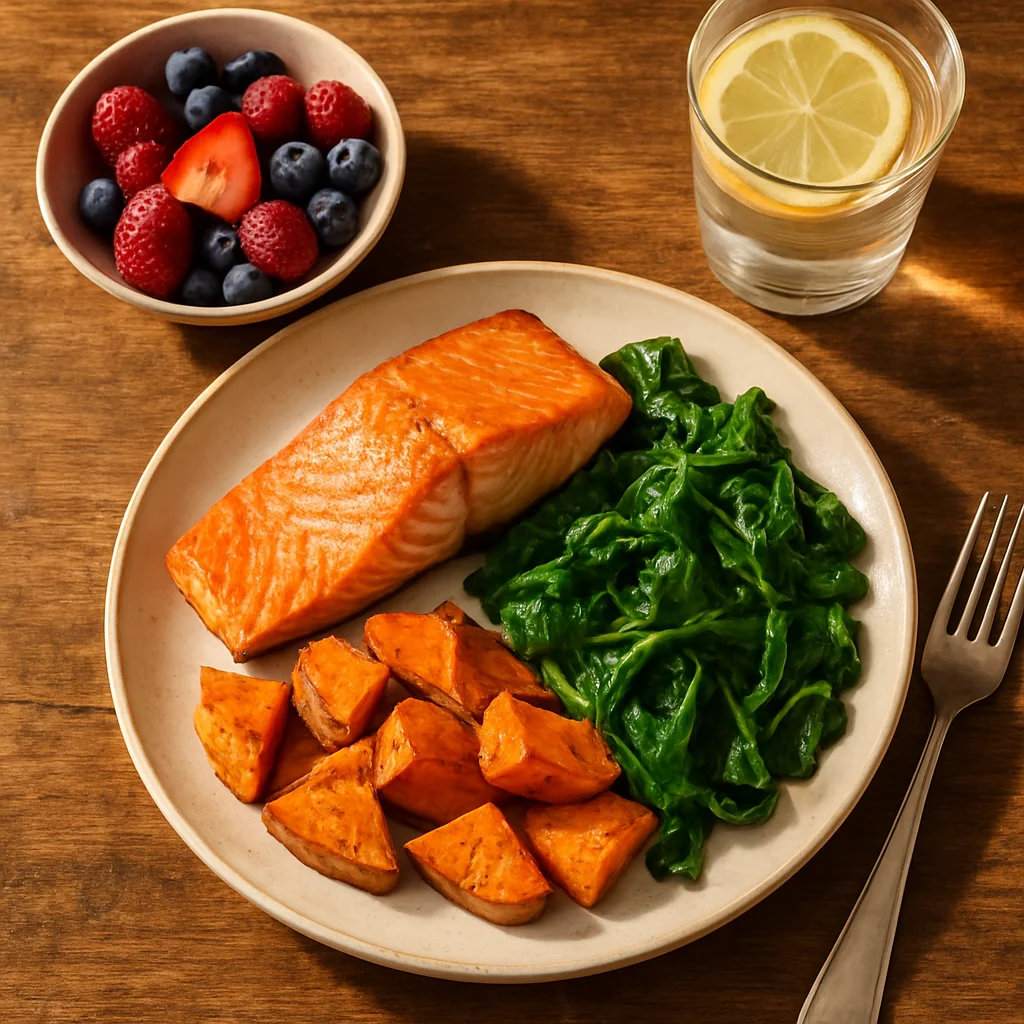
Simple Daily Meal Plan Using These 10 Foods
Here is an example of how to incorporate all 10 foods into a single day without any complex recipes:
- Breakfast: 2 poached eggs + half cup of blueberries + plain Greek yogurt with a sprinkle of chia seeds
- Mid-morning snack: Small handful of walnuts and almonds
- Lunch: Large salad with spinach and kale, olive oil and lemon dressing + lentil soup
- Afternoon snack: Apple slices with almond butter
- Dinner: Baked salmon + roasted sweet potato with olive oil + steamed spinach with turmeric and black pepper
- Evening: Small square of dark chocolate, herbal tea
This day provides complete protein at every meal, omega-3s, probiotics, prebiotics, anti-inflammatory compounds, and all key micronutrients for senior health — without any exotic or expensive ingredients.
Foods Seniors Should Reduce or Avoid
Just as important as what to add is what to reduce. These foods actively work against healthy aging:
- Ultra-processed foods: Drive chronic inflammation, displace nutrient-dense whole foods, and are engineered to override satiety signals
- Refined carbohydrates: White bread, white rice, sugary cereals — cause blood sugar spikes and provide minimal nutrition
- Processed meats: Bacon, sausages, deli meats — linked to colorectal cancer and cardiovascular disease
- Sugary drinks: The fastest way to spike blood sugar; provide no nutritional value and drive insulin resistance
- Excess alcohol: Depletes B vitamins, damages the gut lining, interferes with sleep quality, and raises cancer risk
Frequently Asked Questions
What is the most important nutrient for seniors over 60?
Protein is arguably the most critical nutrient after 60. Muscle loss (sarcopenia) accelerates with age, and adequate protein intake — at least 1.0–1.2 grams per kilogram of body weight per day — is the most effective nutritional strategy to slow it. For a 70kg senior, that means 70–84 grams of protein per day, spread across meals.
Are supplements necessary if you eat these foods?
Vitamin D and B12 are two nutrients many seniors are deficient in regardless of diet, because absorption decreases significantly with age. Stomach acid required to absorb B12 from food diminishes, and skin synthesis of vitamin D declines. Most doctors recommend supplementing both after age 60, even with an excellent diet. Omega-3 supplements are also worth considering for those who don’t eat fish regularly.
How much water should seniors drink daily?
At least 6–8 cups (1.5–2 litres) daily. Seniors have a reduced sense of thirst, so it is important to drink on a schedule rather than waiting to feel thirsty. A simple habit: drink one glass of water before each meal and one upon waking. Dehydration in seniors is directly linked to confusion, falls, constipation, and kidney problems.
Can these foods help with arthritis in seniors?
Yes. Fatty fish, olive oil, turmeric, berries, and leafy greens all have documented anti-inflammatory effects that can reduce arthritis pain and stiffness. While they are not a replacement for medical treatment, multiple studies show that a Mediterranean-style diet — built on these foods — measurably reduces inflammatory markers and joint pain scores in older adults with osteoarthritis and rheumatoid arthritis.
Is it too late to improve health through diet after 60?
No — and research is very clear on this. Studies consistently show that dietary improvements at any age produce measurable health benefits within weeks to months. A landmark study found that adults over 65 who adopted a Mediterranean diet reduced their cardiovascular event risk by 30% within just two years. The body’s capacity to respond to nutritional improvements does not end at any particular age.
What is the best breakfast for seniors over 60?
A breakfast containing protein, healthy fat, and fibre is ideal — this combination stabilises blood sugar, prevents mid-morning energy crashes, and supports muscle maintenance. Greek yogurt with berries and nuts, eggs with vegetables, or oatmeal with chia seeds and almond butter all meet this criteria. Avoid high-sugar cereals or toast alone, which cause rapid blood sugar spikes and leave seniors hungry within an hour.
⚕️ Medical Disclaimer
The information provided on this page is for educational purposes only and is not intended as medical advice, diagnosis, or treatment. Always consult a qualified healthcare professional before making changes to your diet, starting any supplement, or if you have an existing medical condition. KeepFitQuote does not provide medical diagnoses or treatment recommendations. Read our full disclaimer.