Do Smart Rings Work for Senior Sleep Apnea and Heart Issues?
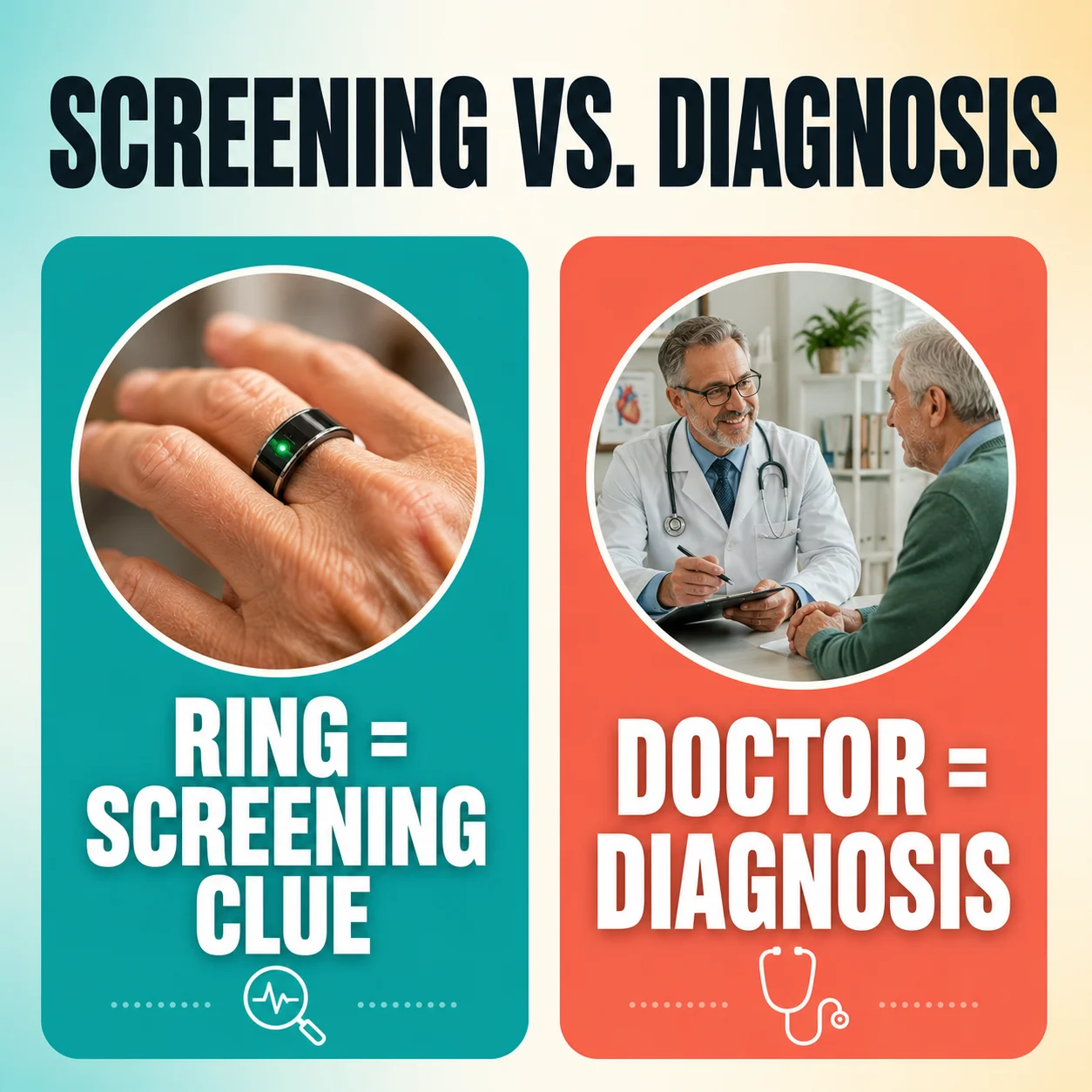
Smart rings can help adults over 60 screen for patterns, but they cannot diagnose sleep apnea, atrial fibrillation, coronary artery disease, or heart failure by themselves. They may reveal repeated oxygen drops, breathing disturbances, unusual nighttime heart rates, or irregular pulse patterns worth reviewing. Save several nights of data, record symptoms, and ask a clinician whether a home sleep apnea test, sleep study, ECG, patch monitor, or another medical evaluation is appropriate.
Why Sleep Apnea and Heart Issues After 60 Matter
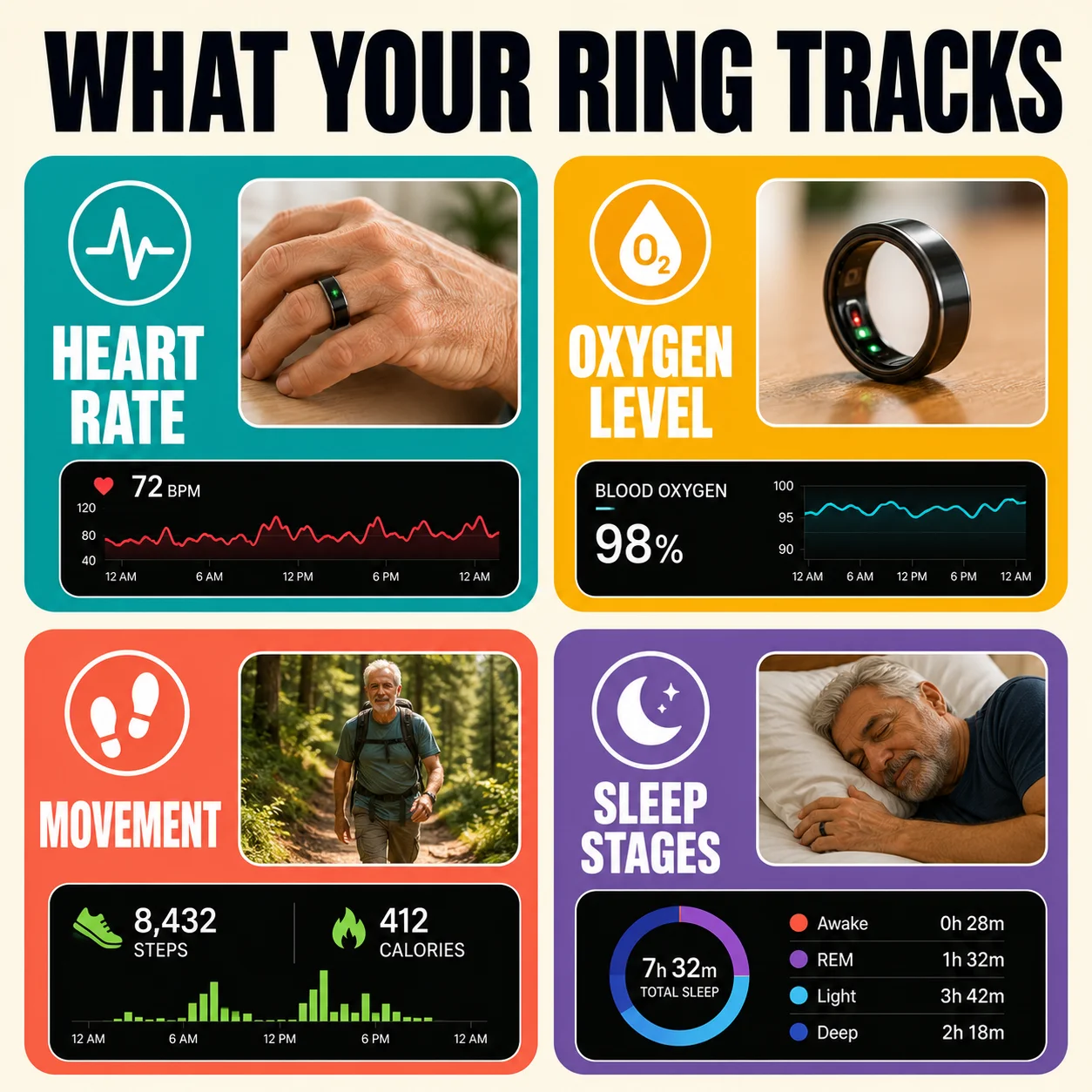
A smart ring feels simple: wear it, sleep, and review a dashboard in the morning. Yet the signals behind that dashboard are complicated. A ring may estimate blood-oxygen saturation, pulse rate, breathing rate, movement, skin temperature, sleep timing, and heart-rate variability. Software then turns those measurements into scores and alerts. The result can be useful, but it is still an estimate created from sensors, algorithms, and assumptions—not a direct view of the lungs, brain, or electrical system of the heart.
For U.S. adults over 60, the distinction between screening and diagnosis is especially important. Obstructive sleep apnea becomes more clinically consequential with age and may coexist with high blood pressure, obesity, diabetes, stroke risk, or atrial fibrillation. AFib also becomes more common with age; the CDC describes it as the most common treated heart arrhythmia, and some people have no obvious symptoms. A wearable may provide an early clue, but a clue should lead to appropriate medical testing rather than self-diagnosis.
The practical question is therefore not “Is the ring right or wrong?” It is “What decision should this pattern trigger?” A single low reading may be noise. A repeated pattern plus loud snoring, witnessed pauses, morning headaches, daytime sleepiness, palpitations, breathlessness, or reduced exercise tolerance deserves more attention. The best use of a smart ring is to organize observations, show trends, and help a clinician choose the right next test.
What a Smart Ring Actually Measures
Optical Pulse Sensing and Blood Oxygen
Most consumer smart rings use photoplethysmography, usually shortened to PPG. Small lights shine into the skin, and sensors measure changes in reflected light as blood volume changes with each pulse. From this waveform, the device estimates heart rate and may look for pulse irregularity. Red and infrared light can also support an estimate of peripheral oxygen saturation, commonly shown as SpO₂. The number is useful as a trend, but it is not identical to an arterial blood-gas measurement or a medically supervised sleep study.
A loose fit, cold fingers, poor circulation, movement, pressure on the hand, skin characteristics, edema, nail or hand position, and weak sensor contact can distort readings. Oxygen algorithms may average data or suppress low-quality periods, so different brands can show different results from the same night. Smart ring blood oxygen accuracy for seniors over 60 should therefore be judged by repeated patterns and data quality, not by one dramatic number.
Movement, Temperature, Breathing, and Sleep Staging
An accelerometer detects movement and helps estimate bedtime, awakenings, and sleep duration. Temperature sensors identify deviations from a personal baseline. Breathing rate may be inferred from changes in PPG, movement, or other signals. Sleep stages are algorithmic estimates based largely on movement and cardiovascular patterns; they are not the same as electroencephalography, which measures brain activity during polysomnography. A “deep sleep” or “REM” score can be directionally useful, but it should not be treated as a clinical measurement of brain state.
Heart-rate variability, or HRV, describes variation in time between beats. It can change with sleep, stress, alcohol, illness, exercise load, medications, and breathing. A lower-than-usual HRV may show that the body is under strain, but it does not identify the cause. Likewise, a high nighttime heart rate may reflect fever, dehydration, alcohol, pain, anxiety, a late meal, medication effects, sleep apnea, or an arrhythmia.
What Current Clinical Evidence Shows
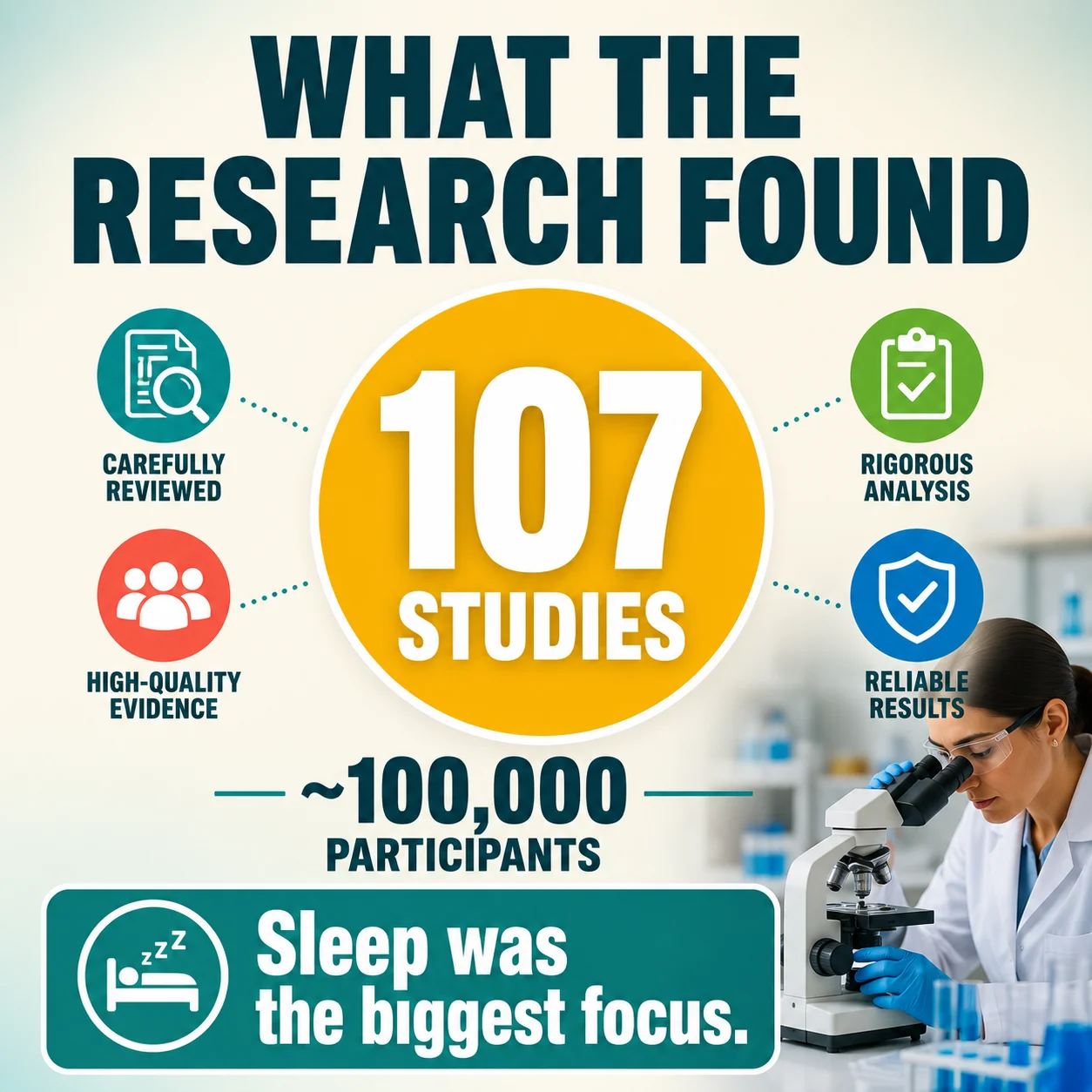
A 2025 systematic review of smart rings included 107 studies and approximately 100,000 participants. Sleep was the largest application area, while other studies examined heart rate, heart-rate variability, temperature, activity, arrhythmia-related signals, and several emerging clinical uses. This breadth supports smart rings as promising monitoring tools, but it does not mean every product, algorithm, or population has been validated equally. Results should remain tied to the specific device, study population, reference test, and measurement conditions.
Where the Evidence Is Most Useful
The evidence is most useful when a ring tracks repeated trends—such as sleep timing, resting pulse, nighttime oxygen patterns, or changes from a personal baseline—and those trends are compared with a recognized reference method. For sleep-disordered breathing, that reference is a clinically interpreted sleep test. For suspected arrhythmia, it is an ECG or prescribed rhythm monitor. A ring can strengthen the reason to test; it does not replace the test that confirms the diagnosis.
Why Evidence May Not Transfer Perfectly to Every Adult Over 60
Older adults are not one uniform validation group. Cold hands, reduced peripheral circulation, tremor, edema, arthritis, thinner skin, loose fit, medication effects, implanted cardiac devices, lung disease, and difficulty charging or synchronizing an app can all affect data quality or adherence. Proprietary algorithms may also change over time. Before buying, check whether the exact feature—not merely the ring itself—has been evaluated for the intended use and whether the company explains exclusions and signal-quality limits. Confirm the exact feature in the FDA Medical Device Databases before treating a marketing claim as a regulated medical function.
Can Smart Rings Detect Senior Sleep Apnea?
A smart ring can sometimes identify patterns compatible with sleep-disordered breathing: repeated oxygen dips, clusters of pulse-rate changes, breathing instability, frequent awakenings, and restless sleep. Some products market a sleep-apnea risk feature, and regulatory status varies by device, software version, and intended use. Consumers should check the exact model and feature in the FDA device database rather than assuming that every ring from the same brand has the same clearance.
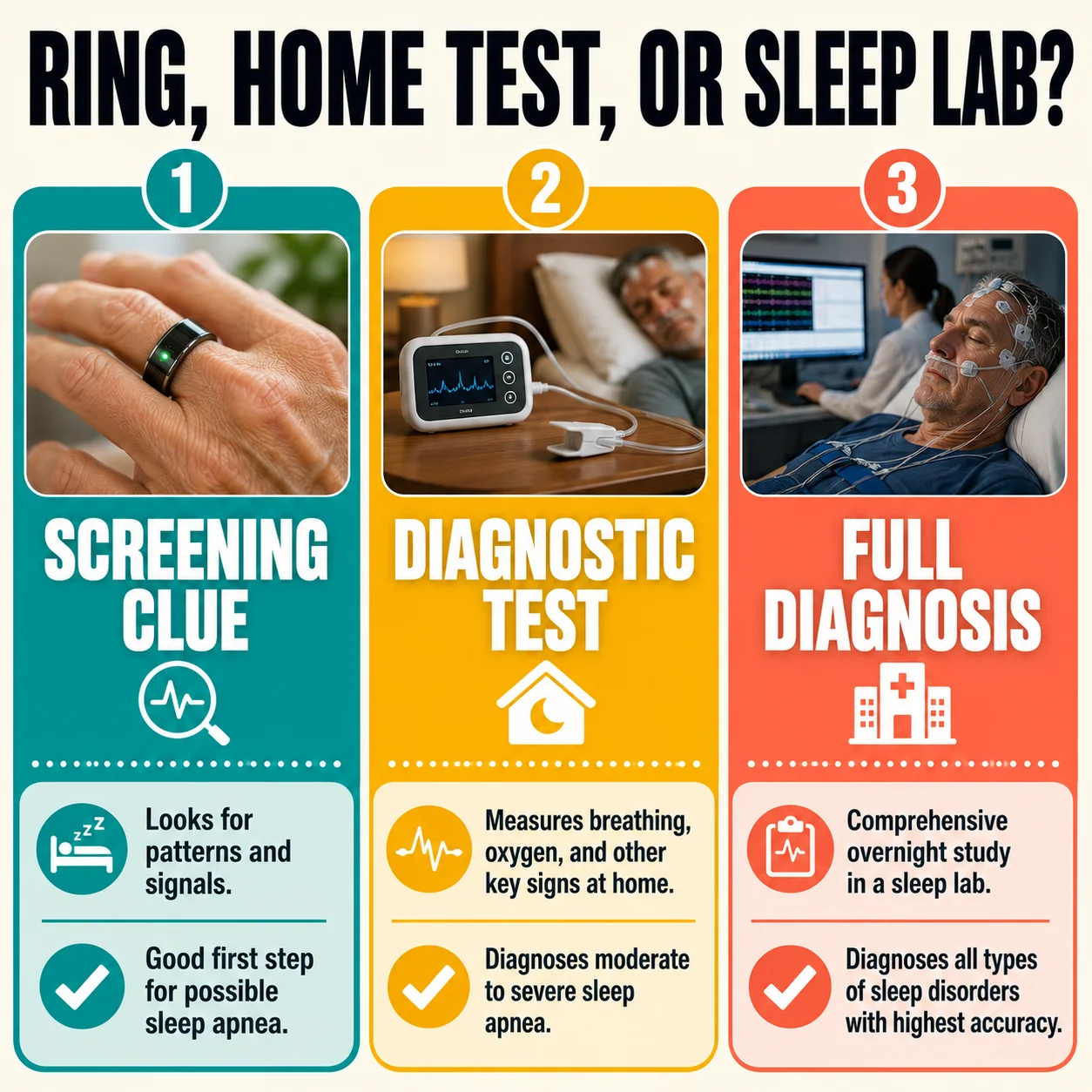
However, a consumer ring generally cannot establish the full diagnosis or reliably determine the treatment plan. Sleep apnea diagnosis depends on respiratory events per hour, airflow, breathing effort, oxygen changes, sleep time, symptoms, medical history, and sometimes body position or sleep stage. A laboratory sleep study can also record brain waves, eye movements, muscle activity, heart rhythm, airflow, chest and abdominal effort, and oxygen. A home sleep apnea test records fewer channels but is still a prescribed medical test interpreted within a clinical pathway.
What Smart Ring Oxygen Drops at Night After 60 May Mean
Repeated oxygen drops can occur with obstructive sleep apnea, but apnea is not the only explanation. Chronic lung disease, heart failure, hypoventilation, altitude, respiratory infection, certain sedatives or opioids, and measurement error can also contribute. A low average may matter differently from short dips. The shape, frequency, duration, and relationship to symptoms are important. Do not start oxygen, change CPAP settings, or stop a medicine based only on a consumer dashboard.
A useful response is to collect three to seven nights under ordinary conditions. Record bedtime, alcohol use, sleep position, congestion, medications, awakenings, morning headache, dry mouth, and daytime sleepiness. Export or screenshot the overnight graph rather than reporting only the sleep score. If the pattern repeats, ask a primary-care clinician or sleep specialist whether a validated home sleep apnea test or laboratory polysomnography is appropriate. If dry mouth is part of your nighttime symptoms and you already use a CPAP machine, see our guide on CPAP dry mouth in older adults.
Smart Ring vs Sleep Study After 60
A smart ring is convenient for long-term observation and may notice a pattern that would otherwise be missed. A sleep study is designed to answer a medical question with validated signals and professional interpretation. The two tools are therefore complementary, not interchangeable. The ring can help decide when to investigate; the sleep test can determine whether sleep apnea is present, how severe it is, what type of breathing disorder is occurring, and what treatment pathway makes sense.
| Feature | Smart Ring | Home Sleep Apnea Test | Laboratory Sleep Study |
|---|---|---|---|
| Main role | Long-term trend and screening clue | Diagnostic test for selected adults | Most complete diagnostic assessment |
| Typical signals | Pulse, movement, estimated SpO₂, breathing trends | Airflow/effort, oxygen, pulse and related channels | Brain waves, eye/muscle activity, airflow, effort, oxygen, ECG and more |
| Can confirm apnea? | Usually no | Often, when clinically appropriate and interpretable | Yes, with specialist interpretation |
| Best use after 60 | Document repeated patterns and symptoms | Convenient evaluation when ordered | Complex symptoms, uncertain results or suspected non-obstructive disorders |
| Important limitation | Algorithm and signal quality vary | May miss disorders outside its channel set | More costly and less convenient |
Decision guide: screening information is not the same as a confirmed sleep diagnosis.
Can Smart Rings Detect Heart Issues in Older Adults?
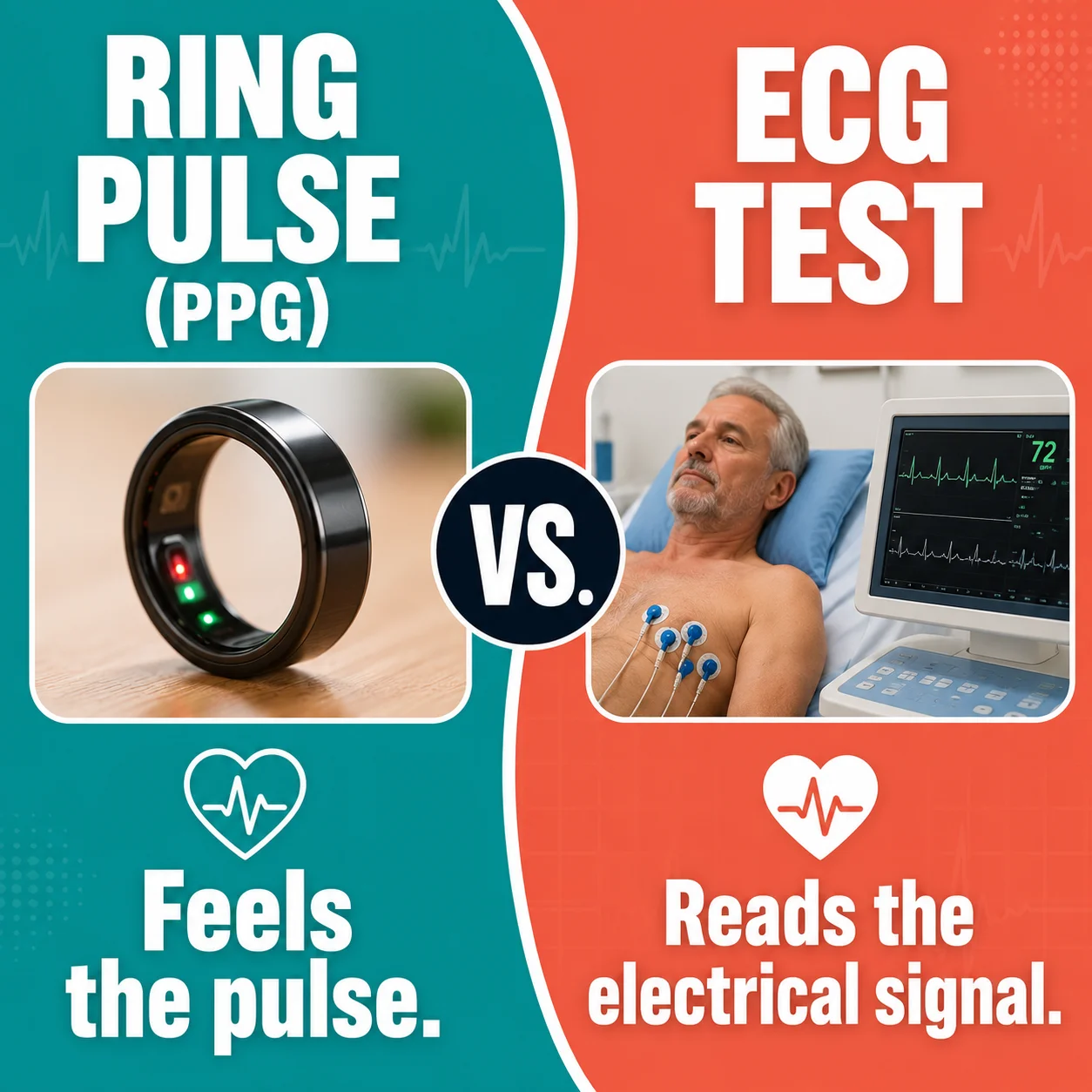
Smart rings are best at observing pulse-derived patterns. They may flag an unusually high or low heart rate, an irregular pulse, or a change from baseline. Some devices can record a brief single-lead electrocardiogram, while others use PPG only. These are not equivalent. PPG observes the pulse wave reaching the finger; an ECG records electrical activity. AFib can create an irregular pulse, but premature beats, movement, poor contact, tremor, and other rhythms can also look irregular to an optical sensor. Bring repeated alerts to a clinician for ECG-based confirmation, and if you’re also managing cardiovascular risk more broadly, see our guide on preventing clogged arteries.
AFib Screening Versus AFib Diagnosis
A smart ring irregular-heartbeat alert after 60 should be treated as a screening signal. AFib may come and go, and a short office ECG can be normal between episodes. If alerts repeat, a clinician may use a 12-lead ECG, Holter monitor, patch monitor, event monitor, or implantable monitor depending on frequency and risk. The goal is to capture an interpretable electrical tracing during the rhythm, not merely to confirm that the pulse looked unusual.
AFib matters because it can increase the risk of blood clots and stroke. Do not start aspirin or an anticoagulant, stop a heart medicine, or change a dose based on a ring alert. Stroke-prevention decisions require confirmation of the rhythm and assessment of factors such as age, blood pressure, diabetes, prior stroke, vascular disease, kidney function, and bleeding risk.
| Tool | What It Observes | Best Role | Key Limitation |
|---|---|---|---|
| Ring PPG | Pulse-wave timing and irregularity | Passive screening and trend capture | Not the heart’s electrical tracing |
| Wearable single-lead ECG | One electrical lead during a recording | Capture a rhythm near an alert or symptom | Short recording; limited rhythm classification |
| 12-lead ECG | Electrical activity from multiple views | Clinical rhythm and conduction assessment | May miss intermittent events |
| Patch/Holter monitor | Continuous or event-based ECG over time | Investigate intermittent palpitations or alerts | Requires prescription, wear period and clinical interpretation |
Decision guide: a ring alert can help time the evaluation, but ECG-based testing establishes the rhythm.
What Smart Rings Cannot Find Reliably
A normal ring cannot rule out blocked coronary arteries, valve disease, heart failure, a transient arrhythmia, or a future heart attack. Rings do not measure cardiac enzymes, image heart structure, or perform a standard 12-lead ECG. They may miss a rhythm when signal quality is poor or when the episode occurs while the ring is off. They may also generate false alerts. Chest pressure, new shortness of breath, fainting, one-sided weakness, or other emergency symptoms should never be dismissed because the app looks normal.
The Connection Between Sleep Apnea and Heart Alerts
Sleep apnea can repeatedly lower oxygen and activate the body’s stress response. Heart rate and blood pressure may surge when breathing resumes. Over time, untreated sleep apnea is associated with cardiovascular problems, including hypertension and arrhythmias. This means a pattern of oxygen dips plus nighttime heart-rate spikes may be clinically meaningful even when neither signal proves a diagnosis. The combined pattern is a reason to discuss both sleep and cardiovascular risk with a clinician.
A Solution-Based Plan for Using Smart Ring Data Safely
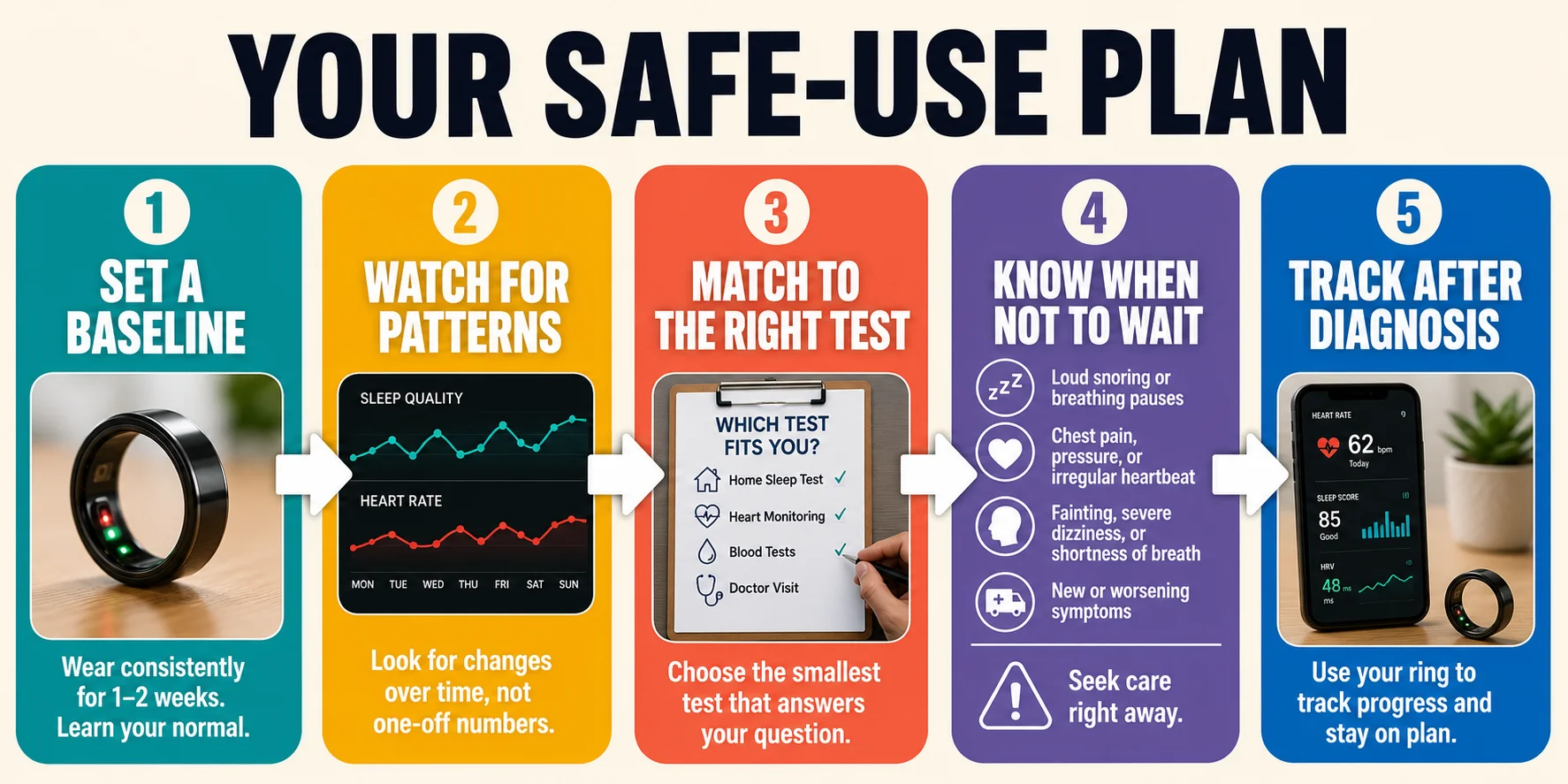
Step 1: Establish a Clean Personal Baseline
Wear the ring correctly for at least one week. Confirm the recommended finger and fit, keep sensors clean, charge the device, and update the app. Avoid judging the first night. Note factors that can alter readings, including alcohol, illness, travel, late meals, unusual exercise, poor sleep, and medication changes. A baseline makes deviations more meaningful than comparison with a generic population score.
Step 2: Verify the Pattern Instead of Chasing One Number
Look for repetition across nights. For oxygen, review the trend, low points, time below the device’s threshold, and whether the signal-quality indicator was acceptable. For heart alerts, note the time, duration, pulse range, symptoms, and activity. Check the pulse manually when safe. If a fingertip pulse oximeter is available, it may provide a second consumer measurement while awake, but it still does not replace clinical evaluation.
Step 3: Match the Alert to the Right Medical Test
For suspected sleep apnea, ask about a home sleep apnea test or an overnight laboratory study. For repeated irregular-rhythm alerts, ask about an ECG or ambulatory rhythm monitor. For persistent low oxygen, COPD, or breathlessness, the clinician may consider pulmonary evaluation. For chest discomfort or declining exercise ability, a broader cardiovascular assessment may be needed. Bringing organized graphs and a symptom log can make the appointment more efficient.
Step 4: Know When Not to Wait
Call 911 for chest pain or pressure, severe shortness of breath, fainting, new confusion, sudden weakness or numbness on one side, trouble speaking, or other possible heart-attack or stroke symptoms. Seek prompt medical advice for repeated irregular-rhythm alerts with dizziness, worsening breathlessness, or sustained rapid heart rate. Urgency depends on symptoms and medical history, not on whether the wearable labels the event “high risk.”
Step 5: Use Trends After Diagnosis
After a clinician establishes a diagnosis, the ring may still be useful for behavior and adherence. Someone using CPAP might track whether sleep continuity, resting heart rate, or oxygen trends improve, but treatment effectiveness should be confirmed by the clinical device report and follow-up plan. Someone with known AFib may use wearable data to document symptoms, while medication and stroke-prevention decisions remain with the care team.
Choosing a Smart Ring for an Adult Over 60
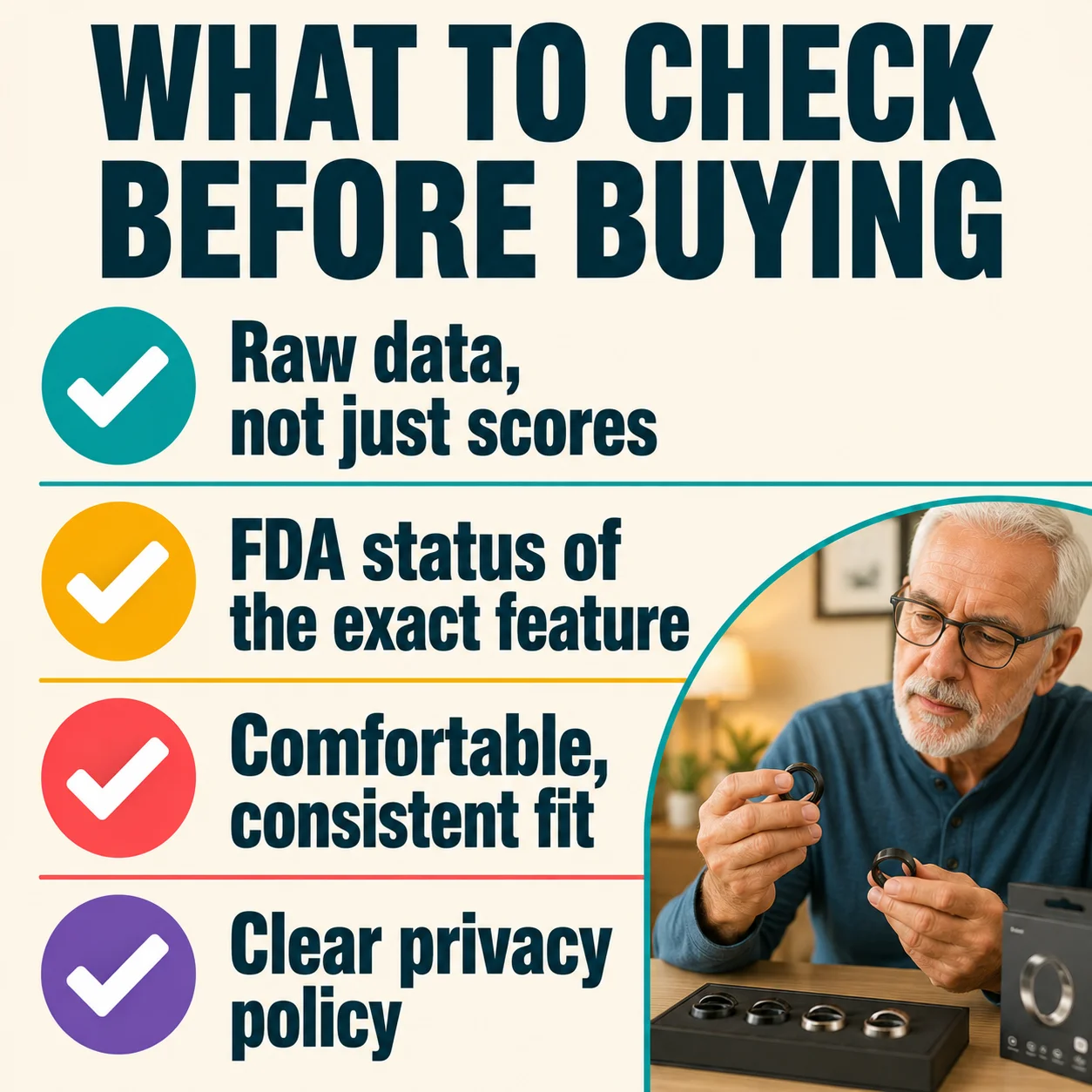
Choose the device around the decision you need to support. Review whether it provides raw overnight graphs or only scores, whether data can be exported, whether irregular-rhythm or ECG features are available in the United States, and whether the exact feature has FDA authorization for its stated purpose. Consider ring fit, dexterity, charging, subscription cost, smartphone compatibility, privacy policy, account recovery, and whether a caregiver can help review data with permission.
Avoid buying solely because a product says “medical grade,” “AI powered,” or “sleep apnea monitoring.” Read the intended-use statement and limitations. A device designed for wellness may still be useful, but its alert should be treated as a prompt for evaluation. A regulated feature may have a narrower approved purpose than the marketing language suggests. No ring is the best choice for everyone, and a comfortable device worn consistently may be more useful than an advanced device left in a drawer. If you’re weighing this alongside a new medication decision, our guide on questions to ask your doctor before starting a new medication after 60 covers a similar decision-making approach.
Privacy and access also matter. Review whether health data are stored locally or in the cloud, whether the company may use de-identified information for research, how long records are retained, and whether an account can be deleted. Turn on multifactor authentication when available. If an adult child or caregiver helps monitor results, agree in advance which alerts should be shared and who will contact the clinician. A ring should support independence without creating constant surveillance or anxiety. Set a regular review schedule instead of checking every fluctuation throughout the night.
Frequently Asked Questions
Usually not by itself. A ring may identify repeated oxygen drops, breathing disturbances, pulse changes, or fragmented sleep that suggest possible sleep apnea. Diagnosis normally requires a clinical assessment and either a validated home sleep apnea test or laboratory sleep study. Regulatory status varies, so check the exact device and software feature rather than relying on the brand name alone.
There is no single consumer-ring number that is safe to interpret without context because accuracy, duration, altitude, lung disease, and signal quality matter. A repeated or sustained low pattern deserves medical review. Severe symptoms such as marked breathlessness, chest pain, confusion, or bluish lips require urgent care regardless of the app reading.
Some rings or paired features can screen for pulse irregularity or record a limited ECG, but capability and authorization vary. An alert is not the final diagnosis. Repeated alerts should be reviewed with a clinician, who may order a 12-lead ECG or longer ambulatory monitoring to capture and identify the rhythm.
No. Optical pulse data and a brief single-lead wearable tracing do not replace a diagnostic 12-lead ECG or prescribed rhythm monitor. A ring may help capture timing and symptoms, but medical ECG equipment provides electrical information needed to distinguish AFib from premature beats and other rhythms.
No. A ring is useful for screening and long-term trends, while a sleep study is designed to diagnose sleep disorders. Polysomnography records signals that a ring cannot, including brain activity, airflow, breathing effort, eye movements, muscle activity, oxygen, and heart rhythm. A home sleep apnea test is simpler but remains a clinical test.
Sleep apnea can occur without obvious snoring, especially when no observer is present. Oxygen drops can also reflect lung disease, hypoventilation, medication effects, infection, altitude, circulation problems, or sensor error. Repeated drops should be discussed with a clinician rather than assumed to be apnea.
A normal wearable score cannot rule out sleep apnea, insomnia, restless legs, anemia, thyroid disease, medication effects, depression, chronic pain, or other causes of fatigue. Rings may miss events or estimate sleep time incorrectly. Persistent daytime sleepiness, morning headaches, or declining function deserves clinical evaluation despite reassuring app data.
Common causes include movement, loose fit, cold hands, weak circulation, tremor, poor skin contact, pressure on the ring, premature beats, and software misclassification. Save the tracing or graph, note what you were doing, and repeat the measurement when still. Recurrent alerts or symptoms still require medical review.
No. Brief spikes may follow dreaming, movement, alcohol, fever, dehydration, pain, anxiety, or breathing events. Concern rises when spikes are sustained, repeated, irregular, new for you, or accompanied by chest discomfort, breathlessness, faintness, or reduced exercise tolerance. Look at patterns and symptoms rather than one peak value.
They may detect an irregular pulse pattern when the wearer feels nothing, which is one reason continuous wear can be helpful. They can also miss intermittent AFib or create false alerts. Silent AFib must be confirmed with an interpretable ECG before treatment decisions are made.
Choose by the exact feature, evidence, regulatory status, data access, comfort, and cost—not by brand recognition alone. Many wellness rings track sleep and oxygen trends without diagnosing apnea. If the main concern is suspected sleep apnea, speaking with a clinician about a validated home test may be more direct than buying a consumer device first.
Medicare coverage depends on whether an item or service meets coverage rules, is medically necessary, and is ordered and supplied through an eligible pathway. Consumer smart rings are generally different from prescribed diagnostic monitors. Ask Medicare or the Medicare Advantage plan about the exact device and billing code before purchase; do not assume reimbursement.
Three to seven representative nights can be a practical starting point, including ordinary nights rather than only the worst one. Bring overnight graphs, alert timestamps, symptoms, medication changes, alcohol use, sleep position, and any witnessed snoring or breathing pauses. More data may help when events are intermittent, but quality matters more than volume.
A ring may show nighttime oxygen trends, but it should not be used alone to diagnose COPD, prescribe oxygen, or change treatment. Poor circulation and motion can affect finger readings, and COPD management requires clinical measurements. Repeated low values or worsening breathlessness should be reviewed promptly by the treating clinician.
First, check for emergency symptoms. If none are present, save the graph, verify fit and signal quality, record symptoms and context, and look for repetition. Contact a clinician for repeated oxygen drops, breathing disturbances, irregular-rhythm alerts, or unexplained nighttime heart-rate changes. Ask which confirmatory test matches the signal.
Bottom Line
Smart rings work best for seniors as early-warning and trend tools. They can make invisible nighttime patterns visible, support better conversations, and encourage timely testing. They work poorly when a score is treated as a diagnosis or a normal dashboard is used to dismiss symptoms. For sleep apnea, the solution is appropriate sleep testing. For suspected AFib or other rhythm problems, the solution is an ECG-based assessment. Use the ring to notice, document, and act—not to replace medical care.
Authoritative U.S. Resources
The following government and clinical resources support the recommendations used in this article.
- CDC – About Atrial Fibrillation
- NHLBI – What Is Atrial Fibrillation?
- NHLBI – Sleep Apnea
- FDA – Medical Device Databases
- Medicare – Sleep Studies
Medical note: These links are provided for education and further reading. Individual sleep, cardiac, and treatment decisions should be reviewed with a qualified healthcare professional.
⚕️ Medical Disclaimer
The information provided on this page is for educational purposes only and is not intended as medical advice, diagnosis, or treatment. Always consult a qualified healthcare professional before making changes to your diet, starting any supplement, or if you have an existing medical condition. KeepFitQuote does not provide medical diagnoses or treatment recommendations. Read our full disclaimer.