
Life can be overwhelming. Between work deadlines, family responsibilities, and daily challenges, stress has a way of creeping into our lives. But the good news? You have the power to manage stress effectively!
Instead of letting stress take over, try these simple yet powerful strategies to bring more calm, balance, and happiness into your life.
Before diving into the strategies themselves, it’s worth understanding why stress management matters beyond simply “feeling better” — chronic stress has measurable effects on the body that compound over time. When stress becomes chronic rather than occasional, cortisol (the primary stress hormone) remains elevated for extended periods, which research has linked to effects on blood pressure, blood sugar regulation, sleep quality, immune function, and even the rate at which certain age-related changes progress. This doesn’t mean occasional stress is dangerous — stress is a normal, even useful, part of life that helps us respond to genuine challenges. The goal of the strategies below isn’t to eliminate stress entirely (which isn’t realistic or even desirable), but to build a toolkit that helps your body return to a calmer baseline after stressful periods, rather than staying activated indefinitely.
1. Breathe Your Stress Away
One of the quickest ways to calm your mind is through a breathing exercise. When you’re stressed, your breathing becomes shallow, making you feel even more anxious.
Close your eyes and take a deep breath in through your nose for four seconds, hold for four seconds, and exhale slowly through your mouth for six seconds. Repeat this a few times and feel the tension melt away.


This breathing pattern works through a well-documented physiological mechanism: the longer exhale relative to the inhale activates the vagus nerve, which runs from the brainstem to many organs including the heart and lungs, and is the primary “off switch” for the body’s stress response. When the vagus nerve is stimulated, it slows heart rate and signals the body to shift from the sympathetic nervous system (“fight or flight”) toward the parasympathetic nervous system (“rest and digest”). This shift can begin within seconds — which is why breathing exercises are often the fastest tool available for in-the-moment stress, faster than exercise, aromatherapy, or most other strategies in this guide, none of which require any equipment, can be done anywhere, and produce no side effects.
The specific 4-4-6 pattern described here (4 seconds in, 4 second hold, 6 seconds out) is one of many similar “extended exhale” breathing patterns — others include 4-7-8 breathing or simple “double exhale” breathing where the out-breath is roughly twice the length of the in-breath. The exact numbers matter less than the principle: a longer, slower exhale than inhale. For adults who find counting distracting, simply focusing on making the out-breath audibly longer than the in-breath — even without precise counting — captures most of the benefit. Practicing this for just 1-2 minutes during a stressful moment, or as a preventive practice a few times daily, can meaningfully shift the day’s overall stress trajectory.
2. Go for a Walk and Clear Your Mind
A simple walk outdoors can do wonders for stress relief. Walking releases endorphins, the body’s natural mood boosters, and gives you a fresh perspective on whatever is weighing on your mind.
Next time you feel overwhelmed, step outside, breathe in the fresh air, and take a 10–15 minute walk. Bonus points if you walk in nature!


The stress-relief benefits of walking come from several mechanisms working together. Beyond endorphin release, rhythmic movement like walking has been shown to help regulate the autonomic nervous system in a way similar to (though milder than) the breathing techniques above — there’s a natural calming effect to repetitive, bilateral movement that researchers have studied in contexts ranging from walking to drumming to certain forms of therapy. Additionally, walking outdoors provides natural light exposure, which supports circadian rhythm regulation — and circadian disruption is itself a contributor to stress sensitivity, creating a virtuous cycle when outdoor time becomes a regular habit.
The “bonus points if you walk in nature” note reflects a genuine research finding: studies comparing walks in natural settings (parks, green spaces, near water) versus urban settings have found that nature walks produce greater reductions in rumination — the repetitive, often negative thought patterns that both cause and result from stress — and greater improvements in mood, even when the physical exertion is identical. This phenomenon, sometimes called “attention restoration,” is thought to occur because natural environments engage attention gently and effortlessly, allowing the more effortful, directed attention used during work and problem-solving to rest and recover. For adults who don’t have easy access to large natural areas, even a few trees, a small garden, or a view of the sky during a walk appears to provide some of this benefit — it doesn’t require a dramatic wilderness experience to be useful.
3. Make Time for Leisure and Fun
Stress builds up when you’re always in “work mode.” Making time for leisure—whether it’s reading, painting, playing an instrument, or simply doing something you love—can help you relax and recharge.
Set aside at least 30 minutes a day to do something purely for enjoyment—no guilt, no pressure, just fun.


The “no guilt, no pressure” framing in this strategy is doing more work than it might seem. Many adults — particularly those who have spent decades prioritizing work, family responsibilities, and obligations to others — find that leisure time, when they do have it, is accompanied by a nagging sense that they “should” be doing something more productive. This guilt can undermine much of the stress-relief benefit that leisure activities would otherwise provide, because the nervous system doesn’t fully shift into a restorative state while some part of the mind remains in an evaluative, “should I be doing this” mode.
Reframing leisure time as a genuine requirement for sustainable functioning — rather than an optional indulgence to be earned after everything else is done — is itself a stress-management skill, separate from whatever specific activity is chosen. Activities that involve a degree of focused attention without high stakes (often called “flow” activities — things like painting, playing an instrument, gardening, puzzles, or crafts) appear particularly effective for stress relief because they occupy the mind in a way that naturally crowds out rumination, without the performance pressure of work-related tasks. For adults exploring or returning to hobbies after years of being too busy, there’s no need to be skilled at the activity for it to provide stress benefits — the engagement itself, regardless of outcome, is where the value lies.
4. Watch Funny Things and Laugh More
Laughter truly is the best medicine! Watching funny videos, comedy shows, or stand-up performances can instantly lift your mood and lower stress levels.
Keep a playlist of your favorite funny clips or watch a comedy when you need a mental reset.

Laughter’s stress-relief effects have a genuine physiological basis that’s been studied for decades. Genuine laughter triggers the release of endorphins (similar to exercise), can temporarily lower levels of cortisol and epinephrine (stress hormones), and produces measurable relaxation of muscle tension that can persist for up to 45 minutes after the laughter itself ends. There’s also a social dimension: laughter shared with others — even via a funny video watched together, or shared and discussed afterward — strengthens social bonds, and social connection is itself one of the strongest protective factors against chronic stress documented in psychological research.
The “keep a playlist” suggestion is practically useful because it removes a barrier: during a stressful moment, having to search for something funny adds friction and decision-making load (itself a small stressor) at exactly the moment when cognitive resources feel depleted. A pre-curated, easily accessible source of reliably funny content — whether a video playlist, a favorite comedy series, or even a folder of funny messages from friends — turns “watch something funny” from a vague intention into an immediately actionable two-minute reset.
5. Take Time to Exercise and Release Tension
Exercise isn’t just for fitness—it’s a powerful stress reliever! Whether it’s yoga, dancing, or hitting the gym, moving your body helps release tension and floods your brain with feel-good hormones.
Find a workout you enjoy and aim for at least 30 minutes of movement a few times a week. Even a quick stretch session can work wonders.

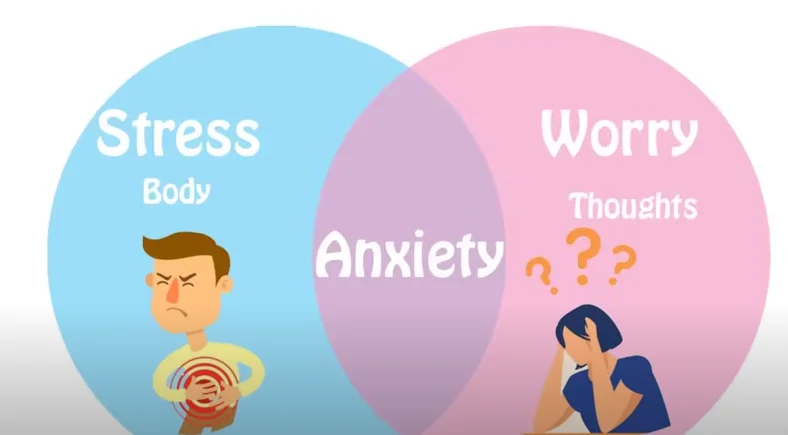
Exercise’s stress-relief mechanism overlaps with but extends beyond the endorphin release mentioned for walking. Resistance and aerobic exercise both produce measurable reductions in muscle tension — and muscle tension is both a symptom and a perpetuator of stress, since tight muscles send signals back to the brain that can reinforce the feeling of being “on edge.” Additionally, regular exercise has been shown in multiple studies to improve sleep quality, and since poor sleep and stress reinforce each other in a vicious cycle (stress disrupts sleep, and poor sleep increases stress sensitivity the following day), exercise’s sleep benefits represent an indirect but powerful stress-management pathway.
Yoga deserves specific mention because it combines several of this guide’s strategies simultaneously: the breathing focus (pranayama) overlaps with the breathing exercises in strategy #1, the physical movement provides the exercise benefits described here, and many yoga traditions include explicit relaxation or meditation components that connect to strategy #7. This “stacking” of multiple stress-relief mechanisms in a single activity may be part of why yoga shows particularly consistent benefits for stress and anxiety across research studies — it’s not necessarily that yoga has a unique mechanism unavailable elsewhere, but that it efficiently combines several proven mechanisms into one practice. For adults who feel they don’t have time for multiple separate stress-management activities, this combination quality makes yoga a particularly time-efficient option.
6. Try Aromatherapy for Instant Calm
Scents have a deep connection with our emotions. Aromatherapy using essential oils like lavender, peppermint, or eucalyptus can help reduce stress and create a soothing atmosphere.
Use a diffuser, light a scented candle, or add a few drops of essential oil to your bath for a spa-like experience at home.

The scent-emotion connection has a specific neurological basis: the olfactory system (sense of smell) has a uniquely direct anatomical connection to the limbic system — the brain regions involved in emotion and memory — more direct than any other sense. This is why a scent can trigger an emotional response or vivid memory almost instantaneously, often before any conscious recognition of what the smell even is. Lavender specifically has been studied more than most essential oils for its calming effects: several small clinical trials have found that lavender aromatherapy can reduce self-reported anxiety and, in some studies, has shown measurable effects on physiological stress markers including cortisol and heart rate variability.
Peppermint and eucalyptus work somewhat differently — their cooling, invigorating scent profiles are often associated more with mental clarity and alertness than with relaxation per se, making them potentially more useful for stress related to mental fatigue or brain fog rather than for winding down before sleep. This suggests a practical approach: lavender or chamomile-scented products for evening relaxation, and peppermint or citrus scents for daytime stress that involves feeling overwhelmed or unfocused. As with herbal teas discussed in other contexts, anyone with asthma or strong scent sensitivities should introduce essential oils gradually and in well-ventilated spaces, as some individuals find strong scents — even pleasant ones — can trigger headaches or respiratory irritation rather than relaxation.
7. Practice Meditation to Find Inner Peace
Meditation helps quiet the mind and brings you into the present moment. Even just a few minutes a day can lower stress, improve focus, and boost overall well-being.
Find a quiet spot, close your eyes, and focus on your breath. If thoughts wander, gently bring your attention back. Start with just 5 minutes a day and build up from there.

Meditation has perhaps the largest body of rigorous research behind it among the strategies in this guide, with mindfulness-based stress reduction (MBSR) programs studied in hundreds of clinical trials across diverse populations. The mechanism most consistently identified involves changes in how the brain processes and responds to stressful or unpleasant stimuli — regular meditators show reduced activity in the amygdala (the brain’s “alarm system”) in response to stressors, and increased activity in prefrontal regions associated with emotional regulation. Some studies using brain imaging have found measurable structural changes in these regions after as little as 8 weeks of regular practice.
The instruction to “gently bring your attention back” when thoughts wander is, perhaps counterintuitively, the most important part of the practice — not a sign of failure. The repeated act of noticing that the mind has wandered and redirecting attention back to the breath is itself the “exercise” that meditation provides for the brain’s attention and emotional regulation systems, similar to how lifting a weight repeatedly builds muscle. A meditation session full of “wandering and returning” is not a poorly done session — it’s exactly how the practice works. This reframe can be particularly helpful for adults who tried meditation once, found their mind constantly wandered, and concluded they “couldn’t meditate” — that experience is universal and is the practice itself, not a barrier to it.
8. Eat Healthy to Support Your Mind and Body
Your diet plays a big role in how you handle stress. Eating nutrient-rich foods like fruits, vegetables, and whole grains supports brain function and energy levels, while too much sugar and processed foods can worsen stress and anxiety.








The connection between diet and stress operates through several interconnected pathways, often summarized as the “gut-brain axis” — the bidirectional communication network between the digestive system and the brain. The gut microbiome produces a significant portion of the body’s serotonin (a neurotransmitter heavily involved in mood regulation) and communicates with the brain via the vagus nerve — the same nerve activated by the breathing exercises in strategy #1. A diet rich in diverse plant fibers supports a more diverse, beneficial gut microbiome, which research has associated with lower markers of inflammation and, in some studies, with reduced anxiety and improved stress resilience.
On the flip side, diets high in refined sugar and ultra-processed foods have been linked in observational studies to higher rates of anxiety and depression symptoms — though the relationship is complex and likely involves multiple factors including blood sugar volatility (sharp spikes and crashes in blood glucose can produce physical sensations — shakiness, irritability, difficulty concentrating — that mimic or amplify anxiety), inflammation, and the simple fact that diets high in processed foods tend to be lower in the nutrients (omega-3 fatty acids, B vitamins, magnesium, and others) that support neurotransmitter production and stress-hormone regulation.
Magnesium deserves particular mention in the context of stress: it’s involved in regulating the HPA axis (the hypothalamic-pituitary-adrenal axis, the body’s central stress-response system), and magnesium deficiency has been associated with increased stress reactivity in both animal and human studies. Foods like leafy greens, nuts, seeds, and whole grains — all part of the “nutrient-rich” category mentioned in this section — happen to be among the richest dietary sources of magnesium, meaning that “eating healthy for stress” isn’t just a vague wellness platitude but connects to specific, identifiable nutritional mechanisms that influence the body’s stress-response machinery directly.
For adults over 50 specifically, omega-3 fatty acids (from fatty fish, walnuts, and flaxseed) deserve attention beyond their well-known cardiovascular benefits — they’re also incorporated into brain cell membranes and have been studied for their role in mood regulation and inflammation reduction, both relevant to stress resilience. None of this means any single food or nutrient is a “cure” for stress — but it does mean that the dietary patterns generally recommended for overall health (whole foods, varied plant intake, adequate protein, healthy fats, limited ultra-processed foods) align closely with what’s also been found beneficial specifically for stress and mood, making this strategy one where general healthy-eating goals and stress-management goals reinforce rather than compete with each other.
Putting It All Together
Managing stress doesn’t have to be complicated. By incorporating small, mindful changes into your daily routine—like deep breathing, walking, laughing, and eating well—you can take control of your stress and create a more balanced, peaceful life.
One final point worth emphasizing: these eight strategies aren’t meant to be adopted all at once, nor are they meant to replace professional support when stress becomes overwhelming or persistent. Chronic stress that significantly affects sleep, relationships, work, or that’s accompanied by persistent sadness, anxiety, or loss of interest in activities that used to bring enjoyment, is worth discussing with a doctor or mental health professional — these strategies work well as part of a broader approach to wellbeing, including professional support when needed, not as a substitute for it.
For most people, starting with just one or two strategies — perhaps the breathing technique for in-the-moment relief, paired with a daily walk — and building consistency with those before adding others, tends to be more sustainable than attempting a complete lifestyle overhaul all at once. Stress management, like most meaningful changes, tends to compound: small, consistent practices accumulate into a genuinely different baseline over weeks and months, even when no single session feels like it’s “doing much” in the moment.
⚕️ Medical Disclaimer
The information provided on this page is for educational purposes only and is not intended as medical advice, diagnosis, or treatment. Always consult a qualified healthcare professional before making changes to your diet, starting any supplement, or if you have an existing medical condition. KeepFitQuote does not provide medical diagnoses or treatment recommendations. Read our full disclaimer.
Related Posts









Pingback: Improving Low Testosterone Naturally Boost Energy & Strength